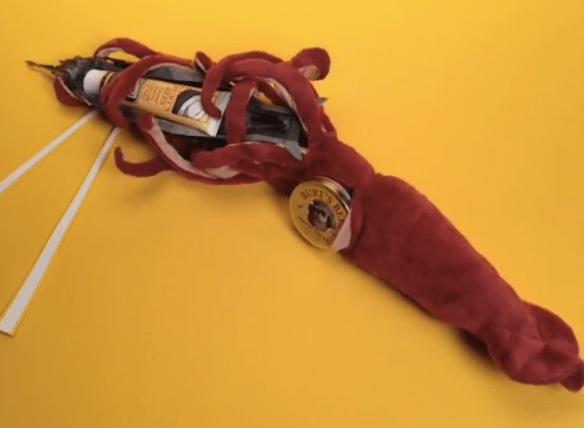
Call him Ishmael, but be quick about it. Personal care brand Burt’s Bees made its Vine debut with a series of #6secondclassics, featuring extremely truncated versions of literary classics to promote its line of mainstay beauty products. The main characters are Burt’s Bees chapsticks and hand creams dressed up in period togs.
The stop motion videos were created by ad agency Baldwin& along with art director Jethro Ames, who’s crafted other branded Vines for GE and The Coffee Bean & Tea Leaf. So far, Burt’s Bees has only posted Vines of “Twenty Thousands Leagues Under the Sea” and “Little Women,” though “Moby Dick” and “The Scarlet Letter” are among other books the campaign will feature.
While the protagonists’ garb informs the Vine viewer what time period it might alluding to, there isn’t really anything literary about the videos. Full text of the Little Women Vine: “We really are quite little. And each of us women.” There’s also not much that’s literary about Burt’s Bees in the first place though, so there’s that.
The brand has only posted two videos so far, so perhaps the execution will evolve with the next set of Vines. Either way, we’re excited to see how Burt’s Bees tackles colonial adultery in Puritanical Salem, Mass.


More in Marketing

‘There’s nothing wrong with being a heritage brand’: How Revlon is updating its image by looking to the past
Revlon named musician and actress Teyana Taylor and country music star Megan Moroney as the faces of its “Revlon Be Unforgettable” campaign.

Inside agency OK Future’s AI ‘pressure cooker’ experiment with Goodwipes
OK Future cut Goodwipes’ AI spoof from six weeks to four days, exposing big savings and burnout risks.
From influencers to AI, here’s what Gen Alpha thinks about your brand
The Gen Alpha cohort now influences nearly half of total U.S. household spending in families with children ages 8-14.