Join us Dec. 1-3 in Nashville for the Digiday Programmatic Marketing Summit
Ally wants influence over women’s sports media deals — not just sponsorships
Live sports could be described as one of the last bastions of live television. With so many eyeballs in one place at one time, marketers are desperate to embed their brands — especially in women’s sports.
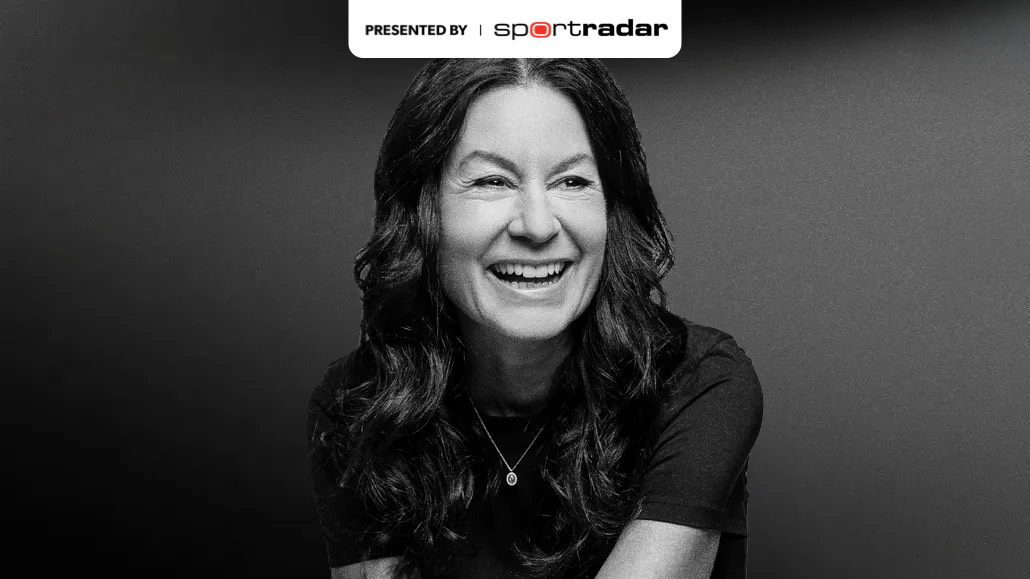
Ally Bank’s chief marketing and PR officer Andrea Brimmer is one of those marketers. Back in 2022, the bank announced its five-year goal to reach parity in ad spend across men and women’s sports media. This year, Ally claims it met that pledge, but Brimmer did not provide specific spend figures.
Sponsorships have become table stakes as the arena gets more crowded. Women’s sports impressions grew last year, and ad spend rose 69%, according to a recent WPP report. P&G this year struck a multi-year, multi-brand partnership with Women’s National Basketball Association (WNBA). Last year, Publicis Sports created a dedicated women’s sports unit.
Digiday caught up with Brimmer to talk about how the bank is brokering deals with media partners, how Ally is navigating sports rights fragmentation and what emerging platforms Ally is putting its next bet on.
This interview has been lightly edited for clarity.
Ally officially achieved its 50/50 pledge to hit equal spend across men’s and women’s sports media by 2027. That was met a full year ahead of schedule. What’s the backstory?
It was always our intention to beat the timeline, and we were exceptionally intentional in putting the building blocks in place in order to do that. And that really, honestly, was creating the structure. It started with this thesis that there was this [unavailability] of media and that we had to make systemic change to create the media. Not only would that help the entire ecosystem, but it would advantage Ally, and that it would allow us to build things where we could show up.
It was making investments and seeing around corners that people weren’t seeing around, or weren’t willing to take risks to invest in because all the data wasn’t there. That’s really what allowed us to be in the position that we’re in today.
Ally seems to have gained more influence in how sports deals are structured with the WNBA League partnership last year and PWHL First National U.S. telecast this year. What has allowed you to demand a bigger seat at the negotiating table?
We have an incredible amount of agency in the marketplace now. It’s been a combination of things. One, it’s been being bold and making the ask. I’m lucky, I’m old, I’ve been doing this for a long time. I’ve got great relationships with a lot of people in the media world. Oftentimes it’s just recognizing what both of you need and creating that reciprocity.
And it’s the way we show up. We don’t just come in with a big stick and beat people. Let’s sit down and let’s talk like humans. What can we do for you?
Do you feel you have more power to set your own terms? Are you able to demand more during negotiations than you could before?
One of the reasons we’ve got the purchase power in the market that we do is because we recognize that we can’t always write the biggest check. We’ll never write the biggest check. Carla Hassan [CMO of JPMorganChase] has got a lot more money than I do.
We laugh about it all the time, right? I’m in a category that spends $55 billion dollars a year in marketing. We have no “Bs” in our budget — maybe other than “broke” — but we will give up categories so that leagues can monetize, even if it’s a category that Ally competes in. We will have the best activation. We will partner to have the best earned media around things. We will create the best fan experiences. We will do the things that are important to fans. We’ll have the exclusive merch.
It seems like your strategy relies on offering flexibility.
I’ll give you a good example: when we renegotiated the NWSL [National Women’s Soccer League] sponsorship a couple of years ago, we could not write the check that they wanted. We said, “Let’s find common ground. What if we give up the mortgage category (at the time we had a mortgage business) and we give up the invest category, and we’ll let you guys go sell that to a brand? Sell it to a mortgage company. We’ll give it up, we’ll let you monetize it.” It allows us to write the check that we can afford to write, and it allows you the opportunity to monetize — not only going to give it up, I’m going to help you, because I know the CMO there, and I’m going to call them. I’m going to ask him to take a meeting with you.
What’s next on your wish list? What are you now in a position to demand?
What are the next emerging sports? If you look at what we’re doing with PWHL [Professional Women’s Hockey League], that’s a great example. We got the takeover tour game that played in Detroit moved to network. That deal came down fast. It was from a Wednesday to [the following] Tuesday that we made that thing happen. Picking up the Detroit inaugural team. You cannot have a team in Detroit without our name on it.
I’m not naive to know that some existing sponsorships that we have are going to get really competitive. People want a piece of what we have. This reconciliation of: where do we play as we go forward? How do we create the right agencies around fandom? Is it around league sponsorships? Is it around team deals? Those are all the things that we’re thinking about. But the one thing I can guarantee you is that we know our role in the media ecosystem and there is no chance that we’re going to walk back that role.
As demand for women’s sports rises and ad prices inevitably climb, how are you protecting your advantage?
I definitely don’t think that we want exclusivity because you want more people in the media ecosystem, not less. Really leaning into emerging media, that’s a place where we can continue to be advantaged — The RE—CAP Show, Welcome to the Party — those types of spaces where we’ve signed long term, multiyear agreements with them so that they’ve got a surety of investment, and it allows us to grow. That’s where the rabid fandom is coming in. You’re seeing the consumption there go through the roof because people are getting a different look — a voyeuristic took a look into the lives of athletes that they really want, and into leagues.
When you say you don’t want exclusivity, what kind of exclusivity are you referring to? Why isn’t exclusivity appealing to Ally Bank?
It’s more of media exclusivity. If a ton of brands don’t invest in the media ecosystem, the women’s sports media ecosystem won’t be successful. I don’t have enough money to support the entire thing. We need other brands to come along. I don’t want competing brands. I want financial exclusivity in those spaces, but I want a bunch of brands around the table.
Sports broadcasting is becoming really messy right now. Games are split up across so many different streaming services and broadcast channels. How do you keep your brand growing?
It’s really hard and it is a consumer pain point right now just because of the fragmentation of the media. It’s equally hard for us. [Anecdotally speaking], three years ago, there were three different places that you would have to make a media investment to be to run a commercial on an NFL game. Now there’s 27. If you look at NWSL as an example, five different media partners. You can’t support all of them. You have to place your bets where you can have the biggest impact, where you can create unique relationships and where you can create something special.
At ESPN on NWSL, we’re the match game presenting sponsor, we’ve been able to create a franchise position there. With Ion, we’ve done some really interesting things with them — where after every game, we did a co-partnership with The RE—CAP Show.
Those are the partners that we put our chips in with, which is, where can we do unique things, and then where there’s places where it’s just a straight media buy, which is probably not the place for us.


More in Marketing
In Graphic Detail: What Apple’s identity block means for the ad money
How Apple’s identity block hits publishers’ wallets, and why Apple can afford it.
Anthropic’s ad bill is soaring, according to IPO filing
Anthropic’s IPO filing shows an ad-free AI company with a fast-growing ad bill.
Salesforce’s $5.7 billion Braze deal puts marketers at an ecosystem crossroads
The deal promises faster, more connected marketing, while raising questions about vendor lock-in and how brands stand out as AI automates campaign execution.