Secure your place at the Digiday Publishing Summit in Vail, March 23-25
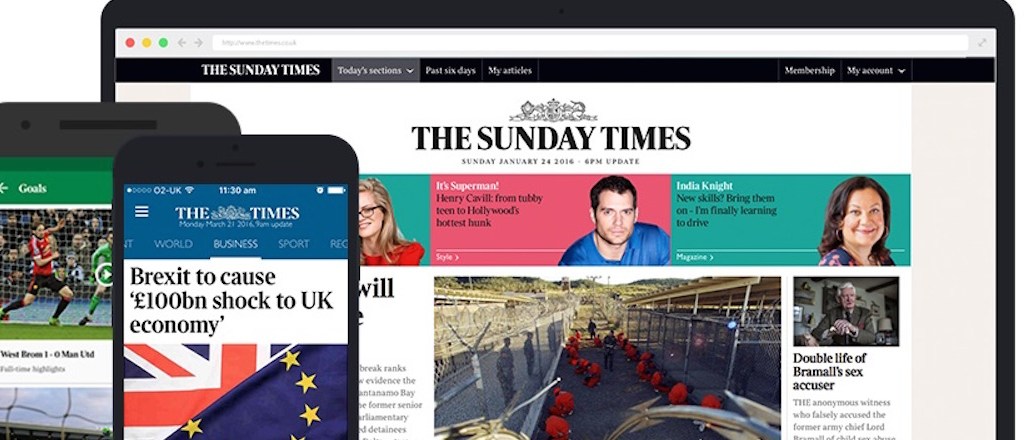
The Times has no plans for relaxing its paywall. But that doesn’t stop the publisher from recognizing the need to experiment with reaching beyond its subscription audiences.
“The Baby Boomers are still pretty wedded to print as a format,” said Eleanor Mills, editorial director of The Sunday Times, the publisher’s Sunday edition. “But we have an egalitarian policy — we don’t mind if they read it in the dead-tree format or if they read it online, because we charge them the same amount of money.”
While the publisher has always had the ability to push pieces outside the paywall, Mills said more of a marketing strategy is growing around reaching audiences beyond subscribers — with the ultimate goal of converting them. “There are ways of speaking through the paywall to beckon readers to our content,” she said. “We’re trying different kinds of approaches to get more of a digital audience.”
Increasingly, this means building up its social following around its brands, like food print supplement Dish — which, Mills said, “is a real millennial favorite because food has become fashion” — and its fashion magazine Style, as well as launching a standalone travel site in March, Insider City Guide. The publisher is also posting several articles a day to Apple News and monitoring its progress, though it’s too early to give any detail on its performance.
Although the publisher was unable to go into specifics, Mills estimates that for the last six months, The Sunday Times has been publishing pieces of content outside of the paywall, on its site and over its social channels, roughly once a week. For instance, this 6,000 word article, “A Fight For The Soul of the World,” about the 276 schoolgirls abducted by Boko Haram in Nigeria, which went “viral” in Nigeria, according to Mills, though the publisher declined to give out figures.
“Hopefully it will help to catalyze change around the cause,” she said, adding that some of these longer and more in-depth pieces, beyond the news cycle, work to highlight content the publisher offers.
Previously, The Sunday Times has made available features on Taylor Swift the day before the Grammys, as part of the publisher’s marketing campaign for the relaunch of The Sunday Times magazine. “You have to do it sparingly though,” points out Mills, “so you don’t start cannibalizing the subscriber audience.”
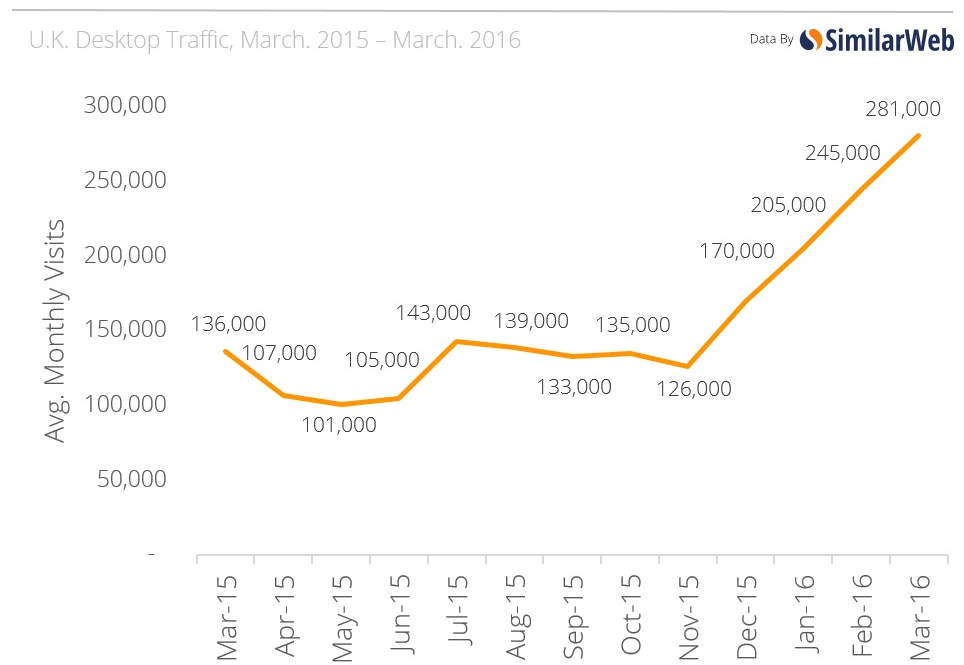
The publisher’s social referral traffic has risen in line with the increase The Times has seen overall. Analytics firm SimilarWeb, which measured the publisher’s desktop traffic, doesn’t separate The Times and The Sunday Times (both hosted on TheTimes.co.uk), found a 107 percent increase in social media-driven visits from March 2015 and March 2016 to 281,000 monthly visits, accounting for 11.2 percent of desktop visits.
What’s more, in the last month subscribers have been able to share articles with non-subscribers on Twitter and Facebook, explains Alan Hunter, head of digital at The Times and the Sunday Times.
“Our readers are our best advocates,” he said, adding the extra feature is part of its strategy to be reader-first. “They asked us for this service and we have listened to them.” While it’s too soon for The Times to glean any substantial conclusions on whether the sharing function has led to more subscriptions, anecdotally it has been well-received.
“The journey from reading one article to paying £6 ($8.90) a week for unlimited access is a long one,” he points out. “There’s not a direct causal link. We, like others, are constantly looking to find the pieces of the jigsaw and how to optimize it.”
People angling to read free content will find ways around a paywall, regardless. While Hunter admits that this could leave the door open for people to abuse the free sharing of its content, it doesn’t expect that, and so far, no one has.
Image: courtesy of The Times.


More in Media

A new studio is betting Hollywood talent and first-party data will reshape creator monetization
Linden Lane Films combines Hollywood talent, YouTube mega creators, and audience data with hopes of reshaping monetization and content.

In graphic detail: Middle-tier creators are fueling the next phase of the creator economy
Facts and figures behind the growing middle tier of creators who make less than macro creators, but convert more.
How medical creator Nick Norwitz grew his Substack paid subscribers from 900 to 5,200 within 8 months
Creator Playbook: Unpacking the strategy behind medical YouTuber Nick Norwitz turning to Substack to significantly grow his brand.