Secure your place at the Digiday Publishing Summit in Vail, March 23-25

For all the talk about “showrooming” and Jeff Bezos mercilessly pursuing world domination, e-commerce remains a fraction of the size of the good ol’ brick and mortar industry. But times are changing.
Physical retail in the U.S. deals in trillions of dollars, while e-commerce dabbles in mere hundreds of billions. Americans are expected to spend $304.1 billion and $4.1 trillion on e-commerce and physical retail, respectively, in 2014. By 2017, those figures are expecting to increase to $440.4 billion and nearly $4.9 trillion, according to eMarketer.
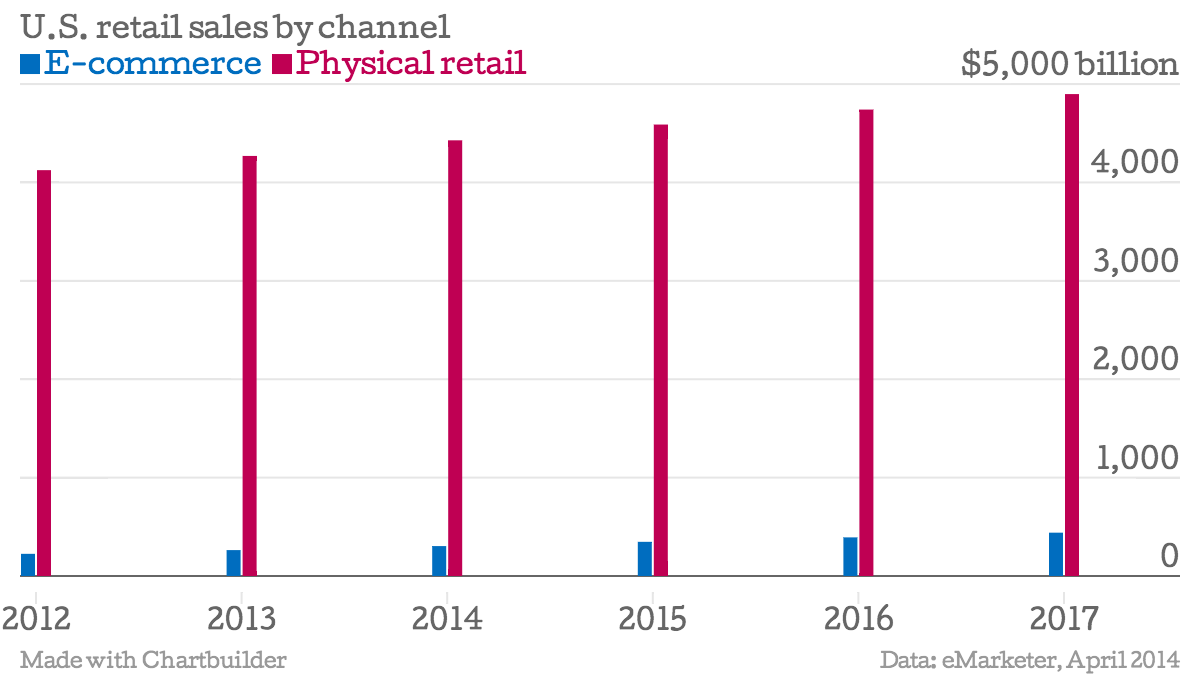
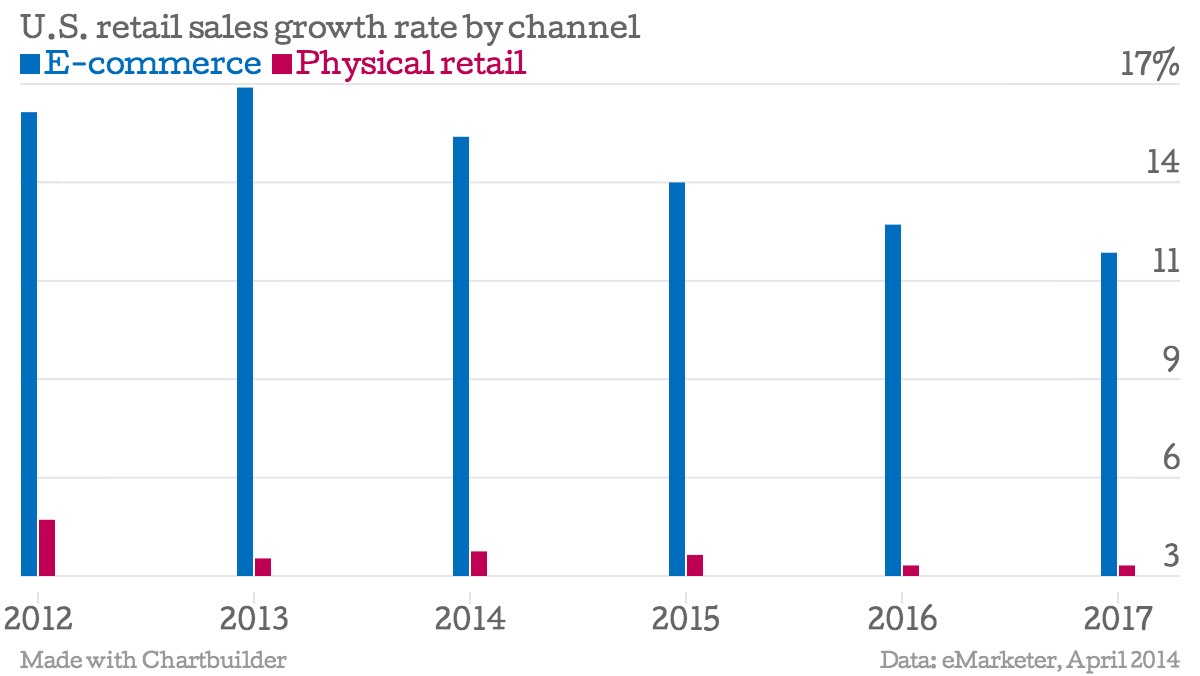
E-commerce is growing more quickly than physical retail, however, thus explaining the number of agencies, brands, platforms and, to a lesser extent, publishers interested in building out their digital retail capabilities. E-commerce’s year-to-year growth rate is projected to be in the teens throughout the next several years, while physical retail’s will remain in the single digits, according to eMarketer.
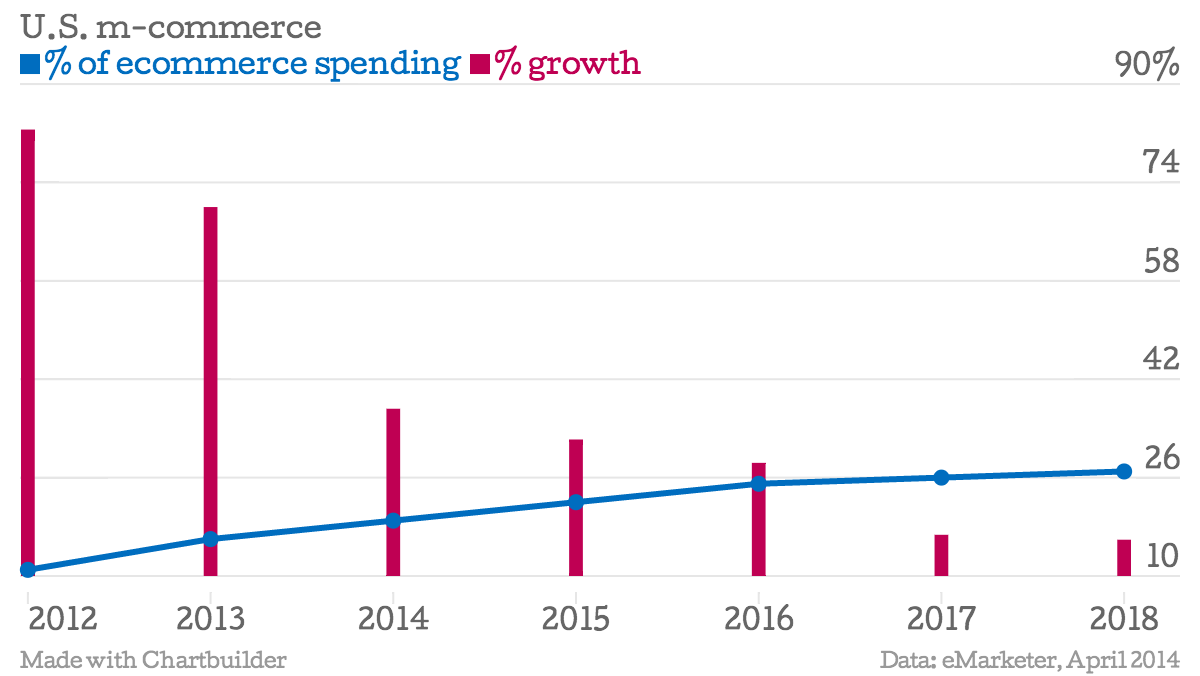
An interesting trend within e-commerce’s growth curve has been the rise of “m-commerce” in recent years. M-commerce — using mobile devices (smartphones and tablets) to buy goods online — is becoming an increasingly larger portion of digital retail. In 2012, m-commerce constituted just 11 percent of U.S. e-commerce sales, according to eMarketer. By 2017 it’s expecting to account for more than a quarter. It’s growth will slow from astronomic (82.6 percent) to healthy (15.9 percent).
As e-commerce is expected to grow, so are retailers’ digital media budgets. The U.S. retail industry is expected to increase it’s digital advertising spending from $10.6 billion this year to 13.8 billion in 2017, per eMarketer. Retail’s percentage of the total U.S. digital advertising market is expected to stay steady at approximately 22 percent during that time.

Despite making up a fifth of the U.S. Web advertising marketing, retailers are inefficient digital marketers relative to companies in other industries. A recent comScore report showed that only 42 percent of retailers’ digital ads reached their intended target market in the first quarter of 2014, less than the Web’s paltry overall average of 44 percent. The only category to perform worse than retail was consumer goods, curious considering CPG are widely regarded as sophisticated marketers, comScore notes in the report.
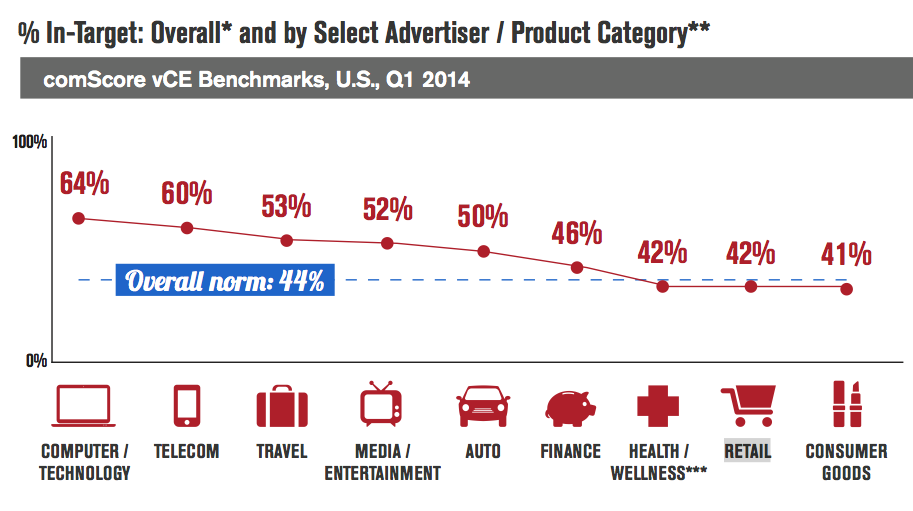 Image via Shutterstock


More in Marketing

‘Nobody’s asking the question’: WPP’s biggest restructure in years means nothing until CMOs say it does
WPP declared itself transformed. CMOs will decide if that’s true.

Why a Gen Alpha–focused skin-care brand is giving equity to teen creators
Brands are looking for new ways to build relationships that last, and go deeper than a hashtag-sponsored post.

Pitch deck: How ChatGPT ads are being sold to Criteo advertisers
OpenAI has the ad inventory. Criteo has relationships with advertisers. Here’s how they’re using them.