Join us Dec. 1-3 in Nashville for the Digiday Programmatic Marketing Summit
Beyoncé profits over social media controversy with ‘Boycott Beyoncé’ T-shirt
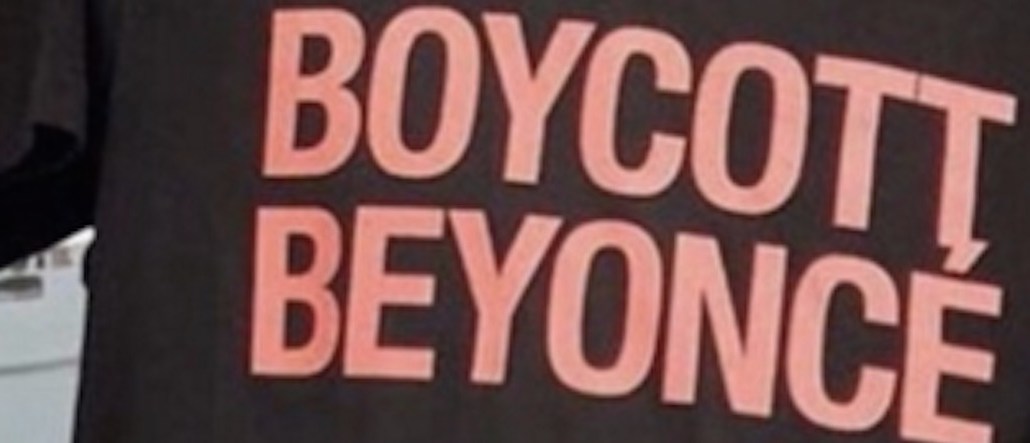
Taking a cue from her own song “Sorry,” Beyoncé is taking the lyric “middle fingers up” on the road.
She kicked off the Formation World Tour in Miami last night, which expectedly comes with a pricey merchandise table. Placed besides the usual array of keychains, jackets and hats, there’s a T-shirt that’s attracting a lot attention not only for what it says, but for her shrewd business sense.
For $45, the T-shirt reads “Boycott Beyoncé,” a clever nod to a campaign started by the Miami Fraternal Order of Police who took offense to the February release of her “Formation” music video and Super Bowl halftime performance. They complained that the song implied that the police actively promote brutality, and that her backup dancers were wearing Black Panther-like costumes. That sprouted the #BoycottBeyoncé campaign online, mostly stirred from within the conservative press.
She pushed back on the criticism in a recent interview with Elle, saying she has “much admiration and respect for officers and the families of officers who sacrifice themselves to keep us safe.” Beyoncé, however, is not above making a dollar (or, in this case, 45) off the social media controversy with T-shirts and cell phone cases emblazoned with the phrase.
Beyoncé is selling BOYCOTT BEYONCÉ t-shirts as tour merch pic.twitter.com/zjD3HcV7XG
— Beyoncé Australia (@BeyonceAUS) April 27, 2016
Capitalism at its funniest! Beyoncé selling her own Boycott Beyoncé shirts, trolling critics and “protesters” pic.twitter.com/2PaXTRwfYm
— Juliana Jai Bolden (@JulianaJai) April 27, 2016
Beyoncé is selling a boycott beyoncé shirt LMFAOOOO QUEEN BETTER MAKE MONEY OFF THOSE HATERS. WHAT KIND OF SLAY?! pic.twitter.com/NTjQ2l3d8q
— Danny (@dannyyonce) April 27, 2016
Beyoncé has dominated the Internet since last Saturday, when she dropped her album “Lemonade” during an HBO special and sparked more than 4.1 million tweets — and just as many uses of the lemon emoji. Her army of fans, the Beyhive, also stung designer Rachel Roy when the singer implied that she was involved in an extramarital affair with Beyoncé’s husband Jay Z.


More in Marketing

Future of Marketing Briefing: Creators had a big year. Christmas still went to the celebrities
Despite leaning on creators for most of the year, marketers aren’t doing it for the holiday crunch. That job still belongs to celebrities.

In graphic detail: Six thousand brands later, ChatGPT ads still have a conversion problem
OpenAI has ambitious ad revenue targets, which depend on advertiser demand, measurement and monetisation.

Agencies find AI overuse is leading to brief bloat
Agencies and marketers now frequently use AI tools to create media and creative briefs. But the practice could be a canary in the coalmine for AI overuse in advertising.