Join us Dec. 1-3 in Nashville for the Digiday Programmatic Marketing Summit
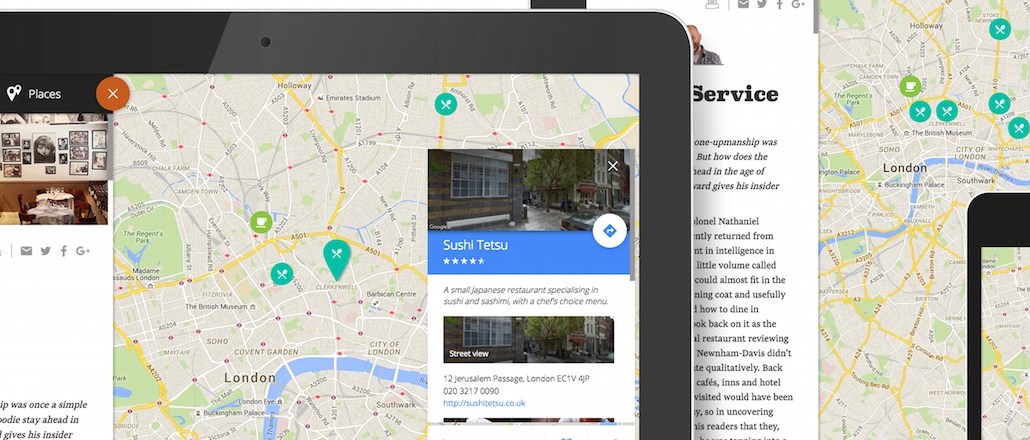
The Financial Times is reaching new audiences by uncovering London’s gems as part of its Hidden Cities project with Google Maps.
The site highlights recommendations for restaurants, bars and cultural hot-spots chosen by its FT Weekend editorial team, with reviews and articles from FT journalists — all available outside the paywall — that will also feature in a weekend print supplement.
The purpose of the project is to leverage the FT’s global network of contributors, as well as showcase its content in new interactive ways, according to Natalie Whittle, FT Weekend associate editor.
“We have such a rich global network that plays really strongly in our news and features coverage, but we wanted to make the most of it and how we write about cities in general,” she said, explaining the FT’s push to highlight its entertainment and culture content rather than just politics and finance. In the future, the interactive map will include video and audio content, according to Whittle.
A number of publishers are finding new ways to grow audiences through mobile-focused propositions. Last month, the Wall Street Journal launched a London-specific app, and recently the New York Times experimented with a virtual reality experience using Google Cardboard. Last year,the Times’ T Brand Studio created an ad for Google called “Plan Your Next Adventure,” an interactive that placed New York Times-recommended attractions on an interactive Google Map.
The project also showcases recently added Google Maps features. Through integration with Google Calendar, for example, it schedules reminders and adds booked events. Areas of interest can also be bookmarked and saved to users’ phones. Google provides the tech platform but will have no editorial control.

“I wanted to take a broad view of what ‘hidden’ means in London,” said Whittle, “whether that’s a seven-seat sushi bar that no one knows about or more historic sites.” The map includes well-known galleries like the Tate and the Institute of Contemporary Arts, plus lesser-known spaces like the Hannah Barry Gallery in south London. At launch, the site will have features on London’s walking tours, plus a piece from food writer Tim Hayward about the forgotten established restaurants that get overlooked by new-venue openings.
Hidden Cities started development four months ago, with the first installment going live in Brussels at the end of October. This was the project’s first choice of location, partly because it’s the site of the FT’s second-largest bureau outside of London. It’s also a city that gets overlooked by tourists, so it fits within the theme of “hidden cities” rather well.
Since launch on Oct. 30, the Brussels site has had 20,000 visitors, 15 percent of whom came through social media, mostly from Twitter, results that had “endorsed what we had hoped for,” according to Whittle.
“We will continue to update the articles for the London site to a degree,” said Whittle, “but the more natural continuation is to consider what other other cities to launch in. And we haven’t decided where these will be yet.”
Images courtesy of Financial Times.


More in Media
Creators say it’s difficult to make money from news — with platform rules and brand guidelines
With more people getting news from creators than traditional media, those creators are still trying to build sustainable businesses.
Why CNN International is building for agentic ad market that barely exists yet
CNN International is still chasing its first agent-sold dollar by Q1.

Media Briefing: The transatlantic push to rein in stealth bots is gathering pace
U.S. and U.K. publishers are pushing for laws to crack down on stealth AI crawlers as bot scraping surges and demands for transparency grow.