Join us Dec. 1-3 in Nashville for the Digiday Programmatic Marketing Summit
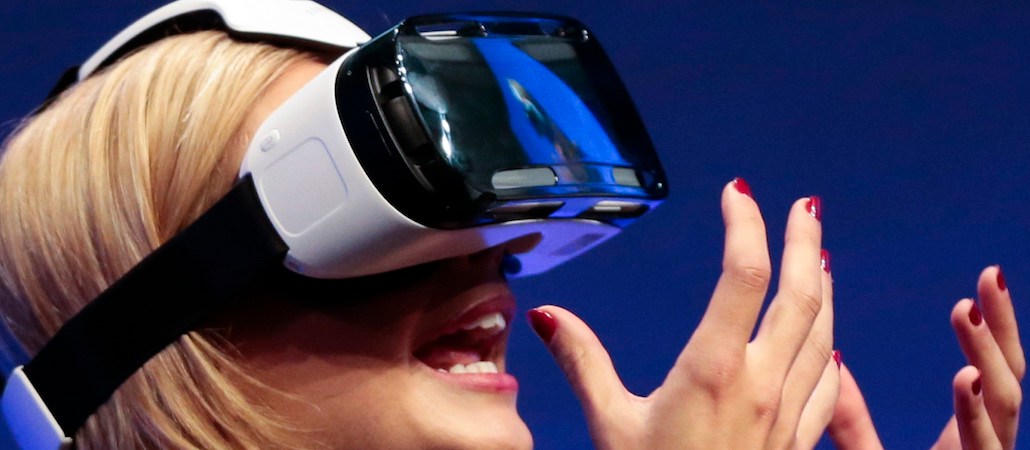
2016 is shaping up to be a “billion dollar year” for virtual reality, following a smattering of long-hyped product releases from Samsung, HTC and Facebook-owned Oculus Rift. Even Jesus is getting a retelling with the technology. Talk about biblical scale. Here’s what marketers need to know about VR.
The novelty is fading
Searches for virtual reality nearly quadrupled in the 12 months leading up to May, according to Google’s head of VR partnerships Aaron Luber. As for 360-degree videos, they’re getting a heap of traffic, too. The most-watched 360 video on YouTube — a demo for the game Clash of Clans — is nearing 44 million views.
People remember their first time using VR, be it a claustrophobic solitary confinement cell or a white-knuckle ride in a racecar. But as the technology becomes more commonplace, the novelty is wearing off.
Henry Stuart, CEO of London-based VR studio Visualise, said it’s no longer enough to just tick the VR box for an increasingly demanding audience.
“Only two years ago, if you shot a piece of VR footage and put it on a headset you’d get PR out of it,” he said. “But now people aren’t wowed by just having a headset on. They want to know about the actual value behind it.”
So is motion sickness, for now
When early prototypes were released, users reported feeling queasy, which got worse the longer they spent inside the headset.
The latest models have fixed that, said Unity Technologies’ regional sales director Andrew Brammall. His company — essentially a Photoshop for game designers — claims to be used in around 90 percent of all VR games. (An exception is if you’re watching a video via an older smartphone inside a Google Cardboard headset. Also, if VR content producers want to make you sick, they can.)
Most production studios now use gyro-stabilized cameras and optimized frame rates to avoid jittery film. “Make sure it’s comfortable. If you don’t tick that box, the project shouldn’t go forward,” says Stuart.
It’s getting cheaper
While the high-spec VR headsets can cost almost $600, a slew of new hardware is making it easier and cheaper to produce immersive video.
There are 360-degree cameras everywhere, from Facebook’s open-source model to cubes from China that cost less than $60. Tech companies are expected to sell 4 million consumer cameras by 2021, according to ABI Research.
It’s already showing. According to YouTube, uploads of 360-degree videos doubled in the three months leading up to June, compared with the year-ago period. “It’s changing things in the same sense that the Canon EOS 5D Mark II changed the world of wedding video in 2008,” said Stuart.
VR isn’t just for gamers
While core VR users are still gamers, consumers are interested in using it for other things, too. A recent survey of 1,200 U.S. consumers from Greenlight VR found that gaming content ranked sixth behind categories like home design and education. Sixty-seven percent of respondents were interested in live events.
Similarly, a survey from Ericsson Consumerlab found that people were most interested in VR as a way to improve online shopping, create VR maps for smartphones and view movies.
The likes of Disney, ComCast and Time Warner are now backing VR startups, too. While the breakout hit for VR is likely to be a game, said Sam Shaw, head of insight at Canvas8, entertainment could last in the long-term.
“It will ultimately be a entertainment device. Things that are adopted fastest are entertainment-based, not communication-based.”


More in Marketing

Ruggable’s new ad spend strategy shifts focus to ShopMy creators
Ruggable is shaking up its marketing stack, pulling dollars our of Meta and into ShopMy creators ahead of a potential IPO.

Future of Marketing Briefing: The holdcos long, awkward courtship of the C-suite
What holdcos risk when they go over the CMO’s head.

Brands turn to content series and Jimi Hendrix to improve AI search performance
Guitar brand Fender and amp-maker Marshall both recently launched content series aimed, in part, at improving their visibility in AI search answers. It’s part of a greater pattern.