Join us Sept. 24 in NYC to connect with execs from Digitas, Claire's, Marriott, Havas and others
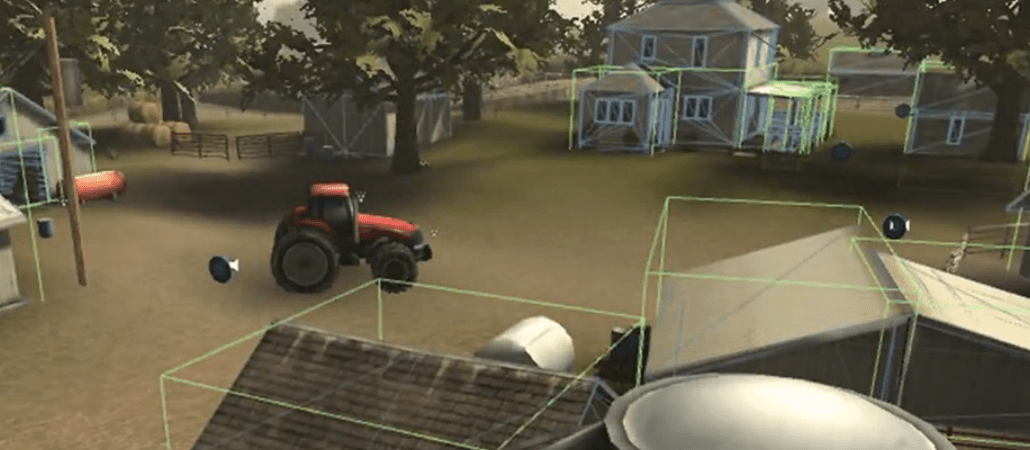
When Gannett Digital created an interactive feature for the Des Moines Register called Harvest of Change, it wasn’t just notable because it incorporated cutting-edge technology, virtual reality headset Oculus Rift. It’s an example of the work the company is doing to try to create that scale and speed with forward-looking applications that can play across the company.
The work comes out of the Gannett’s interactive applications group, a four-person team overseen by Anthony DeBarros that works out of Gannett headquarters in suburban D.C. (although they collaborate with design and information architecture teams at Gannett Digital.) As tech people infiltrate newsrooms, DeBarros is an example of the reverse — he’s a journalist who went over to the tech-heavy side (he started at Gannett 27 years ago writing obits and covering cops at the Poughkeepsie Journal). His boss, Mitch Gelman, vp of product for Gannett Digital, also has an editorial background as a former svp at CNN.com. Their job: Speed the spread of innovation throughout the company’s newsrooms at USA Today and 81 community dailies.
“Journalists and software developers work in different ways,” DeBarros said. At Gannett Digital, he went on, his experience helps him bridge the newsroom and the hard-core tech people. “I’m able to ensure the broader thinking is captured and well represented.”
While individual Gannett papers still have their own teams that work on interactive journalism, DeBarros’ mandate is to build big-scale, interactive products than can run across multiple properties.
“We’re right in with our peers in the things we’re doing with 2-D graphics, but one of the things we’re doing that is unique to Gannett — by virtue of our publishing platform — is we now have the ability to create an interactive application and publish it simultaneously across all those properties,” DeBarros said. “So we’re looking at what can we can do that has broad appeal and can be somewhat customizable.”
Last year, his group built a Storm Tracker that any paper could pull out and use to show local hurricane activity in real time. (“Every time there was a hurricane, some poor artist had to go into Photoshop and update the location and show a new map,” DeBarros said.) This year it created an election tracker that lets a paper showcase all 1,100 federal candidates, with data like bios, polling numbers and financial contributions.
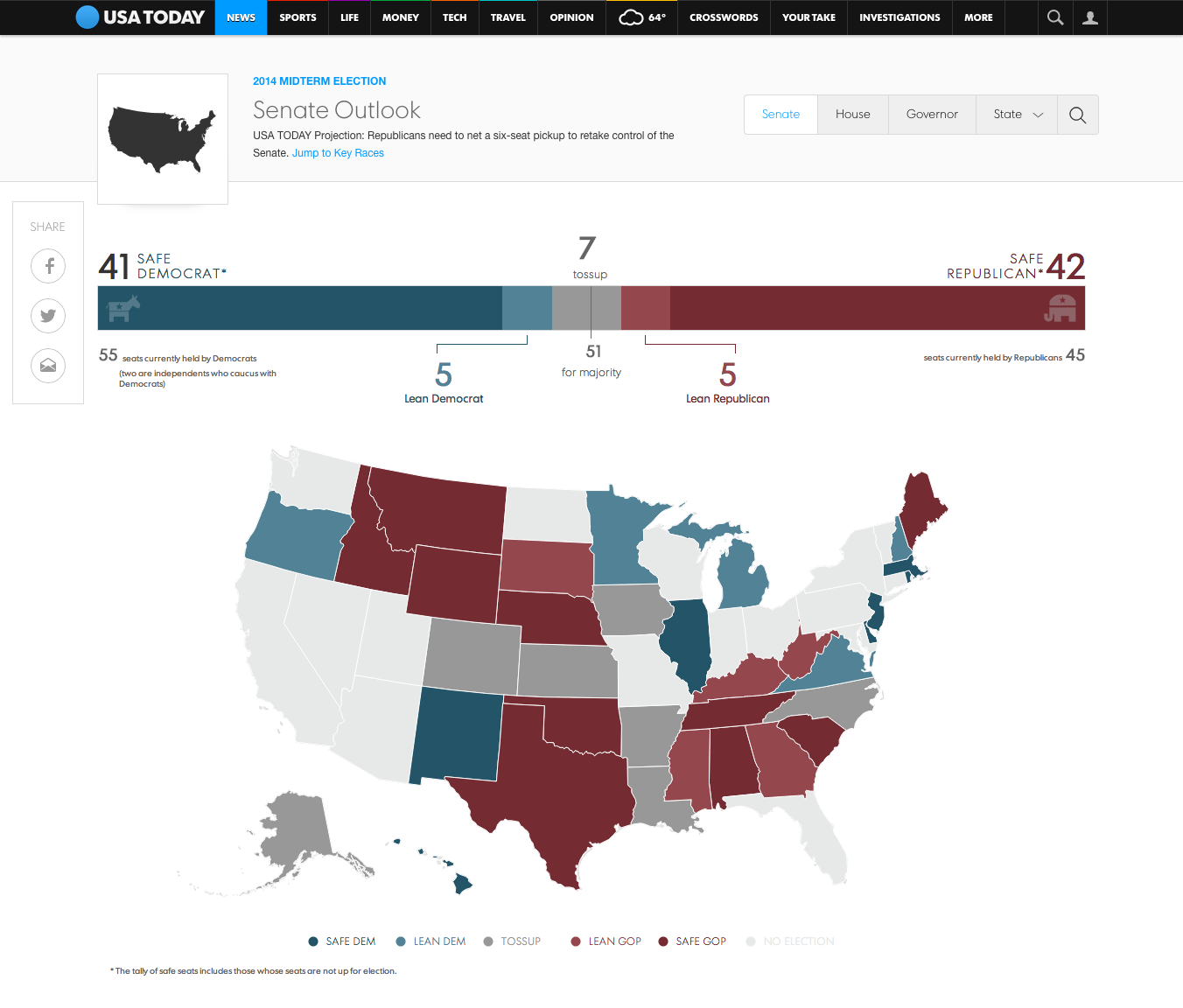
Gannett wouldn’t share how many community papers have picked up those interactive features, although it revealed that another investigative project and interactive tool that DeBarros’ group worked on, Fugitive Next Door, was carried by 60 papers.
Harvest of Change was a new area for DeBarros, having never worked with virtual reality before. But the former journalist is always looking for innovative ways to tell stories. And using emerging media could reach younger readers who are less inclined to read a print newspaper than their parents are.
“Mitch has said, we have a lot of potential news consumers who have no interest in picking up a print newspaper or tuning in to watch a news broadcast,” he said. “But they are very interested in experiences like video gaming and immersive activity.”
The work comes as Gannett prepares to spin off its publishing business from its faster-growing broadcasting side early next year, which will likely put more pressure on the newspapers to improve their performance.
Scaling those editorial products is increasingly possible because the company, under its digital chief David Payne, has been breaking down silos between USA Today and its community newspapers with a common CMS and shared video production studio and news desk. Local Gannett papers have a USA Today section as their de facto national news coverage. Payne prides the digital group as a whole as acting like a startup. There are standing meetings, huddles at sofas instead of conference tables, a ping-pong table and a culture of continuous improvement.
Payne said he’s looking to the interactive applications group for the next generation of media storytelling products. While their efforts have so far only yielded products for the newsroom, products that also have use for advertisers is “our dream.”
The challenge will be finding other uses for those products across the company.
Dan Pacheco, who is chair of journalism innovation at Syracuse University and who consulted to Gannett on the Oculus Rift project, said the barriers to scaling these ideas aren’t technological (the tools are there and free to use), but the finding the right stories and people with the right skill sets.
“The pitfall here would be some newspaper says we want to get into this, we have this intern who’s good at photoshop but they’re not necessarily good at 3-D modeling,” he said. “Another pitfall is, you try to show something that’s cool about the environment and forget about the story. In terms of how to scale it across the company, it’s not going to be done by making a whole bunch of enterprise-level Harvest of Changes.”


More in Media
Walmart adds marketplace data, deeper AI features to Scintilla insights platform
The upgrade includes access to marketplace data, customizable dashboards, custom alerts, a deeper version of its Marty agent and a closer link with the Scintilla data platform.

How women athletes are betting on the creator playbook
Women athletes are increasingly leaning on content creation to build their brand, grow their sports’ fandom, and help close salary gaps.
Axios preps new Axios Direct feeds for AI models, agents as revenue tops 2026 goal
Axios has reached its revenue goal for 2026. Now the news publisher is building a new revenue stream to keep up the pace in 2027 and beyond.