Join us Dec. 1-3 in Nashville for the Digiday Programmatic Marketing Summit
Why Donald Trump’s face keeps showing up on content ads
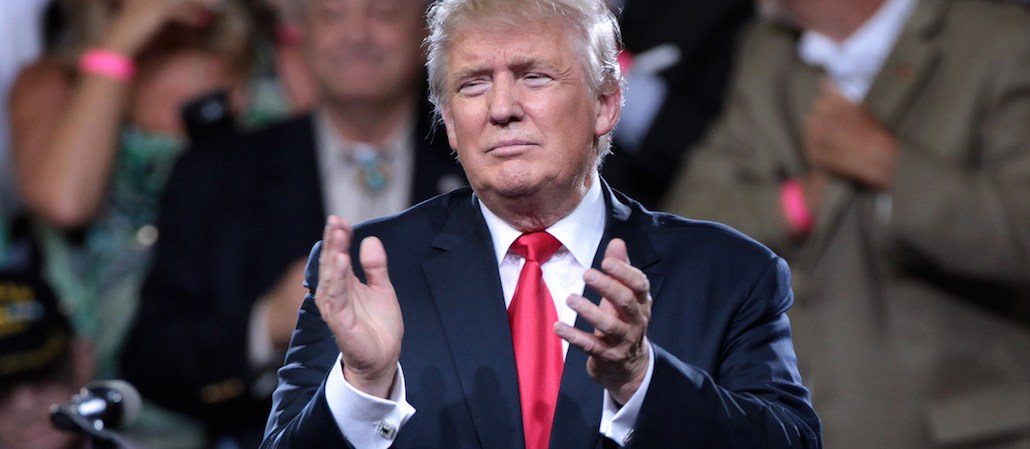

If it wasn’t enough that Donald Trump was dominating the news, he’s also popping up in ads hawking mortgage products.
Ads like the one to the right making false Trump claims have been showing up in content-recommendation engine Outbrain on sites including ESPN and Variety. Exploiting the intense interest in Trump news and enabled by ubiquitous content ads, they click through to a lead-generation marketing site called The Dollar Daily Today. Other versions of these ads have featured Sean Spicer, Paul Ryan and President Obama.
More broadly, the ads belong to a subcategory of suspect online content, advertising that uses misleading images and headlines to get unwitting consumers to click through to direct-response ads.
It’s a not-so-distant cousin of so-called fake news that was blamed for influencing last year’s presidential election and which Facebook and Google have pledged to try to stop from spreading.
Outbrain said it was alerted to the Trumpian ad and was in the process of removing it from its network. Most major publisher sites run content-recommendation ad units like Outbrain’s.
Outbrain serves as many as 250 billion content recommendations a month, so it’s hard to police them all. A report by ChangeAdvertising.org found 26 percent of the links in content ads were clickbait, most of it directing to sites that were anonymous.
Content-ad companies say one way misleading ads or images get by is that companies alter their ads after they’re published or include images that don’t match the content. This is far from the first time a content-recommendation engine has had to weed out misleading or sensational ads using famous personalities from its network. In recent months, Outbrain said it has blocked the use of headlines like “celebrity X went broke” or “celebrity Y you didn’t know died this year.”
Adam Singolda, founder and CEO of the other leading content ad company, Taboola, said he couldn’t find the Trump image or advertiser in Taboola’s network but that, in general, Taboola doesn’t accept advertisements containing images from celebrities or politicians unless the advertiser has permission from the person.
But there’s limited incentive for all the stakeholders to get rid of such ads, said New School professor David Carroll, an ad tech expert. In addition to his draw as a celebrity, Trump could be a popular choice for an ad given that Facebook data has shown Trump supporters are more likely to respond to ads than the average person. “Including Trump in a banner ad could just be to bait the high-propensity click-through,” he said. “If it makes money, it’s hard to say no. The publisher that has the content ad makes money, Outbrain makes money, the lead generation site makes money, the loan originator make money.”


More in Media
The Hill adds interactive election tools to subscription offering ahead of the midterms
The Hill is betting on interactive subscriber-only features to help grow its new subscription business ahead of the 2026 midterms.
The Daily Mail tests GEO with brands ahead of AI visibility product
The Daily Mail is running around a dozen GEO tests to work out what works before turning its AI visibility offering into an official product early next year.

Meta delays rollout of updated commercial terms amid publishers’ collective pushback
Meta’s updated commercial terms have galvanized publishers into a coordinated pushback over the company’s use of their content.