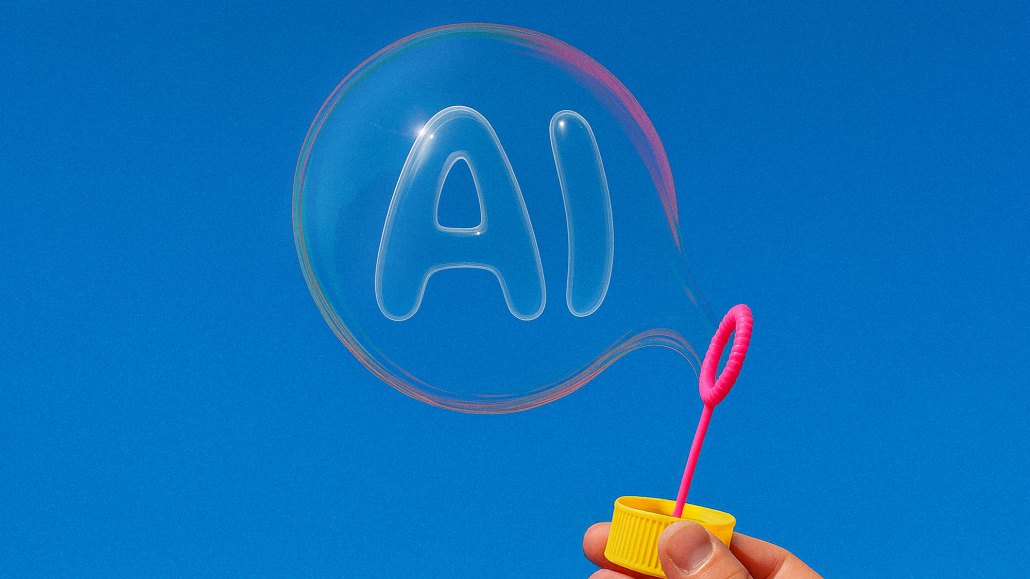
At the beginning of the year, not long after the release of OpenAI’s Sora 2 and its almost immediate backlash, the creator economy at large loudly denounced generative AI content in favor of authenticity. YouTube nuked AI slop accounts, Instagram CEO Adam Mosseri released a lengthy memo about improving ranking for originality, and brands were looking for the messiness and creativity of real creators over everything.
But in the last 10 months, AI has steadily crept into nearly every corner of the creator economy. Rejecting AI-generated content wasn’t the same as rejecting AI outright. The harder question was how much of the creative process creators were willing to hand over.
CapCut, the popular TikTok editor, has a suite of AI editing tools. Adobe Firefly is billed as an “all-in-one creator studio.” Now YouTube is adding new agentic tools to aid in both the creative process and strategizing, like the recently announced video A/B testing and conversational editing.
Creators folding AI into their workflows isn’t exactly new. Lucy Kruszynski, global head of brand at influencer marketing agency Buttermilk, told Digiday she was on a panel about AI and creators in 2019 and acknowledged that the industry is in “such a different place as far as morality is concerned around AI.”
“I think it’s a lot harder to be super binary because it’s just crept into our everyday so much,” Kruszynski said.
Last July, Billion Dollar Boy reported that 32% of creators polled suggested using AI and scheduling tools to reduce workload and prevent burnout. Its November 2025 poll of creators showed 87% had increased their use of AI in their content creation process over the last year, with 86% planning to increase it even more in the next 12 months.
Creator Gigi Robinson, host of the Creator Etiquette podcast, uses AI across “almost every layer” of her workflow, from content analytics to brainstorming, to file organization and concept development. She considers it an acceleration of what she’s already doing, not a determining factor for her content.
But there’s still hesitation (and occasional aversion) to using AI-generated creator content on the brand side, and lingering questions over what kind of content these tools could churn out, especially if mass-adopted.
Companies don’t want content to be flagged for using AI on social platforms and face the subsequent backlash, says Keith Bendes, chief strategy officer at Linqia. “I don’t think brands care outside of like, ‘is this content going to be flagged as AI? And if it is, will I get into AI jail or algorithm jail?’ That’s the tricky part,” Bendes said.
Journalist-turned-creator Danae Mercer has shifted her stance, and now uses AI tools to organize her inbox, calendar, and task lists as a “one-woman band.” Still, she recently encountered a specific “no AI allowed” clause (which included edits and concepts) in a campaign brief for LA-based brand, Open.
The big difference, and the lingering question, is whether creators are using AI to create, full stop. “I think there’s going to be a very interesting line when it comes to generative AI, like generative video, versus AI tooling that helps the content creators make the content,” said Anders Bill, co-founder at Superfiliate.
That’s why tools like YouTube’s A/B testing feel like a blurring of those lines: sure, it’s your original content, but if the tone of that content is dictated by an agentic editor, how does it affect authenticity and originality?
The sameness problem
YouTube’s new tool will allow creators to upload multiple versions of a video and its Gemini-powered Ask Studio tool will indicate which version would keep people hooked the longest. The fear is that this could result in content feeling very “samey,” though Mustafa Aijaz, vp of media company SoaR, isn’t all that concerned.
Aijaz believes the platform’s ever-changing content tides will help deter homogeneity. “Things evolve so quickly…the hooks are gonna change and keep evolving… I’m not really worried about that kind of flattening,” he said.
He noted that video A/B testing is a great tool for smaller creators who can’t afford an editor and he considers it a “net good” for the platform and creators as a whole. Others who spoke with Digiday pointed to the democratization of content creation as a net positive, but were less enthusiastic about what kind of content it might create and what trends it could set.
“There is a real risk there,” Kruszynski said. “…there’s this risk that every video suddenly looks very similar. We lose nuance.”
Mercer said she’s noticed an increase in “AI speak” where “where everything sounds the same, the ideas sound the same, the emails sound the same.”
“There has been a rush towards the ease of AI, the convenience,” she added.
Becky Owen, CMO of Billion Dollar Boy, thinks these tools might further bifurcate the creator space.
“Is this a great reset?” she wondered. “Will it start to pull apart the kinds of careerists that are built for volume and cash grab and scale from those that are intentional and thoughtful and true?”
Could these kinds of tools exist in the more lower funnel, quantity-focused brand activations, where smaller creators churn out UGC for awareness over everything? Several execs, including Bendes, considered it a possibility, especially when it’s becoming increasingly harder to predict if a big-budget mega creator push will provide adequate ROI.
Algorithmic-focused, agentic-supported content could hedge bets. Brands could send messages that should be communicated to a creator who knows how to use these tools, and maybe it won’t get suppressed but will instead, thrive.
“Not everybody is in this to maximize every metric to the nth degree. That’s not what art is all about,” Bendes said.


More in Media

Creator mentors Colin and Samir want to turn their followers’ ideas into productions
Creator mentors Colin and Samir teamed up with Adobe to fund a creator’s project; the first step towards the duo’s new production era.
How a fashion creator turned audience demand into a 500+ client styling business
A creator with a fashion merchandising degree speaks on her quest to diversify revenue fast, from styling to sweat equity investment.
Forbes looks to Google AI pilot for insights as publishers seek value beyond the click
Forbes has joined Google’s paid News AI pilot that gives Google expanded rights to its content to test new ways of providing readers with context about stories before they click through.