The legacy of media, even online, is the segregation of editorial content and advertising. Put simply, editors used content-management systems while the ads came through an ad server.
That’s a mistake, new-style digital publisher Say Media believes. Different systems mean different experiences. It’s no wonder that banner ads feel like intruders on most Web pages. Say believes its new platform, Tempest, will weave together content and ads (and commerce too) in a coherent fashion.
“We’re still stuck in a 10-year-old format, with the article on left, ad on the right, comments on the bottom,” said David Lerman, the company’s chief technology officer. “The new challenge is on across the device. Sponsored content is not a scalable solution; the banner on the side is not the right ad format. There’s room for the next generation of ad product.”
Publishers constantly work to figure out how to integrate marketing into the content. The latest vogue is for “native advertising,” which for most publishers looks a lot like a sponsored post. The debate is a bit beside the point, in Say’s view, since the big challenge is matching up the right ad format to wherever the visitor is accessing the content.
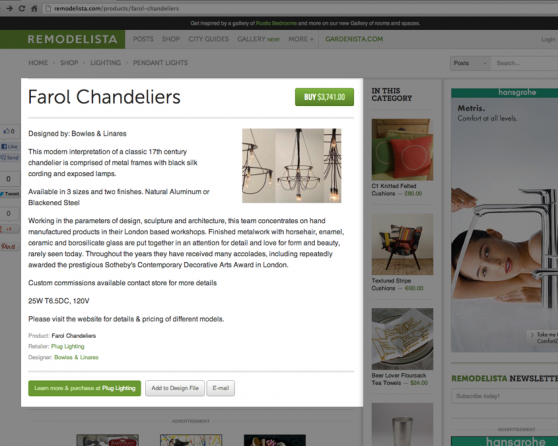
Lerman said the ad products are in development and will be launched in six months to a year. Right now, Say relies on its AdFrames unit and does custom campaigns with brands. It recently worked with Starbucks to create custom content and video interviews with Remodelista editors and designers, which was then turned into an ad unit and delivered across Remodelista.
Tempest is also built to support “editorial-driven commerce.” The bet: Editorial voice has more influence than a random recommendation because readers trust editors. This has obvious applications for a Say property like Remodelista.
“I just moved to San Francisco and am in the market for new furniture,” Lerman said. “I looked at Amazon for light fixtures and got ratings, etc. But it wasn’t a useful solution. At Remodelista, I find 10 results that our editor has selected. The point of view is more reliable than Amazon.”
Lerman believes modern publishers need to address marketing and commerce on one platform because “it lives in a syndicated world where not all content sits on the site. We need a new kind of platform for this new kind of media to take on all these problems.”


More in Media

How a fashion creator turned audience demand into a 500+ client styling business
A creator with a fashion merchandising degree speaks on her quest to diversify revenue fast, from styling to sweat equity investment.
Forbes looks to Google AI pilot for insights as publishers seek value beyond the click
Forbes has joined Google’s paid News AI pilot that gives Google expanded rights to its content to test new ways of providing readers with context about stories before they click through.

The Verge switches up its audience team to prepare for Google Zero
The Verge has restructured its audience development team to prioritize loyal readers over traffic and page views.