Secure your place at the Digiday Media Buying Summit in Nashville, March 2-4
Pandora gets into the ticket selling business while SoundCloud looks to sell

Pandora listeners now have something else they can do as they listen to their favorite artists: Buy concert tickets.
Streaming music is a tough business. Pandora, Spotify, Apple music and their ilk have to pay a large percentage of their revenues to cover song royalty fees (and even still manage to leave artists dissatisfied). Today, Pandora created a new revenue stream for itself by offering its 80 million monthly listeners personalized concert suggestions when their favorite artists are playing at a local Ticketfly venue.
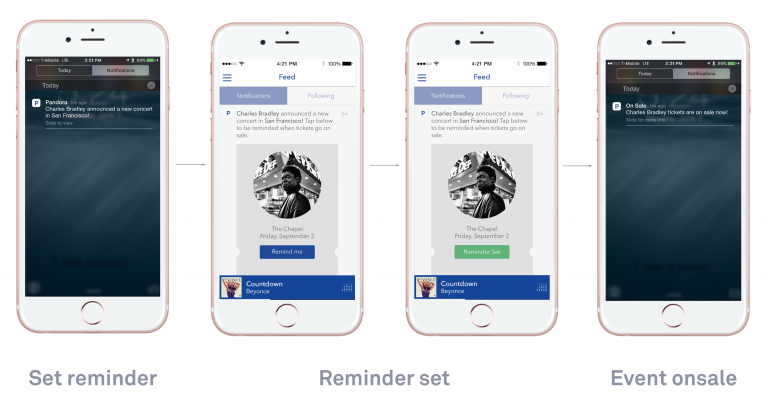
Pandora acquired Ticketfly for $450 million last year. When an artist creates an event on the ticket distribution app, Pandora will now send a push notification in its feed to users who may want to attend. Its in-app browser will further direct them to make a purchase on Ticketfly should they tap on the notification.
Spotify for its part has been offering concert suggestions since last November.
Analysts were largely bullish on the Pandora news. “For Pandora, it provides a significant and much-needed diversification of their revenue streams,” Ted Cohen, managing partner of digital entertainment consultancy TAG Strategic told Fortune. “For Pandora users, it offers a seamless and elegant way to connect them, up close and personal, with their favorite artists live on stage.”
If the tickets are not yet on sale when the event goes live, Pandora listeners can create a reminder after they click on the push notification so they can receive another alert when tickets are available.
Pandora will also start sending listeners personalized live event digest emails periodically later this year. Those emails may include special offers and promotions.
While Pandora and Spotify are tapping their listener data for new revenue streams, SoundCloud’s founders and investors, including investment firm Doughty Hanson & Co., are reportedly considering a sale at $1 billion. The company is reported to have around 175 million active users, who use the site to share, listen and record their own songs.
The free streaming service has failed to monetize that active user base despite introducing a subscription service in the U.S. back in March of this year, where users can pay $10 a month for ad-free streaming and increased access to more than 125 million tracks.
SoundCloud has also introduced advertising — including audio ads, promoted tracks and creator partnerships — to make money. Its latest public set of financial results show that in the three years from 2012 to 2014, SoundCloud lost $82 million and only brought in $40.8 million in income — a sour note indeed.


More in Media

From feeds to streets: How mega influencer Haley Baylee is diversifying beyond platform algorithms
Kalil is partnering with LinkNYC to take her social media content into the real world and the streets of NYC.

‘A brand trip’: How the creator economy showed up at this year’s Super Bowl
Super Bowl 2026 had more on-the-ground brand activations and creator participation than ever, showcasing how it’s become a massive IRL moment for the creator economy.

Media Briefing: Turning scraped content into paid assets — Amazon and Microsoft build AI marketplaces
Amazon plans an AI content marketplace to join Microsoft’s efforts and pay publishers — but it relies on AI com stop scraping for free.