for the Digiday Programmatic Marketing Summit, May 6-8 in Palm Springs.
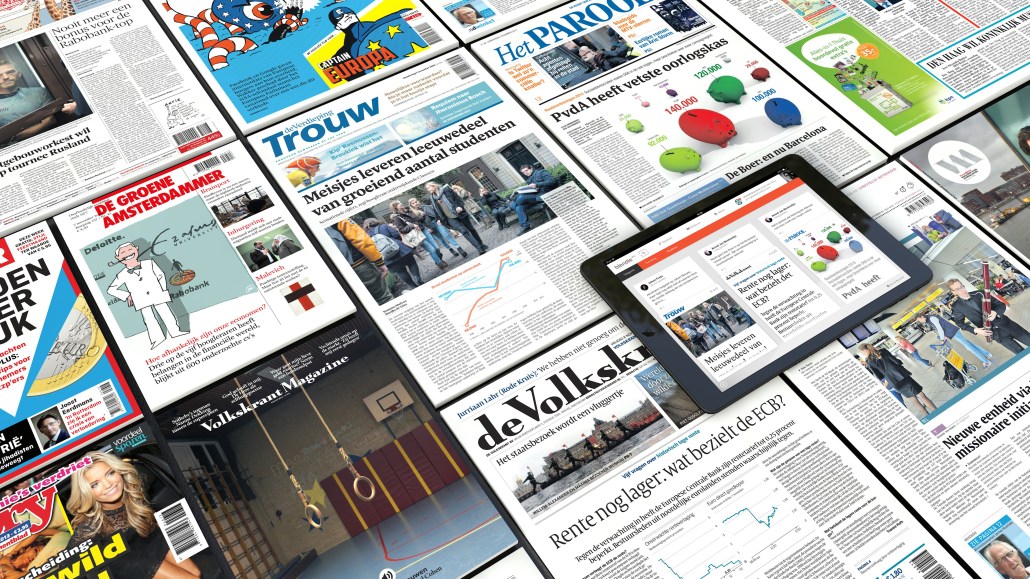
This spring saw an handful of startup magazine platforms launch in Europe. There appears to be a strong publisher interest in what would essentially amount to a Netflix-for-magazines, but you’d be forgiven for having a sense of déjà vu. U.S.-based platform Next Issue launched five years ago with a similar model but has failed to drive sustained reader interest.
That cautionary tale aside, European startups Readly and Blendle both hope to become the next great digital subscription platform. Readly follows a Spotify-like model, charging fixed monthly fee for access to a large archive of magazines. The company now has 37 publisher partners in the U.K. In total, Readly offers 558 global magazine titles in the U.S., U.K. and Sweden. The problem: It has yet to follow its rivals by offering content that adapts to users’ screens. Pinch and zoom PDF replicas are still the order of the day.
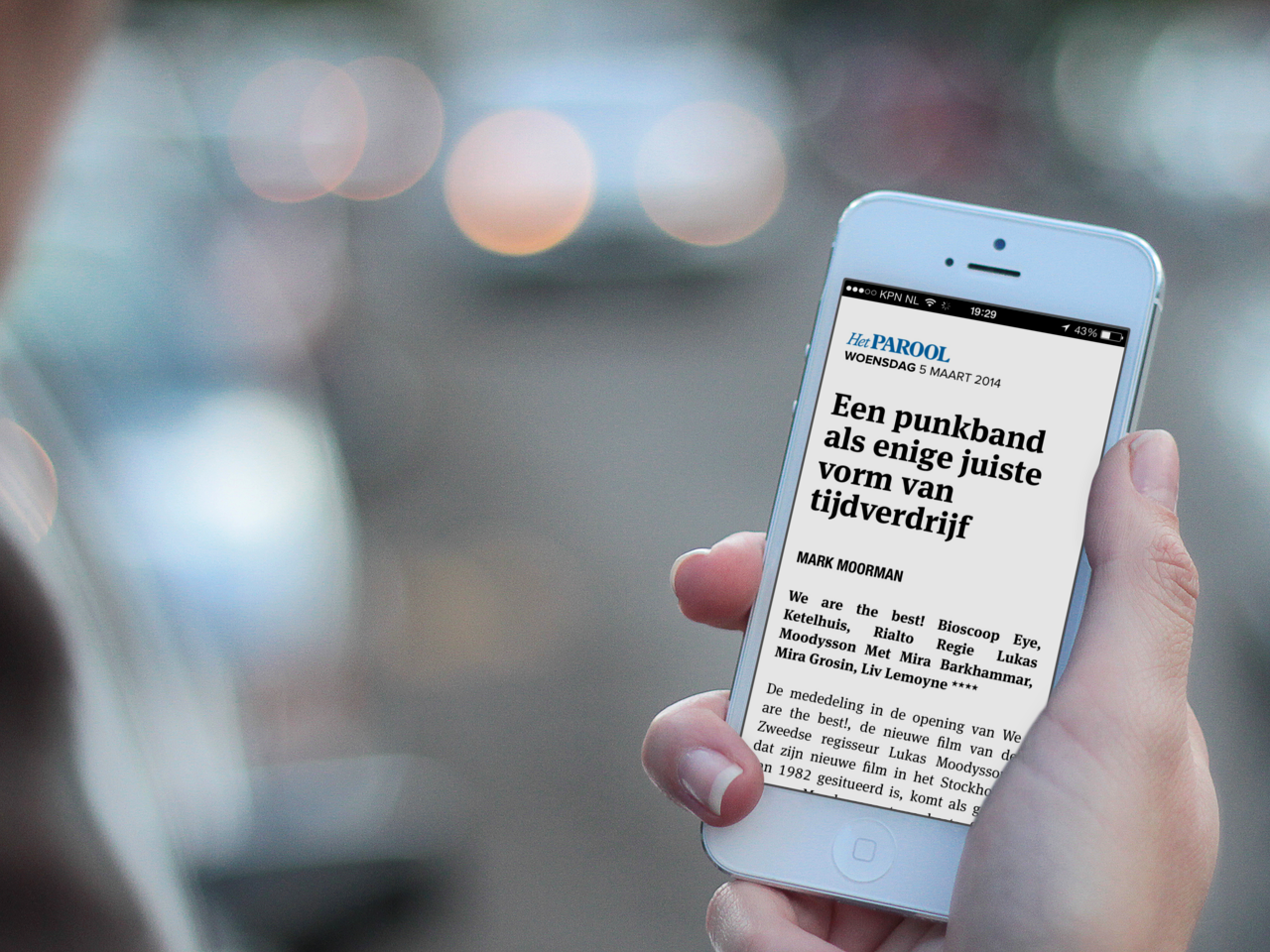 Blendle does things differently. The Dutch app is more comparable to iTunes, giving users the option to pay by the article instead of a flat monthly fee. The service also skips the need to pinch and zoom by adapting PDF replicas into HTML to fit the screen. Blendle claims to have 100,000 users — impressive considering the Netherlands is a smaller market. How much revenue they contribute is not known, however. The platform is currently only available in the Netherlands but is seeking partnerships with publishers worldwide.
In addition to its adaptive design, Blendle offers what others don’t: genuine social functionality. Users can create profiles, follow other users, share content and see who is else is sharing a particular article on Twitter. In comparison, Readly’s social functionality feels like an afterthought, offering only the ability to share shrunk-down images of a magazine page with a small preview — and requiring the recipient to download an app in order to see it. Here’s what a shared article looks like on a smartphone:
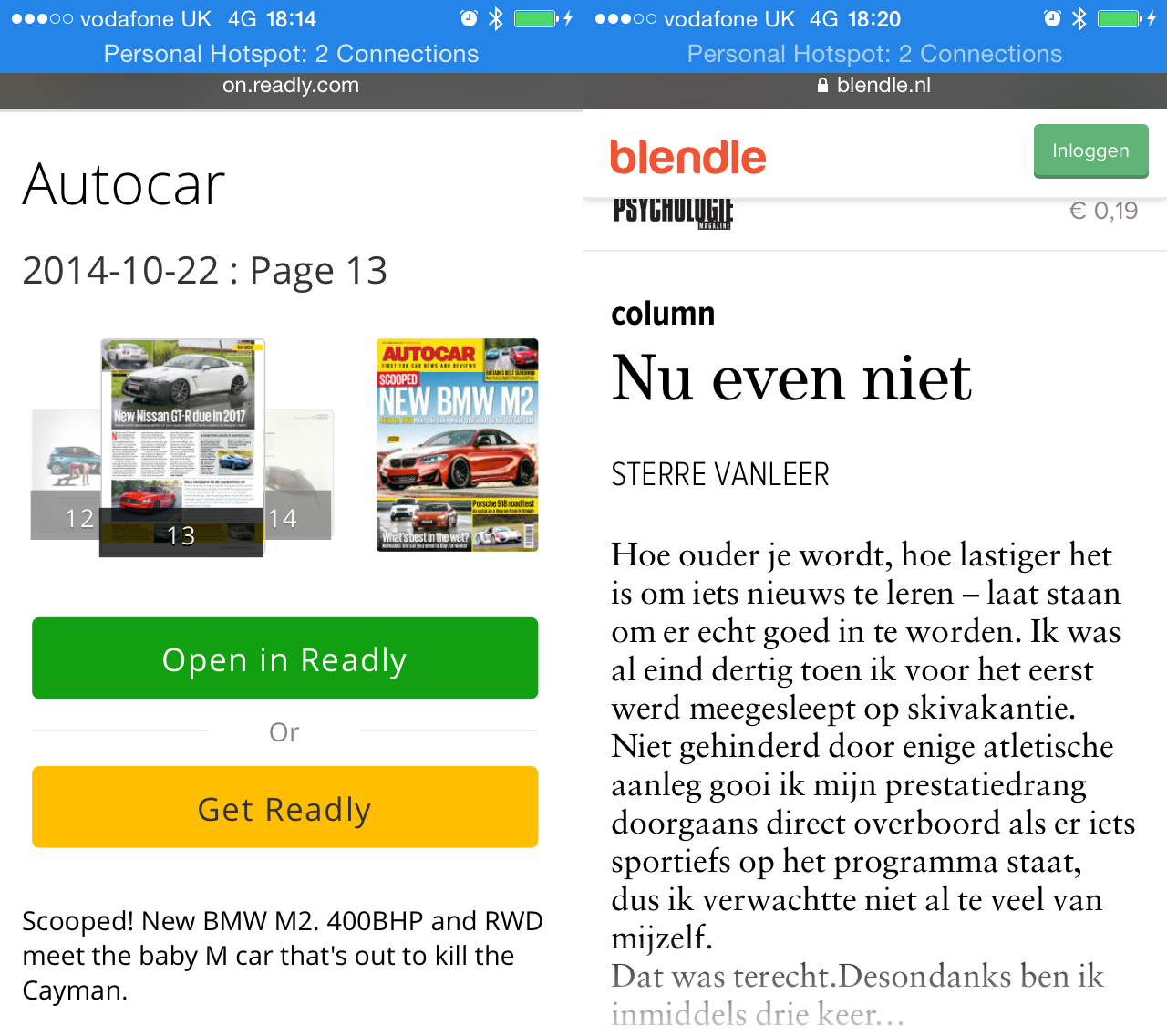
“The whole idea of social sharing is definitely an issue for magazines,” Peter Houston, founder of media consultancy Flipping Pages Media. “Think how much social is driving content discovery and consumption — without social, these apps potentially shut off a big chunk of potential readership.”
There are more of these startups coming down the pike, too. U.K.-based Readbug, founded in early 2014, is in private beta. It is currently seeking funds to supplement its £70,000 ($112,000) crowd-funded investment round before it launches publicly. Its founders say it’ll offer PDF to HTML conversion. Magzter, a U.S.-based magazine platform, is also developing tools to convert PDFs to HTML following a $10 million funding round last year. Apple’s Newsstand, much maligned by publishers, could someday in the future offer this functionality, having recently acquired Prss.
Matt Hammett, co-founder of Readbug, drew a distinction between his platform and competitors in the space. “Readily is very much a content archive akin to Netflix, which assumes you’ll take an hour to read an issue, perhaps on a tablet,” he said. “In contrast, we’re optimizing to the smartphone, which might offer no more 10 minutes of engagement at one time.”
But the question remains whether the Netflix, iTunes or Spotify models can even work for magazines, given the unique relationship readers cultivate with their favorite titles. “The industry is intrigued by the concept of Netflix for magazines, but people don’t read magazines like they watch movies,” said Houston. “I’m not sure people want a huge choice — I suspect they just want access to the few magazines they’re really into.”
For now though, publishers are content to see well-funded startups come forward and promote magazine consumption in digital form. Bauer Media’s head of ePublishing Jim Foster, a client of Readly’s, said, “It’s a good thing for the industry to have a well-funded startup come in and dynamically take our products to market. [PDF replicas] have a place in the market at the moment, but they are not the longer-term future. I’m sure Readly know that, though.”


More in Media

Ozone’s platform tries to simulate how publisher content appears in AI answers
Ozone’s new simulation platform aims to crack AI’s black box to let publishers model how their content gets surfaced in AI answer engines.

CNN builds in-house agent infrastructure as it prepares for AI-driven media trading
In Q3, it plans to test one or two properties to see how they’re interpreted by LLMs, before turning in Q4 to buyer behavior and whether budgets are being allocated toward agent-to-agent trading experiments.

How a ‘TikTok doctorate’ made 26-year-old Griffin Johnson a venture capitalist
Griffin Johnson made it big on TikTok back in 2019, now he runs a VC firm and uses his marketing expertise in the Derby world.