In graphic detail: Middle-tier creators are fueling the next phase of the creator economy
As top creators turn into celebrities commanding six-figure brand deals, a growing middle tier of creators is building sustainable businesses.
These creators — often niche experts, educators, or hobbyists turned entrepreneurs — are monetizing audiences through a mix of newsletters, courses, digital products and smaller sponsorships.
They represent the “everyday” creator, earning revenue through channels like affiliate commerce or data-driven partnerships. Many see their journey as more of a side hustle, while others seek to grow their reach through affiliate marketing programs. As we’ve seen with Urban Outfitters’ newly launched creator program (targeting creators with less than 10,000 followers), more and more brands want to invest in this middle tier to drive sales.
Less than a quarter of creators are macro or mega
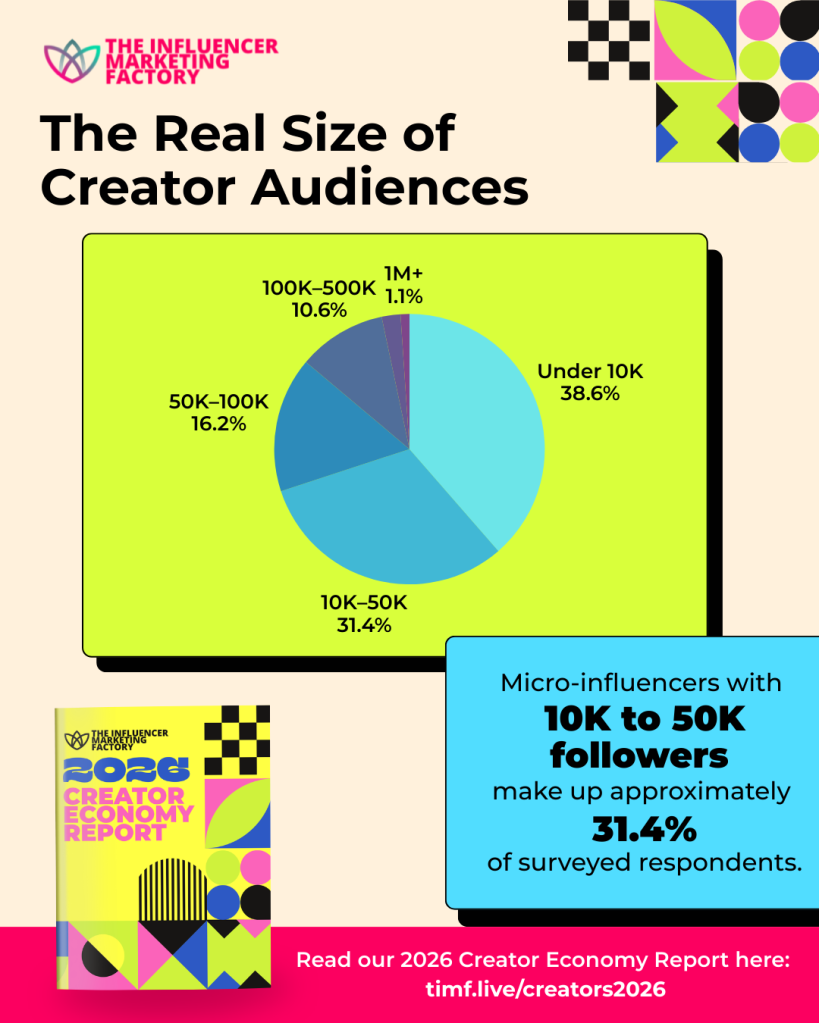
Credit: The Influencer Marketing Factory
Marketers and brands differ on how they define this so-called “creator middle class,” though the common definition is:
- Nano: 10,000 followers or less
- Micro: 50,000 followers or less
- Mid: 50-50,000 followers
- Macro: 500,000 to 1 million followers
- Mega: More than 1 million followers
And yet, while these remain useful labels for the market, they’re no longer reliable categories for predicting performance, stressed Xavier de Baillenx, CEO of AI-powered UGC sourcing and management platform Ramdam. He said the “middle class” of creators sits closer to nano and micro than mega or macro influencers. “It’s a huge group,” he added.
“Consumers are getting tired of seeing these big macro creators being kind of rotating ad units,” said Cami Téllez, founder of the newly launched AI-powered influencer marketing agency, Devotion. “There’s a never-ending supply of creators who are excited to work with brands that are new and are coming to the table with a desire to participate.”
But even though these creators make up an increasingly large slice of the creator economy pie, many say they aren’t getting compensated accordingly.
Larger creators are still making the most money — maybe even more than before
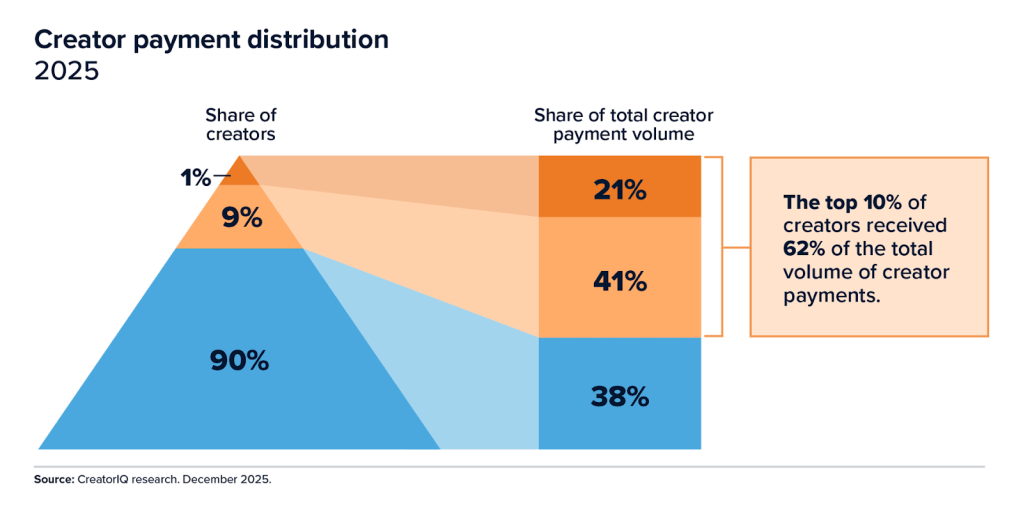
As CreatorIQ recently revealed, the top 10 percent of creators earned 62 percent of total payment in 2025, showcasing a widening compensation gap. With so many creators based in major U.S. cities with high costs of living, this could prove to be a problem.
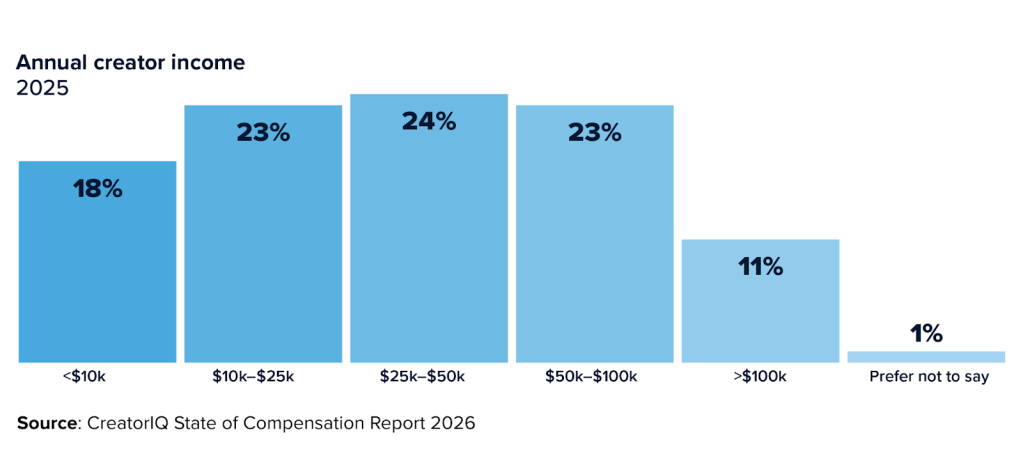
And though CreatorIQ reports that average creator earnings rose last year, but median pay stayed flat between 2023 and 2025 — a sign that growth is flowing to top-tier stars while most creators see little change.
More brands are looking to work with “creator operators” and micro/mid creators rather than viral stars. And more companies like Devotion and LTK are looking to make scaling partnerships with this creator middle class easier.
Mid-tier creators drive sales
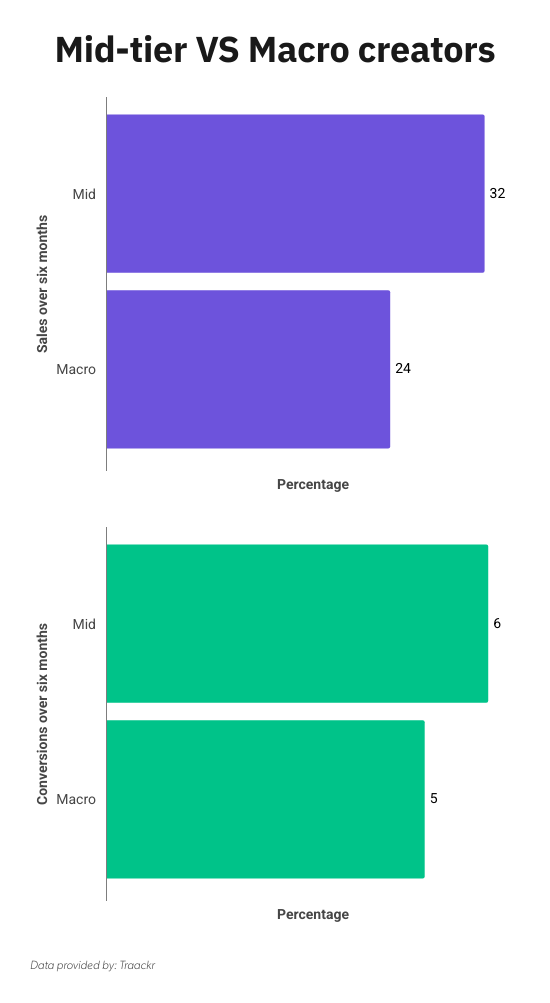
Affiliate marketing company Levanta told Digiday that the mid-tier creator segment has grown 10 times faster over the past six months than macro creators, with a larger increase in sales and a slightly higher conversion rate.
This points to smaller creators’ ability to motivate their highly engaged audiences to make purchases. A Levanta rep said the 50,000 to 1 million creator segment is the “fastest-growing engine of creator commerce,” and that macro creators are converting at a 6 percent rate, compared to macro’s 5 percent.
YouTube is a great option for mid-tier creators
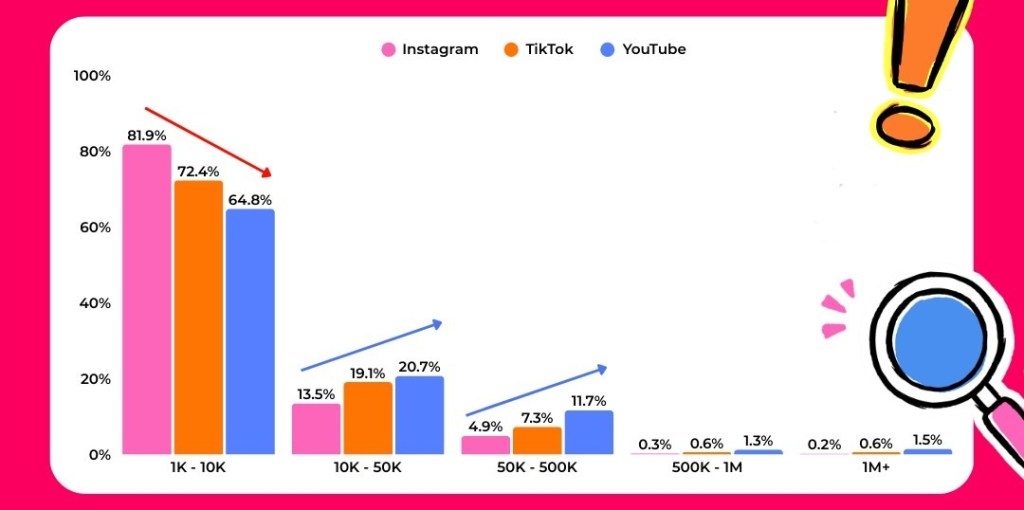
It’s difficult for entry-level creators to make a break in this economy, especially when it comes to sustainably building audiences. However, the Influencer Marketing Factory, a global influencer marketing agency, reports that YouTube appears to be slightly more successful when it comes to growth for mid-tier creators, with 20.7 percent reaching 10,000 to 50,000 followers, as opposed to TikTok’s 19.1 percent and Instagram’s 13.5.
YouTube has the most followers across every creator tier except for those with 1,000 to 10,000 followers. And with YouTube surpassing Paramount in ad revenue last year, it’s a viable option for creators to grow.
Credit: The Influencer Marketing Factory
Part-time creators make up nearly half of the economy
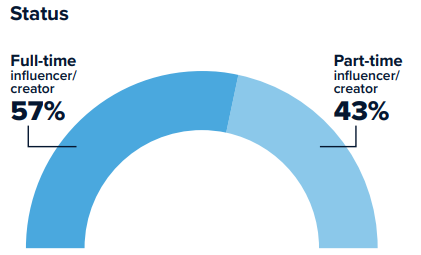
Nearly 60 percent of creators consider themselves full-time creators, while 40 percent consider themselves part-timers, per CreatorIQ’s State of Creator Marketing 2025-2026 report.
With 34 percent of agencies believing social commerce will be a major disruptor, according to CreatorIQ, affiliate links and TikTok Shop are expected to become even more central to marketing campaigns, which are two areas of the creator economy in which mid-tier creators thrive. This could mean that some of those part-time creators become full-time over the next few years — if paid accordingly, of course.
“Everyone wants to be a creator,” Téllez said. “With these trends around AI, people have more free time to make content, it’ll be easier to make content — I think all of that is relevant here. We’re seeing a world in which a nurse or a mom in Ohio or a college student has the same algorithmic potential as a macro creator.”
Credit: Creator IQ
The creator middle class is making money – just perhaps not enough
Credit: Influencer Marketing Factory
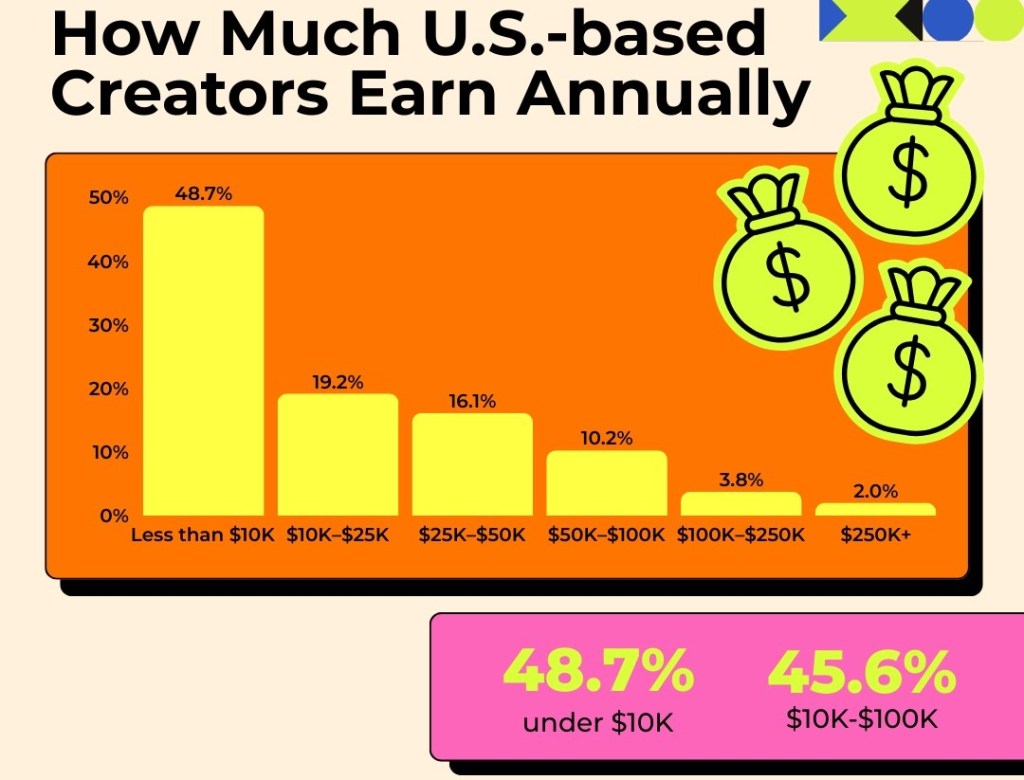
Nearly half of all creators surveyed by The Influencer Marketing Factory are making less than $10,000 a year for their content creation, while 45.6 percent make between $10,000 and $100,000. Only two percent of creators are making more than $250,000 a year. As Becca Bahrke, CEO of creator management firm Illuminate Social points out, “Earning $100,000 today is very different from earning $100,000 ten years ago.” If mid-tier creators are converting more sales for brands but aren’t making enough to turn their content creation into full-time work, something will have to give.
Mid-tier creators are largely based in New York and LA
There are more than 770,000 U.S. creators in influencer marketing Traackr’s database who fall in the mid-tier range (between 10,000 to 500,000 followers across all platforms). With location details of 43 percent of those creators, we see that the majority of mid-tier creators are based in either New York City or Los Angeles — where many creator opportunities lie.
But those are incredibly expensive cities to live in, and if these creators are doing this work full-time, they may not be earning enough.
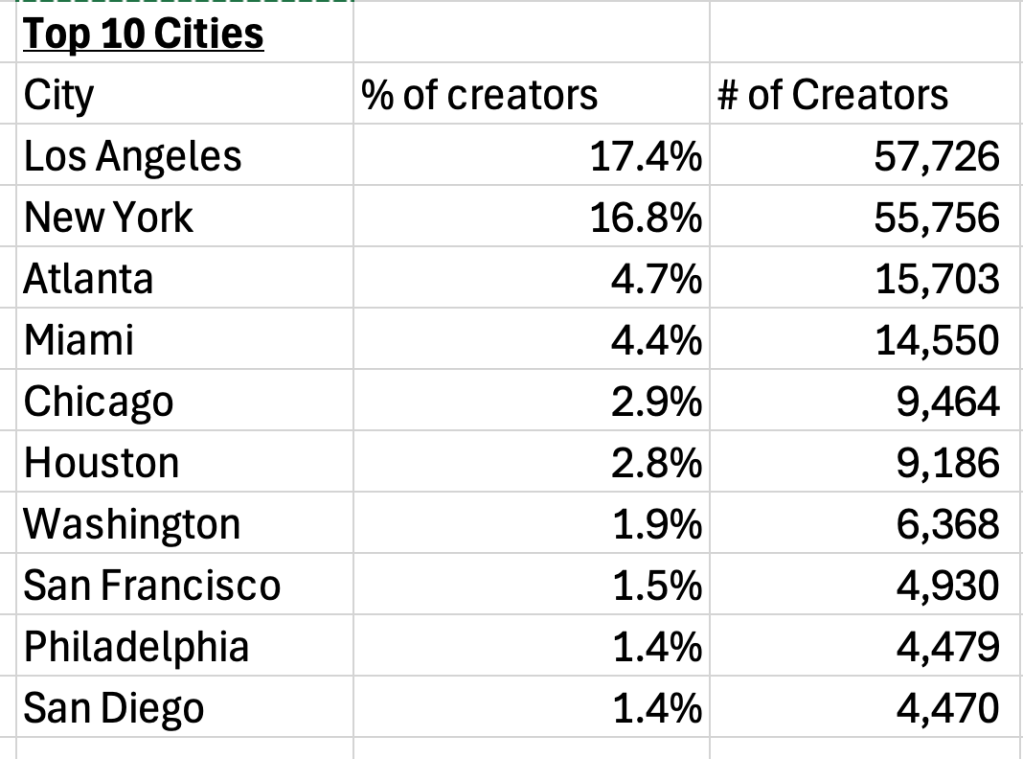
Credit: Traackr


More in Media

How a ‘TikTok doctorate’ made 26-year-old Griffin Johnson a venture capitalist
Griffin Johnson made it big on TikTok back in 2019, now he runs a VC firm and uses his marketing expertise in the Derby world.

Media Briefing: Publishers debate the value of AI licensing and GEO
Publishers may be gaining visibility in AI search, but execs say the lack of traffic and licensing revenue is raising doubts about the payoff.

Meta’s bid to woo creators to Facebook just might work, despite its recent legal woes
Meta’s recent legal woes likely won’t deter creators from trying out its new Facebook Creator Track, according to marketing experts.