Join us Dec. 1-3 in Nashville for the Digiday Programmatic Marketing Summit
Hot Ones creator Sean Evans on YouTube vs. TV, the interview boom and what comes next
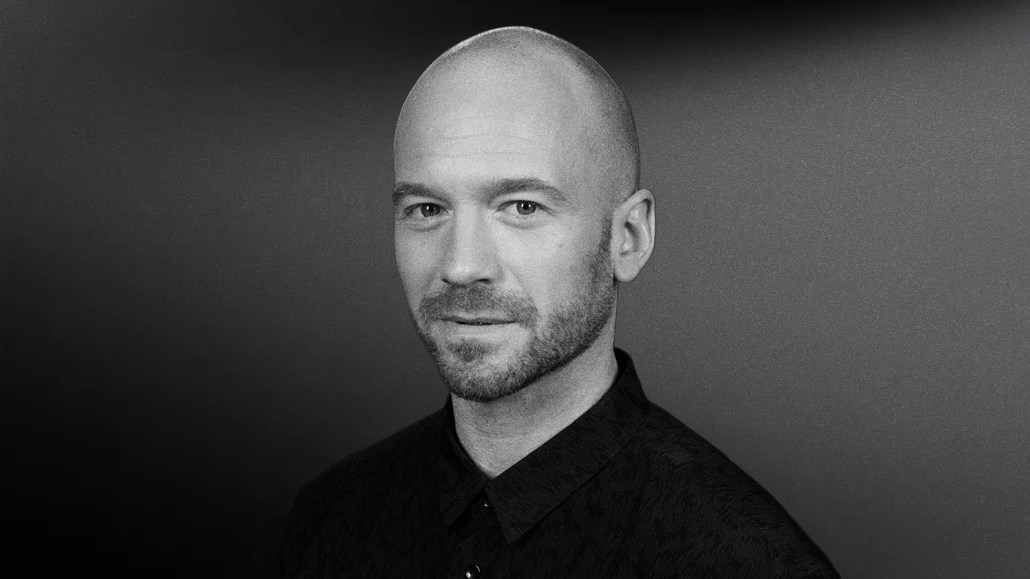
Sean Evans, the man behind the hit YouTube celebrity interview series “Hot Ones,” was named one of Time’s 100 most influential creators of 2025. He was early to CTV, early to the interview-as-spectable creator format, and among the first journalist-slash-creators to turn a YouTube show into a recognizable franchise.
He has watched platforms and formats rise and fall, and has a front row view of how creator-led shows can move culture – and brand dollars.
Digiday sat down with Evans to talk about how the creator economy got here, how interview formats and platforms have evolved, what’s real versus hype around AI and CTV, and where the next wave of creator business is headed.
Here’s what Evans had to say.
Paradigm shifts are now constant, not generational
Evans has lived through multiple shifts during his Hot Ones run, from the podcast boom to the CTV push to the rise of TikTok and livestreaming. He argues that media businesses still looking for a “new normal” misunderstand the environment, while creators are built for permanent flux.
“I do think that you’ll just see like a Wild Wild West, just passing the torch – these paradigm-shifting moments that used to happen in media would be once a generation. People are listening to the radio for most of their lives, and then my gosh, look, live television…and then you get color television and cable, and then the internet. But just in my time of doing this show, – and I don’t think of myself as that old, I’m getting older and I’m kind of like a dinosaur by like YouTube standards or like internet show standards – but I’ve seen like eight of those paradigm-shifting moments just over the course of my career.”
Those moments result in eyeballs shifting from platform to platform, and new generations of creators rising up to meet the moment.
“There’s so much tug of war, push and pull. There’s a new app that comes out. There’s a new platform that catches fire,” Evans said. “I’ve shot with Kai [Cenat] when he moves around, it’s like Justin Bieber moving around. Guys like iShowSpeed, they’ve become these globally famous people. I have a job that didn’t exist when I graduated college, and these guys have jobs and careers that didn’t exist even four or five years ago…It’s just going to keep happening over and over and over again, and eventually I’ll be too old to know what’s going on, and I’ll have lost my touch and my fastball and it’ll be like so overwhelming to me. The way media is going to look in 10 to 15 years will probably be completely unrecognizable to what’s happening now, and on and on it goes.”
Platform distinction is collapsing at the viewer level
Having seen how much CTV and creator-led shows have grown over the last 11 years, Evans stressed how it’s tough to distinguish between content across streaming platforms.
“I don’t distinguish between YouTube and Netflix and HBO Max – those are apps that I just watch on my TV, I find my shows…There’s a lot on YouTube that is programming, and you’re seeing it in the campaign that’s happening this summer; there’s all these shows that if you didn’t know that you opened that app, you wouldn’t know if this is a Netflix show or a YouTube show,” he said. “Those lines have been so blurred. And then when you look at the cultural penetration of these shows, when you look at the ratings of these shows, when you look at the caliber of guests on these shows, they all rival one another, and they’re all worthy of competition and comparison with one another.”
Interview formats have exploded and the competition has caught up
When Hot Ones launched in 2015, there weren’t many creator-led celebrity interview formats. Today, video podcasts and creative (often funny) interview formats, from Alex Cooper’s “Call Her Daddy” and the Kelce Brothers’ “New Heights” to more traditional media outlets doing gamified celebrity content like BuzzFeed’s puppy interviews and Wired’s Autocomplete Interview – are everywhere.
“When we started [Hot Ones], there weren’t that many interview shows on the internet and almost no celebrity interview shows on the internet. It was kind of an event to have somebody who you typically see on the late night couch, doing an internet show,” Evans said. “Podcasts were big, but certainly not as big as they are now, and they weren’t so guest-driven. Now there’s these shows that are guest-driven, you have all these new formats, and you have a lot of celebrities, who used to only be on the late night couches or magazine covers doing these different internet shows, because that’s where the audience is.”
With more variety and opportunity comes more competition
“It’s certainly a much more crowded and competitive marketplace now than it used to be. And the standard of interviews – there weren’t that many interview shows, and then many of them were not good at all. Now I think there’s a lot of interview shows, and many of them are quite good, so the standard across the board, the bar has been raised, and then the volume is much larger than it used to be,” Evans said. “I think that there’ll only be more…A kid growing up this these days who has ambitions in broadcasting, I don’t think they’re dreaming of hosting ‘The Tonight Show’ one day, I think they’re dreaming of starting their YouTube channel.”
Hot Ones is a salve for empty, high-concept stunts
Though Hot Ones may have spawned dozens of copycat interview shows, Evans stressed that, at its core, the show was an attempt to conduct celebrity interviews that felt less like canned PR stunts and more genuine.
“The interview is the oldest construct in the history of media. People sometimes ask me, ‘What’s your next thing, what’s your next show?’ My next show is gonna be called “Just an Interview Show with Sean,” we’re just gonna sit there and talk,” he laughed. “[With Hot Ones] there was a problem that we were trying to solve…we did it to disrupt the PR-driven flight pattern of a celebrity guest. What if we had them eat increasingly spicy chicken wings? A good, dumb idea, but there was a reason for it. There was a purpose for it.”
Hot Ones broke ground in a more structured and buttoned-up PR-driven where celebs sit down and answer predetermined questions about whatever project they were pushing at the time – ushering in an era in which celebs want to appear more approachable, more human, and real during press runs.
A potential return to Old Hollywood-style content
With platforms and media companies all trying to cash in on the creator boom with big brand deals or production partnerships, what does a Time 100 creator think the space will look like in the future? Technology will continue to innovate and streamline production, but Evans thinks the consolidation of major studios and networks could inspire a new approach to how content is made and packaged.
“Everyone is fighting for the same bandwidth of attention; it gets more competitive, and you see it in the way these big studios and big networks are struggling – the ones that are built on scale all seem to be having financial problems,” Evans said. “Maybe instead of these giant, hulking media companies, everything’s kind of like a strip mall media company, or a garage media company…Right now there’s endless ink spilled about the trouble that late night is having: ‘There’s too much overhead, it’s too expensive.’ But you have these YouTubers who are doing shows at a fraction of the cost with twice the audience. Economically it may not make sense but what if aesthetically everything becomes more lo-fi, and that kid who dreamed of hosting The Tonight Show is now the top podcast on Spotify.”
He then wondered if that low-fi, low-budget, creator-led content made as a sort of protest against ballooning studio budgets could then swing the pendulum back.
“Maybe things get like too low-fi and too real and like too relatable, that people crave an escape that is like something bigger, brighter, lights, camera, action, Hollywood, and that makes a return because people get bored of like the current landscape of people in windowless rooms and windowless podcast studios, talking to each other,” he said. “Maybe that’s my big bold prediction that like old Hollywood’s gonna make a comeback – I’m just throwing darts right now…things change a lot and change fast, so who knows?”
AI won’t disrupt Hollywood or creators
Lastly, and maybe most importantly, what about AI? As deepfakes become a more pressing issue across Hollywood and the creator economy, is Evans concerned it could upend Hollywood or replace people like him? Not really.
“It’s hard for me to forecast AI’s impact on media – deepfakes are crazy but it might be more paradigm shifting in the scam economy than it is in the media economy,” he said. “I don’t know if it’s this great disruptor to Hollywood or this great disruptor to creators, I guess only time will tell, but I think so far that upheaval has been, if there is any effort to do it, kind of a failure.”


More in Media
Reach CEO touts Google AI deal as a template, steps up pressure on OpenAI over scraping
Digiday spoke with Reach CEO Piers North about his plans to make its Google AI content deal a blueprint framework for other LLM deals, and its recent cease-and-desist letter to OpenAI.
Social commerce edges past SEO at The Independent for the first time
The Independent’s social-commerce revenue edged past its SEO-based commerce revenue for the first time in September, CEO Christian Broughton said at Digiday’s Media Strategies event in London this week.
Ownership, control, margins: the brand playbook for microseries is still taking shape
Creator-led microseries are hot, and brands want in, but everyone’s still figuring out the structure of the deals and the content itself