Digiday Research: With ad businesses suffering, publishers turn even more to subscriptions

This research is based on unique data collected from our proprietary audience of publisher, agency, brand and tech insiders. It’s available to Digiday+ members. More from the series →
The impacts of the coronavirus outbreak are still just beginning to be felt on the economy. In media, the global pandemic has meant a forecasted drop in ad revenue and event revenue for publishers. About 88% of them say they will miss their forecasts for the year.
In response, publishers are also ramping up focus on certain parts of their business.
A new Digiday Research survey on the business impacts of the coronavirus outbreak has found that 40% said spending more resources on building their subscription businesses is their biggest priority, while 32% of them also indicated that branded content programs and “virtual events” are now taking up more of their attention and resources.

But for many, spending more resources simply isn’t an option. Some of the publishers who took this survey said that they “aren’t spending resources because we can’t afford to.” Another said: “We’re not reallocating resources, we’re diminishing resources.” Others are cutting any sort of spending radically, including on overheads like office space.
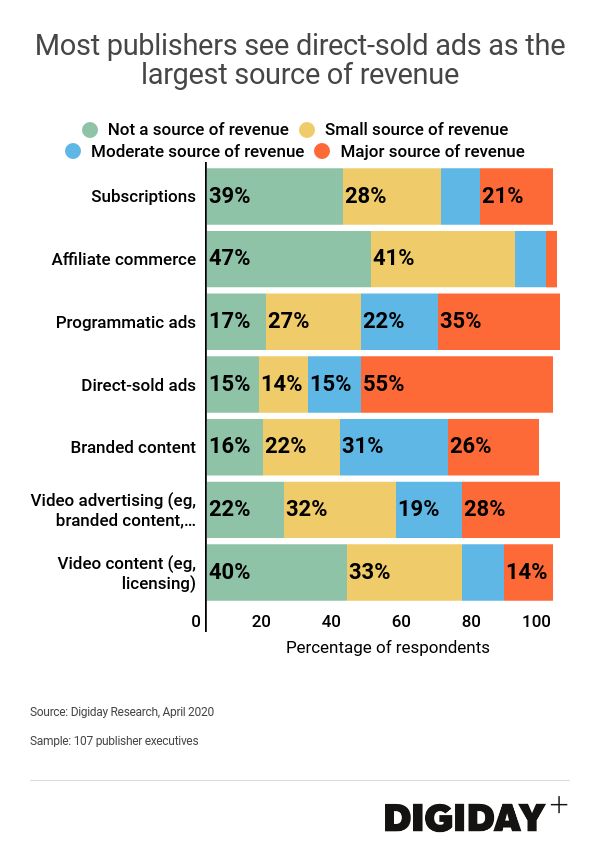
According to our benchmarking research, the priorities before the outbreak were growing direct-sold ads, programmatic ads and branded content revenue. Subscriptions were the fifth priority for most publishers heading into the second-quarter, just as the outbreak started to make its presence felt in the U.S.


More in Media

How a fashion creator turned audience demand into a 500+ client styling business
A creator with a fashion merchandising degree speaks on her quest to diversify revenue fast, from styling to sweat equity investment.

Forbes looks to Google AI pilot for insights as publishers seek value beyond the click
Forbes has joined Google’s paid News AI pilot that gives Google expanded rights to its content to test new ways of providing readers with context about stories before they click through.

The Verge switches up its audience team to prepare for Google Zero
The Verge has restructured its audience development team to prioritize loyal readers over traffic and page views.