Join us Dec. 1-3 in Nashville for the Digiday Programmatic Marketing Summit
Digiday Research: Publishers prioritize direct-sold ads heading into the second quarter

This research is based on unique data collected from our proprietary audience of publisher, agency, brand and tech insiders. It’s available to Digiday+ members. More from the series →
Direct-sold ads are still the biggest source of revenue for publishers online, according to the latest Digiday Research.
Our six-month benchmarking survey found that 53% of publishers said direct-sold advertising is a large or very large source of revenue for them. Programmatic ads are a large source of revenue for 35% of publishers, while video advertising is for 28%.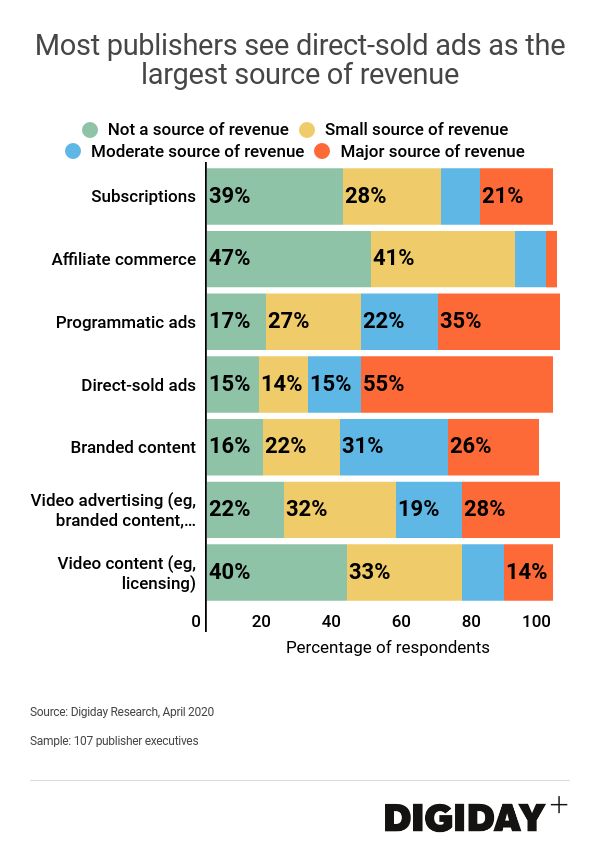
That’s in line with last fall’s findings: Of the 135 publishers surveyed by Digiday last fall, more than 50% of publishers reported that direct-sold advertising was a large or very large source of revenue for them. Video advertising was also another bright spot, with 28% of publishers reporting it as a large or very large source of revenue, as were programmatic ads, with 35%.

Subscriptions, in the meantime, are a large or very large source of revenue for only 21% of publishers. About 40% of publishers say it isn’t a source of revenue for them at all — flat from six months ago.
Still, growing that direct reader revenue was the biggest priority for publishers heading into 2020: Back in October, 46% of respondents said growing subscriptions was a major focus for them. Now, 40% of respondents said growing subscriptions is a major focus as they look to finish out the year.


More in Media

Creators say it’s difficult to make money from news — with platform rules and brand guidelines
With more people getting news from creators than traditional media, those creators are still trying to build sustainable businesses.

Why CNN International is building for agentic ad market that barely exists yet
CNN International is still chasing its first agent-sold dollar by Q1.

Media Briefing: The transatlantic push to rein in stealth bots is gathering pace
U.S. and U.K. publishers are pushing for laws to crack down on stealth AI crawlers as bot scraping surges and demands for transparency grow.