Digiday Research: 70 percent of publishers say they personalize content
This research is based on unique data collected from our proprietary audience of publisher, agency, brand and tech insiders. It’s available to Digiday+ members. More from the series →
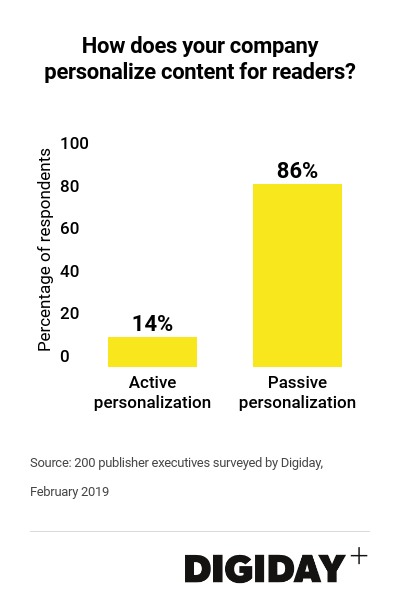
A survey of 200 publishers by Digiday this month found that most (70 percent) personalize the content they deliver to visitors. Once frowned upon by editors and consumers alike, the practice is becoming mainstream or publishers are now more willing to talk about it.
However, readers might not always be aware they are served different content than the person sitting next to them. Eight-four percent of publishers that do personalize content said they conduct passive personalization rather than active personalization. Passive personalization utilizes information like readers’ location or browsing history to tailor to the content they see, whereas readers self-select the content they wish to see more or less of in active personalization.
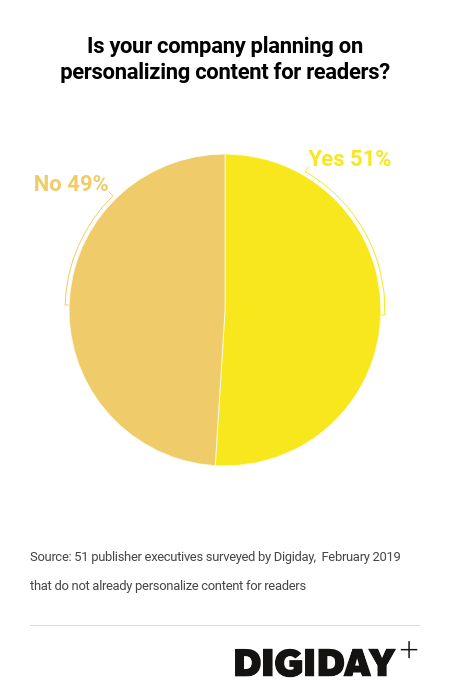
Over time, personalization is likely to become more popular among publishers. Half of publishers that do not currently personalize content said they are developing plans to do so
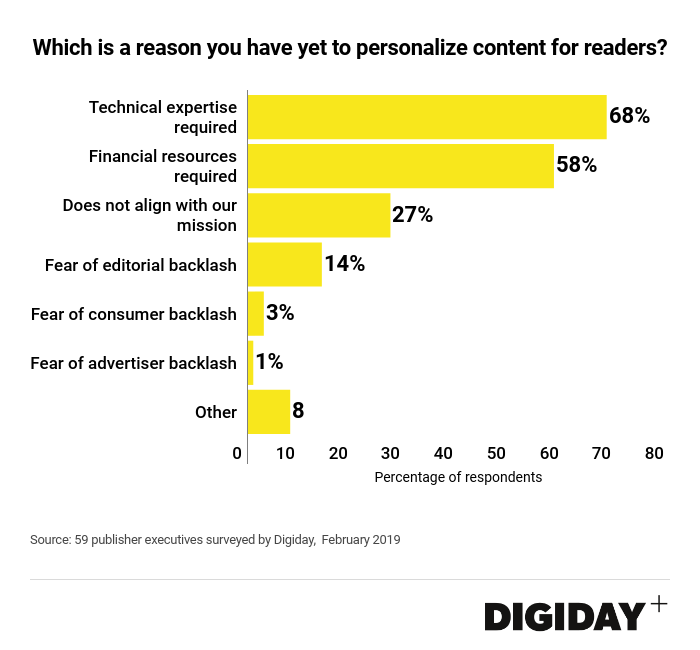
Costs, both technical and monetary, are holding publishers back from achieving personalization. Sixty-eight percent of companies that do not personalize content said they lack the technical expertise required and 58 percent were short of funding for such projects.
Fewer respondents choose not to tailor content for readers due to ethical qualms or potential sources of backlash according to the Digiday survey. Only a quarter of respondents not personalizing content said it ran counter to their editorial missions and just 14 percent were worried about potential pushback from editors.
.
“Overall, I’ve seen publishers worry about not sounding caught-up if they’re not doing some form of personalization,” said one anonymous publisher executive. “They think they’re being left behind.”
Part of why personalization has become so widespread among publishers is that it has become a catchall for a number of projects. Tailored content has evolved beyond algorithms customizing homepages and now includes everything from popular-articles widgets to newsletters constructed based on reader interests.
“We don’t hear about personalization from readers,” said Jason Jedlinski, svp of consumer products at Gannett. He pointed out to social platforms like Facebook and Twitter for changing readers expectations around personalization.


More in Media

Media Briefing: ‘Cloudflare is locking the door’: Publishers celebrate victory against AI bot crawlers
After years of miserably watching their content get ransacked for free by millions of unidentified AI bot crawlers, publishers were finally thrown a viable lifeline.
Vogue faces new headwinds as Anna Wintour — who agency execs say made ad dollars flow — shifts focus
Anna Wintour’s successor at Vogue will have to overcome the myriad of challenges facing fashion media and the digital publishing ecosystem.

Here are the biggest misconceptions about AI content scraping
An increase in bots scraping content from publishers’ sites represents a huge threat to their businesses. But scraping for AI training and scraping for real-time outputs present different challenges and opportunities.