for the Digiday Programmatic Marketing Summit, May 6-8 in Palm Springs.
Creator scandals have turned morality clauses into brands’ go-to exit strategy
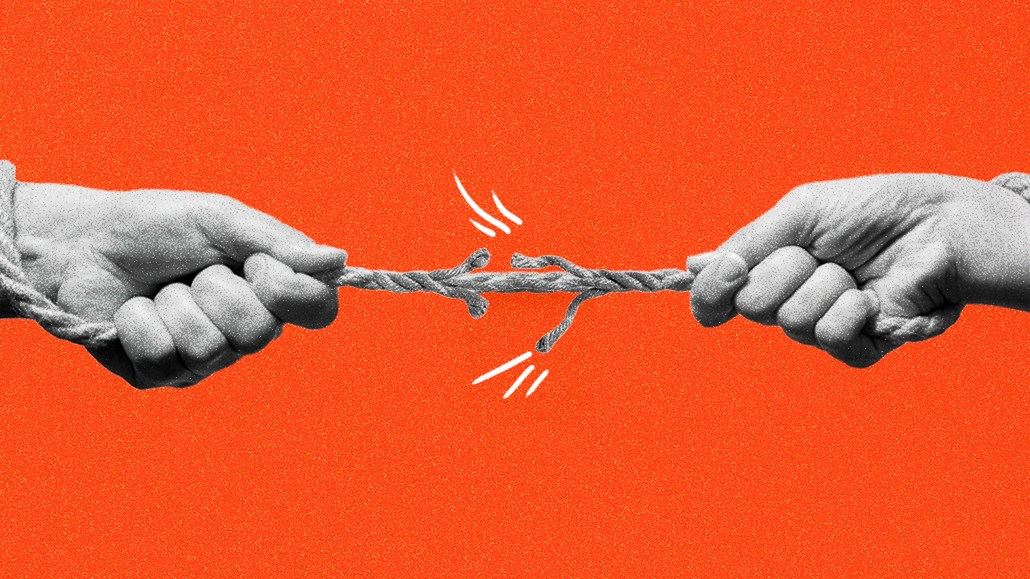
Whether it was Edie Parker quietly scrubbing every trace of Summer House star Amanda Batula from its website days after she revealed a secret relationship with one of her cast mates, or ABC canceling an entire Bachelorette season after TMZ published footage of its star in a physical altercation with her then-boyfriend, the pattern is the same: when a creator becomes a liability, brands reach for the escape hatch. Experts believe that hatch has a name: the morality clause.
Baked into the boilerplate of most influencer and creator contracts, morality clauses required talent to maintain broadly defined behavioral standards or face termination. In practice, they hand brands near-unilateral power to walk away from partnerships — no court, no arbitration, no explanation required.
“If they can’t control the situation, they’ll control the deal,” said Nima Tahmaseebi, founder of NT Legal, a creator-focused law firm. “They will make sure they have final say on how this goes, and that happens time and time again.”
It’s risk calculus, ultimately. Brands are writing the checks and they want contractual language that reflects that. Clauses are broad enough to cover almost anything — from hateful speech made online to criminal offenses. It’s why, lawyers argue, creators need serious legal representation before signing.
“There’s a huge imbalance in power,” said Brooke Ash, founder of digital business and influencer law firm, For Founders. “Even if you’re a big influencer, you have these large corporations that have boilerplate agreements that include a clause along the lines of ‘it’s our discretion and anything that doesn’t align with our brand, we can terminate the deal’.”
The morality clause trapdoor
That trapdoor can open almost any reason — or none stated at all.
The Edie Parker case sharpens the point precisely because no public explanation was given. Neither the brand nor Batula said publicly why the partnership ended — and yet every marketer and legal expert Digiday spoke with reached for the same explanation: a morality clause.
“In light of the newly released video just surfaced today, we have made the decision to not move forward with the new season of The Bachelorette at this time, and our focus is on supporting the family,” a Disney spokesperson told Today, referencing the investigation around reality star Taylor Frankie Paul. Neither Edie Parker nor Batula replied to a request for comment
“The real headscratcher is: Why did a cannabis lifestyle brand want to separate the message from the messenger so quickly?” said Deb Gabor, founder and CEO of brand strategy consultancy firm Sol Marketing. “I don’t see how this poses a risk to the brand… it seems off-strategy for a cannabis brand to dissociate itself with someone when there’s no criminal activity.”
The imbalance Ash described isn’t manufactured, but is the predictable result of an industry that scaled faster than the legal frameworks protecting the people at its center.
“I had an ABC Bachelorette deal earlier this year, where we didn’t have a morals clause because the agency wouldn’t allow us to negotiate (a major red flag), but the talent still wanted to do the deal,” said Kayla Moran, founder and managing attorney of Kayla Moran Law. Moran said the brand ultimately canceled the partnership. “The talent was really not looking forward to posting during the backlash,” she said.
Some lawyers are increasingly trying to make these clauses kinder to creators.
“We try to make it more objective, more observable…wave in front of me the number of articles that this scandal actually affected, because this isn’t the moral police, this isn’t the pope coming down saying this is good or bad,” Frank Poe, founder of Poe Law.
It’s a standard that rarely gets applied. Poe has seen clauses triggered because a creator was filmed crowdsurfing at a concert during a brand activation, the brand’s justification being venue rule violations. In most cases, creators accept these repercussions, because fighting back means a public legal battle against a corporation with deeper pockets and most aren’t willing to go there.
“It would be more expensive to take them to court and not a lot of people would spend that time, especially a public figure. So they’re kind of trapped,” Ash said.
But Poe told Digiday in that instance, he pushed back, and was able to negotiate a financial settlement for the creator he represented.
“Brands try to rely on vagueness, and when you call them on it they tend to buckle” he said.
The aftershock
Expect the fights over morality clauses — how broad, how triggered and how contested — to get louder.
“Brands are not looking for saints,” Poe said. “They don’t need saints to be effective, there is some element of notoriety and street cred to working with creators.”
Creators, meanwhile, are getting savvier about the terms they’ll accept.
“As the creator economy grows and creators become increasingly brand conscious themselves, they gain more leverage. And they should,” said Moran. “It’s not about taking away power from brands, it’s about giving creators and their teams more autonomy.”
Though these situations are not unique to creators and influencers, the power of influencer marketing makes brand partnerships with potentially polarizing figures incredibly enticing. Brands may still be somewhat hesitant to give full-throated backing to the Batulas of the world, but they aren’t going to stop hiring people like her for collaborations and activations.
“Brands care most about the court of public opinion,” said Molly Lopez, founder and ceo of Sparo Marketing.
Lopez noted last year’s controversial American Eagle campaign starring actor Sydney Sweeney. Neither the brand nor Sweeney acknowledged the online backlash, and American Eagle reported its total revenue increased 6% to $1.4 billion in Q3 of last year.
“In the very polarized reality we live in, you’re never going to make everyone happy,” Lopez said. “If I was Edie Parker’s brand advisor, I would have told them to take a beat.”


More in Media
‘I’m playing the long game’: Journalists are striking out alone and discovering the business is toughest beat of all
News Creators have become preferred sources for younger viewers, but how do they grow and sustain their independent endeavors?

In Graphic Detail: New data shows publishers face growing AI bot, third-party scraper activity
New data shows publishers face a surge in AI bots and third-party scrapers harvesting content without compensation.

Media Briefing: Another AI threat emerges for publishers: the third-party scraper
A growing network of third-party web scrapers is fueling an AI content licensing market, where publisher content is scraped and sold.