Join us Dec. 1-3 in Nashville for the Digiday Programmatic Marketing Summit
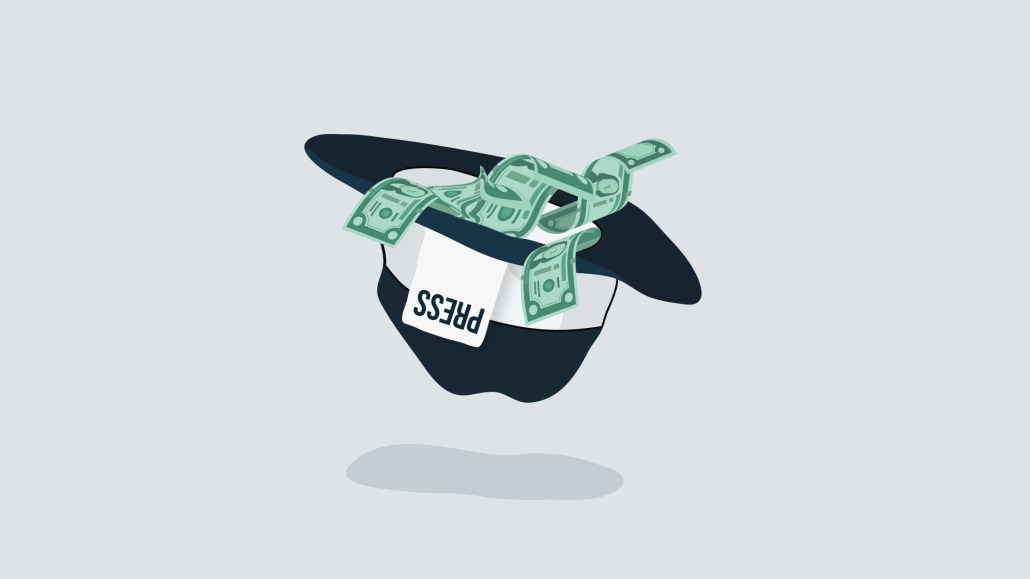
A business reporter at The Boston Globe had an idea that drove 16% of the subscriptions the news publisher gathered during this recent Cyber Week.
While many news publishers, the Globe included, spent last week promoting subscription offers to their readers — often backed by steep discounts — the Globe’s reporters also put some effort into Subscribe Sunday, an unofficial holiday dreamt up by Janelle Nanos, a Globe business reporter who had the idea during Cyber Week in 2018.
After talking things over with the Globe’s editor-in-chief earlier this fall, Nanos worked with the paper’s audience development and web teams to work up Subscribe Sunday marketing language and marketing assets that could be shared on Twitter, as well as a landing page to make it easier to track people who clicked on the publisher’s Subscribe Sunday offer: Six months of digital access for $1. (A full year’s subscription to The Boston Globe costs $1 per day)
Though the Globe originally imagined Subscribe Sunday for itself, the paper decided to tap into a network it assembled last year, when it led an effort across 300 different newspapers to publish editorials on the importance of a free press. Nanos’ colleagues worked up non-Globe marketing messaging and assets and for those partners.
Members of 40 different newsrooms participated, Nanos said, some more officially than others. The New York Times PR Twitter account promoted it; Des Moines Register and The Maine Press-Herald, for example, built a separate gift page which it circulated using Twitter, while reporters at The Virginian-Pilot shared posts on Twitter promoting it. Evan Smith, the CEO of The Texas Tribune, tweeted about it, though the nonprofit did not coordinate any efforts around Subscribe Sunday.
Subscribe Sunday was responsible for 16% of the subscriptions the Globe sold during Cyber Week, Nanos said, who declined to provide hard numbers. The majority of the Globe’s subscriber base is digital; last month, Nanos said, the Globe surpassed 150,000 digital subscribers.
Nanos said her bosses saw the campaign as a success, and plan to do something similar in 2020. But beyond just adding new subscribers to the rolls, Nanos said she thinks the greater long-term value could come from the insights offered by the people who were moved by its message.
“Our thought is: Can we survey the people who use this message, and what can we learn from them going forward?” Nanos said. “Can we learn more about this population and how to serve them better going forward?”
Many news publishers that have begun focusing on consumer revenue have concluded they need to work on explaining the dire financial straits local news is in. For example, many used Giving Tuesday this past week to raise awareness of the problems local news publishers face as well as attract donations.
Beyond individuals buying subscriptions for themselves, Nanos said she thinks Subscribe Sunday could be buoyed more in further years by people looking to give subscriptions as gifts to one another; she heard several questions about that on Twitter this past week.
“It’s not just about gift subscriptions,” Nanos said. “It’s about doing your part for democracy.”


More in Media

The Hill adds interactive election tools to subscription offering ahead of the midterms
The Hill is betting on interactive subscriber-only features to help grow its new subscription business ahead of the 2026 midterms.

The Daily Mail tests GEO with brands ahead of AI visibility product
The Daily Mail is running around a dozen GEO tests to work out what works before turning its AI visibility offering into an official product early next year.

Meta delays rollout of updated commercial terms amid publishers’ collective pushback
Meta’s updated commercial terms have galvanized publishers into a coordinated pushback over the company’s use of their content.