Join us Dec. 1-3 in Nashville for the Digiday Programmatic Marketing Summit
NASCAR rebuilds its commercial engine to tempt back motorsports fans
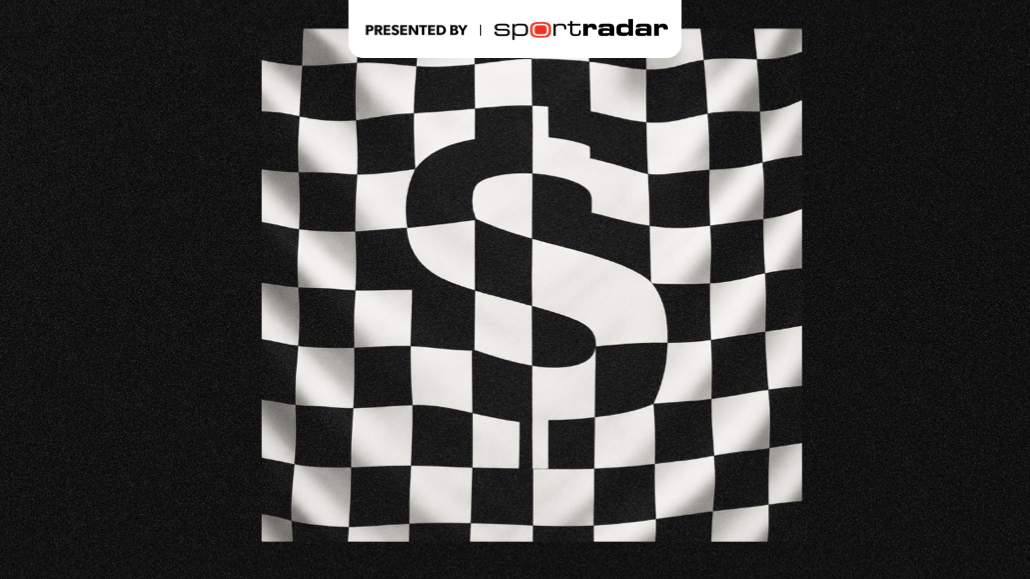
NASCAR draws roughly half the television audiences it once attracted a decade ago, just as Formula 1 has surged in popularity among American motorsports fans. In response to both pressures, the homegrown racing league has been quietly retuning its consumer brand and sponsorship operations.
To refresh its image and appeal, NASCAR launched a brand campaign in late spring promoting the opening of the season. Behind the scenes, NASCAR has also been investing in its commercial operation to better attract sponsors and commercial partners.
The league expanded its commercial sales team by 25%, and over the last 12 months, welcomed 17 fresh sponsors to the winner’s circle, according to chief commercial officer Craig Stimmel. While some, like O’Reilly Auto Parts, are endemic to the automotive/aftermarket category, companies like Airbnb and defense tech company Anduril hail from without.
According to Jess Smith, vp of brand content, a former Under Armor and Stewart-Haas F1 team exec who joined in 2024, NASCAR’s campaign is built around a hero film featuring fighter jets, beer pong, muscle cars and Lynyrd Skynyrd. It’s meant to “reintroduce” viewers to the “fun, visceral, bold experience” of watching the sport, she said.
Smith has overhauled the league’s approach to organic content, too. “Social used to be an afterthought; now it’s the starting point,” she said. The campaign principally ran on YouTube and Meta properties, with the intention of raising awareness of events like this Sunday’s (July 12) race at Atlanta’s Echopark Speedway, and shifting in-person tickets. Smith didn’t disclose NASCAR’s media budget.
“We’re trying to engage our core again and grow our fan base,” she said.
Competition on the grid
Given the campaign fell during America’s 250th birthday year, that should have been a simple enough proposition. The league even has the gift of a fresh storyline for fans, in the form of Michael Jordan-backed team 23XI Racing.
But NASCAR’s top execs must also contend with the fact that they now share an audience, and the attention of sponsors within the motorsports lane, with a relative newcomer.
According to Nielsen data shared with Digiday, Formula 1 is the most popular single sports league worldwide, boasting a fanbase of some 830 million; 16-29 year old consumers predominate.
NASCAR’s campaign film itself thumbs its nose at F1: “’If you want perfect turns and polite applause, you know where to find it,” intones the voiceover.
But while F1’s U.S. viewership still lags NASCAR, it has momentum. Val Middleton, evp and head of sport, North America at M+C Saatchi Sport & Entertainment, said: “With consumers under 45, we’re seeing a broader consumption of motorsports as a passion point rather than allegiance to a single series. The expansion to three States-side Grands Prix, coupled with the cultural impact of [Netflix show] Drive to Survive, has dramatically increased awareness of F1 and elevated motorsports into a lifestyle category.”
Stimmel argued that the crossover between NASCAR’s audience and F1’s remains limited (“We over-index with blue-collar workers,” he noted), and marketers are paying attention to those distinctions. CMOs, after all, are in the business of converting the cultural cachet of sports properties — whatever currency it’s traded in but so long as it fits the mission — into brand lift, engagement and ultimately sales.
“[Sponsorship deals] should be guided by business objectives and the role each property plays in the customer journey,” said Middleton.
AI operations company Rubrik, for example, is a partner of both the McLaren Mastercard Formula 1 Team and the Arrow McLaren IndyCar Team. Deanna Singrey, Rubrik’s brand director, told Digiday the company paid close attention to the “brand conversations” offered by a sports property.
“Formula 1 is a global stage built around precision engineering, zero-margin-for-error performance, and technology as a competitive weapon,” said Singrey. “Those aren’t just talking points for us, they’re core to what Rubrik does and what our customers demand. So the choice isn’t really about which motorsport, it’s about where the fit runs deeper than demographics.”
The growth of F1 in the U.S. has been ill-timed for NASCAR. While viewership has ebbed away, other sports properties have expanded both in fanbase terms and commercial ones.
“F1 is all about precision, elite-level performance, and a luxury vibe that plays globally,” said Jess Manganelli, head of client services at brand consultancy Redscout. “NASCAR’s story over the last 20 years is messier. It’s a sport that had a real identity, drifted from it, and is now trying to find its way back.”
Under the hood
While Smith has been working to reinforce NASCAR’s connection to its fans, her colleague Stimmel has been building up the league’s commercial operation.
The league has been on a hiring tear, bringing on former CAA exec Jake Krantz in as senior director of national partnerships; former Chicago Fire vp Alexandria Munoz as managing director of commercial revenue; and former International Speedway commercial exec TR Stape as vp of integrated media. Stimmel himself brings experience from P&G, Snap and WWE to bear since he joined in 2024.
NASCAR, which owns most of the racetracks used in the season, is selling more extensive packages than other sports leagues, argued Stimmel, offering marketers a full-fat package without the need to negotiate with multiple rightsholders or vendors. Bespoke bundles often include digital activations, trackside out-of-home inventory and experiential opportunities on race days. “We’ve become a lot more flexible in what we offer to brands,” he said.
Stimmel pointed to Anduril as a case in point. At this season’s San Diego race the defense firm sponsored a car, held the presenting sponsor slot and ran coordinated TV spots — a package negotiated through NASCAR. And Arby’s, which partnered with NASCAR for the 2025 Chicago Street Race, returned to sponsor that event again this year.
Though NASCAR has begun using media mix modeling (MMM) and works with partners such as partners include Two Circles, Nielsen and Meltwater to provide effectiveness metrics, Stimmel said NASCAR aimed to support brands’ own measurement systems rather than develop its own solution in the way that the Chicago Bulls have.
“We’ll craft a deal to make sure it delivers on whatever their success measure is,” he said.
Early signs suggesting Stimmel and Smith’s work is bearing fruit. 59% of the ticketholders June’s Chicagoland race were newbies, while eight of its NASCAR Cup Series events staged so far this year have sold out.
Manganelli said the league’s combination of unique sponsorship offerings can prove tempting, if its consumer-facing operation can reconnect with the sport’s fanbase.
“NASCAR has a real asset in grit. And it’s built on proximity, not exclusivity: fans camp trackside, sponsors activate in the parking lot, and nobody’s behind a velvet rope,” she said. “But it only works if it’s more than a tagline. If the racing, the tracks, and the driver pipeline don’t actually reflect a return to that identity, ‘heartland’ is just marketing layered over a sport still figuring out what it is. Advertisers who get in early and tie their money to the real signals — local tracks, regional programs, and drivers with actual ties to those communities — stand to benefit if this is real.”


More in Marketing
Salesforce’s $5.7 billion Braze deal puts marketers at an ecosystem crossroads
The deal promises faster, more connected marketing, while raising questions about vendor lock-in and how brands stand out as AI automates campaign execution.
AI boosts discovery but reviews still seal the deal, new research shows
ChatGPT is where 16% of shoppers start looking for products. However, only 9% go there to actually buy something.
Future of Marketing Briefing: Advertisers have more ways than ever to choose a holdco, and free holdcos to choose from
Fewer holdcos, more ways to pick one: inside the changing agency pitch.