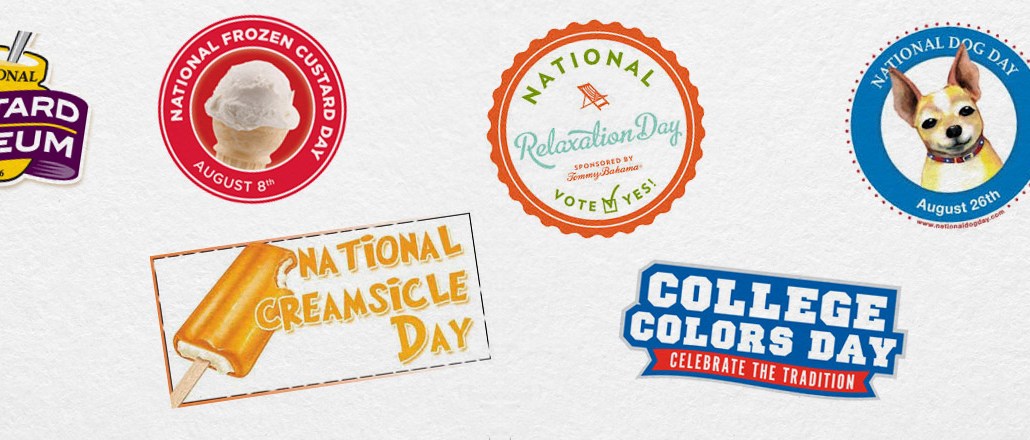
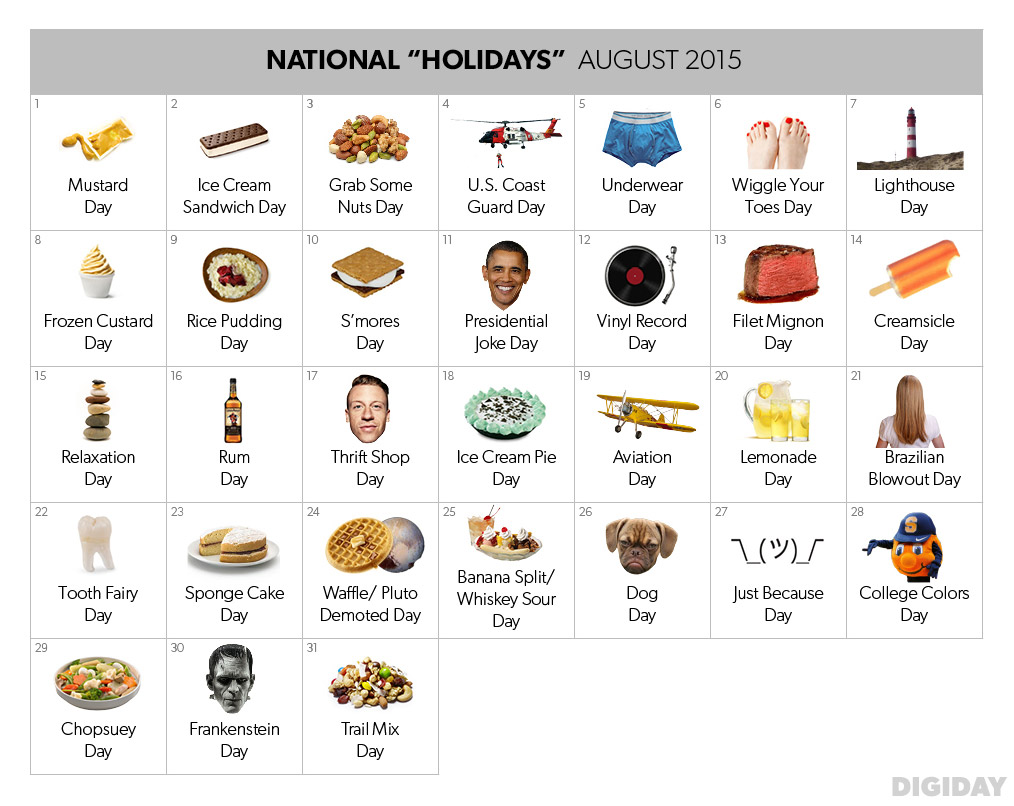
These days, a holiday doesn’t necessarily have to mark a day of national or religious significance. It can celebrate lemonade, working “like a dog,” and Brazilian blowouts. And there’s the thing: Anyone can declare a “national” holiday. In true American fashion, it’s simply a matter of marketing the hell out of it to make it a reality.
Please, do not confuse National Donut Day with Armed Forces Day. The latter was created by President Harry Truman in 1949 and the former is a marketing schtick promoted by Dunkin Donuts. Although the Congress still votes on commemorative resolutions to recognize certain days on occasion — as it did with Pi Day in 2009 — most remain unofficial.
But that hasn’t stopped marketers from clambering on the bandwagon of ginning up ridiculous holidays for just about every day of the year. There’s National Pancake Day (IHOP), National Underwear Day (skivvies monger Freshpair) and National Pie Day (American Pie Council).
“It can be a really great excuse to have a pillar moment in the year that wouldn’t otherwise exist, but there needs to be an obvious connection with or incentive for the consumer or it comes across as desperate,” said Andrew Cunningham, social marketing lead at digital Huge.
The good news: There’s a made-up holiday, usually with thinly disguised marketing goals, for you to celebrate every day of the month.


More in Marketing
Why Sephora released a beauty set exclusively on TikTok Shop
TikTok Shop’s combination of eyeball-sucking entertainment and frictionless shopping have made it a legitimate competitor to beauty giants like the LVMH-owned Sephora.
In Graphic Detail: LLMs keep citing YouTube in search results
The videos getting cited reveal how different AI search can be from traditional Google search.
Marketers have bought into microdramas — but a lack of ROI might make them irrelevant
Microdramas are attracting brand dollars and audiences. The harder question is whether the format can translate that attention into meas.