Join us Dec. 1-3 in Nashville for the Digiday Programmatic Marketing Summit
In graphic detail: The numbers making the case for what holdcos could be

Few execs in advertising have a taller in-tray than the CEOs of the big agency groups. AI, talent, platforms, regulators, investors, billionaires – the pressures are real and multiplying. But trace most of them back far enough and they have the same root cause: somewhere along the way, these businesses stopped being about making CMOs look good.
The data suggests they have a chance to change that. Read on.
An impending crisis
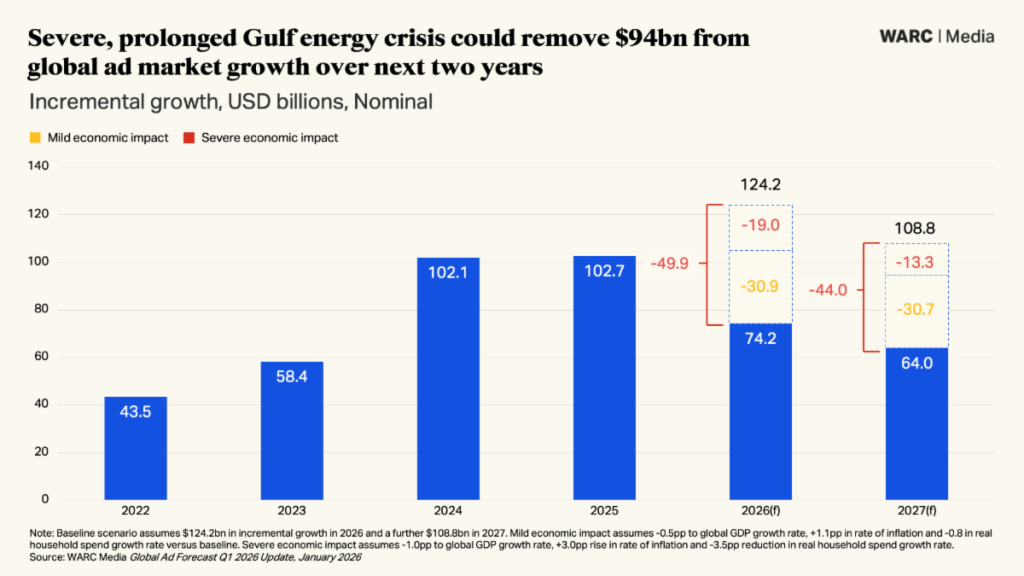
The conflict in the Middle East has yet to deliver its full economic shock. When it does, ad budgets will feel it. Warc has already warned that a prolonged conflict could threaten $49.9bn of global advertising growth this year, and $93.9bn over the next two years. CMOs are already making contingency plans in markets they can’t fully read. For agencies, that uncertainty is an opening — the kind of moment where genuine strategic counsel is worth more than any media plan.
A relationship built on trust – and running low on it
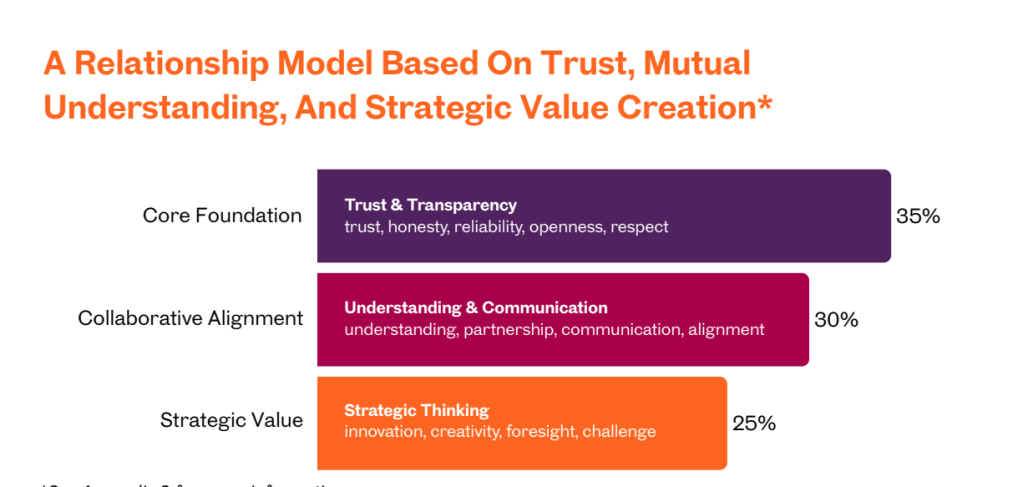
The relationship between CMOs and their agencies has always run on trust – more so than process or price. A survey of 141 senior marketers across 22 countries by the European Association of Communications Agencies and Kantar confirms it. The problem is that trust is exactly what’s running out. CMOs suspect agencies are skimming from budgets they don’t fully control or understand. Agencies watch the same clients who squeezed their fees to the floor turn around and accuse them of finding other ways to make the margin back. It is, as cycles of mutual resentment go, a remarkably self-sustaining one. And so far, neither side has shown much appetite for breaking it.
Marketers need all the help they can get
Agency bosses have long cast themselves as the CMO’s consigliere, advising on everything from creative to which ad tech vendor to back. For a time, that was a defensible position. It’s harder to hold now. Platforms, consulting firms, even talent agencies all make the same claim, and CMOs have more options than they’ve ever had. Which makes the following finding from Ipsos something of an opening.
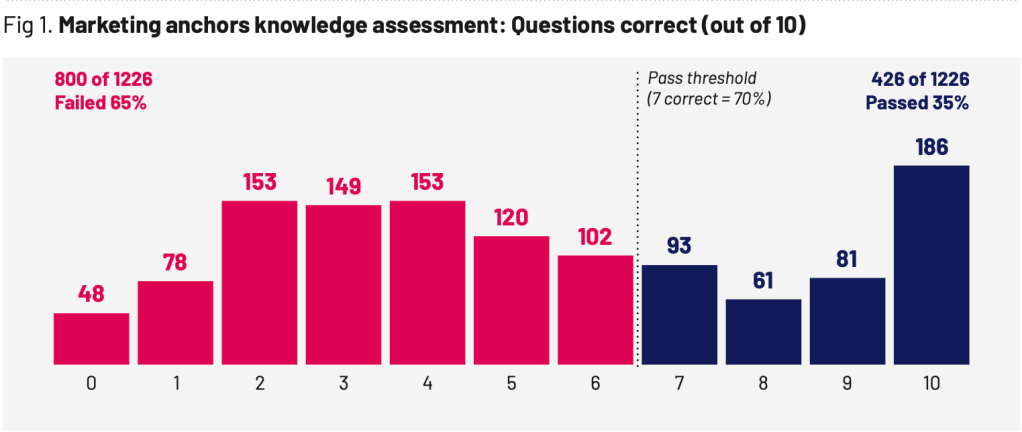
Only 35% of marketing practitioners across the U.K., U.S., Canada and Australia passed a basic ten-question assessment of foundational marketing concepts, developed in collaboration with Professor Mark Ritson. If CMOs are under pressure to prove they can run a business, and their own teams can’t pass a marketing fundamentals test, the agency that positions itself as the place that closes that gap has a clearer value proposition than most.
The practice that poisons the well
No examination of the CMO-agency relationship is complete without principal media. The practice — agencies buying media on their own behalf and reselling it to clients at a markup — has grown into a significant revenue line for holding companies, and a significant source of mistrust for the marketers funding it.
Here’s why: an agency cannot give a CMO independent advice on where to spend if the answer determines whether the agency makes some money or a lot of it. The further that practice extends, the more the advisory relationship curdles into something else.
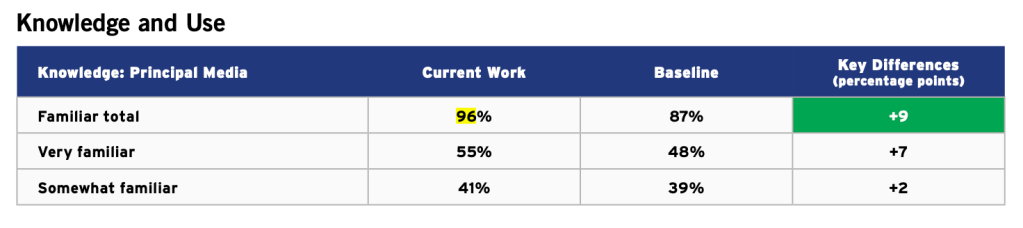
A whistleblower lawsuit against WPP, currently making its way through the courts, illustrates where that slope leads. Awareness of the issue is rising – 96% of respondents to an ANA survey of 114 senior marketers said they were at least somewhat familiar with principal media, up from 87% in the prior study. Familiarity, though, is not the same as control.


More in Marketing

Salesforce’s $5.7 billion Braze deal puts marketers at an ecosystem crossroads
The deal promises faster, more connected marketing, while raising questions about vendor lock-in and how brands stand out as AI automates campaign execution.

AI boosts discovery but reviews still seal the deal, new research shows
ChatGPT is where 16% of shoppers start looking for products. However, only 9% go there to actually buy something.

Future of Marketing Briefing: Advertisers have more ways than ever to choose a holdco, and free holdcos to choose from
Fewer holdcos, more ways to pick one: inside the changing agency pitch.