for the Digiday Programmatic Marketing Summit, May 6-8 in Palm Springs.
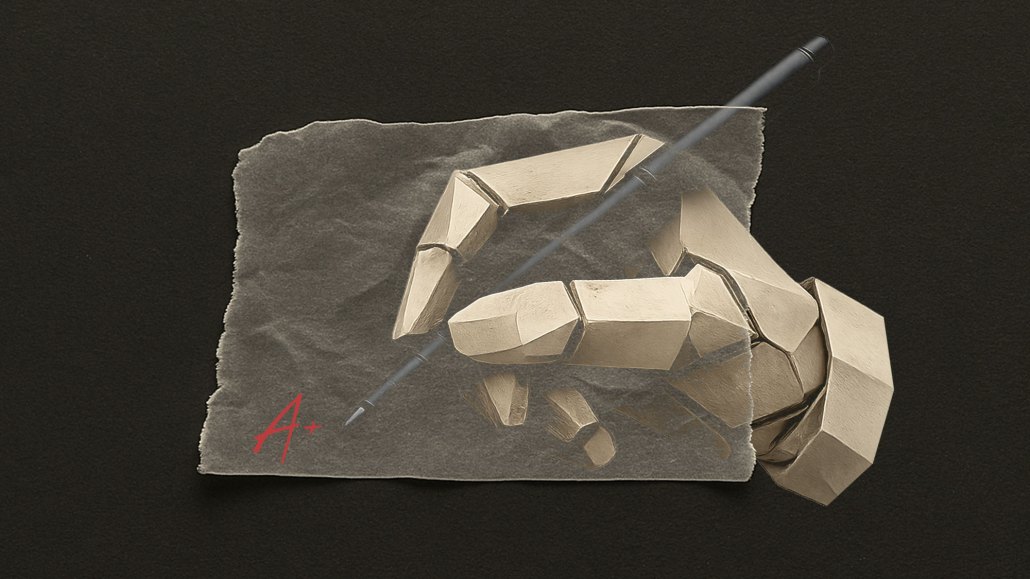
Generative AI tools crept closer to the uncanny valley this year as tools like OpenAI’s Sora or Google’s Nano Banana, have flooded the market. Marketers have higher expectations than ever for AI to streamline marketing processes and save dollars. The novelty of generative AI has worn off and marketers want controllable, consistent tools that can be easily integrated into the creative ecosystem.
“If you’re using AI to automate a certain task, but then you have to move files from 15 different softwares, you’re not actually making your life more efficient,” said Freddy Dabaghi, chief transformation officer at Crispin.
This year has brought winners, losers and middleground contenders based on their integration capabilities, user interface and of course, final output. To get a better sense of how these tools performed this year, Digiday pulled together a 2025 agency generative AI report card ranking based on output, user experience and capabilities. This list is by no means exhaustive as generative AI tools continue to flood the market.
Digiday reached out to Google, OpenAI and Midjourney for comment. Google and OpenAI defended the creative potential of their respective generative AI tools, while Midjourney did not respond by press time.
Nano Banana: A
As with most things Google touches, its generative AI tools have become the gold standard, according to marketers. Google brought Nano Banana Pro, its image generation and editing tool built on its Gemini LLM, to market in November.
At least two agency execs say Nano Banana Pro is the go-to starting point for creative workflows, who largely complimented the image generation tool for its higher precision than competitors, like Midjourney, Canva or Adobe Firefly. There’s less of what marketers call AI sheen — which is described as inconsistencies and a “too perfect” quality that people notice — and there’s consistency in what the image generation tool produces. Images look hyper-realistic, which makes it more difficult for users to tell the difference between what’s real and what’s AI generated.
Another win for Nano Banana is that it’s within Google’s ecosystem. The image generation tool is embedded into Google Ads, Gemini and other Google workspaces which makes it easier to set live in campaigns.
“Nano Banana is a pretty dang good image generation model,” according to an agency creative director who agreed to speak candidly on background. He added that Nano Banana is the agency’s “favorite and preferred image generation tool.” The agency is a large global digital marketing and part of a holding company.
Nano Banana’s faults are less about the Google-powered app itself and more about where generative AI tools stand as a whole. Marketers are pushing for consistency across AI tools‘ ability to storyboard and have characters, narratives and more look exactly the same across multiple iterations — something marketers have struggled with as one tweak can upend a piece of AI powered creative.
VEO: A
Also at the top of the class is VEO, Google’s text-to-video generative AI model.
“VEO is probably the one that we use the most in that it just is incredibly robust,” said a second anonymous source — an exec at a branded entertainment company, who spoke on the condition of anonymity. He added, “It’s just pretty damn good at everything.”
VEO originally launched at the tail end of 2024, but picked up steam when audio capabilities went live in VEO 3.1 in May.
Like Nano Banana, VEO is one of the leading tools in the generative AI toolkit, according to the marketers Digiday spoke with for this piece. VEO’s consistency in its ability to create characters, interpreting and executing prompts and cinematographic concepts. Its recently launched voice, audio and lip sync capabilities have only made it better, even surpassing Sora, marketers say.
But again, VEO (and generative AI image tools for that matter) are in early stages. While marketers say Google’s premier products are good, VEO hasn’t quite reached production level — that polished, finalized and clear of any so-called AI sheen.
Sora: B
Sora, OpenAI’s text-to-video AI model, marked a massive shift in the image generation tool landscape in December 2024. Its major breakthrough, Sora 2, launched invite-only for iOS users in September this year complete with realistic sound effects. The turning point came earlier this month, when Disney and OpenAI inked a partnership, allowing Sora users to use characters from Star Wars, Pixar and Marvel franchises in content creation.
Its consistency in characters, environments and other aspects of image creation is a winning point, per marketers. Its primary critique, however, is the AI sheen.
“Sora had a really nice cinematic quality to it. I find the lighting and the idea of cinematic look to be great there, but it has a real uncanny valley with skin textures and things like that,” said an agency group creative director, who spoke on background.
While its partnership with Disney made headlines, Sora’s efficacy has fallen behind, leap frogged by the likes of VEO, which is more hyper realistic and easily integrated across other creative workflows, marketers say. There are also lingering business concerns around Sora’s training data, copyright and IP usage.
Midjourney: B
Midjourney could be considered an OG in the generative AI visual creation space. Since its launch in 2022, the image generation tool has been steadily releasing updates to offer more realistic images and user control. The tool faces lawsuits from the likes of Disney and Universal, giving some marketers pause but it has been leapfrogged by its competitors in terms of hyperrealism, integrations and user experience, per marketers.
While it’s a perhaps more established brand that’s good for “Marvel movie-style images,” according to the first creative director who spoke on background, Midjourney’s considered unreliable and commercially unsafe for client work due to training data.
“Midjourney could benefit from more control,” said the agency group creative director. “Midjourney has been a little bit more of that Wild West slot machine — put in a prompt and here’s four very different results.”
Ultimately, its placement in the generative AI creative toolkit pales in comparison to Google’s Nano Banana or Adobe Firefly. At least one agency dubbed Midjourney a “no-no” in client work.
Conclusion: There’s no king to rule them all
What’s important to note, and what marketers stress, is that many of these tools are used in tandem with one another. There’s no king to rule them all — at least not yet, marketers say.
On a whole, marketers critique their consistency, control and integration. The promise of generative AI content creation tools is to expedite, personalize and scale content creation. That promise still sits on the horizon as the onslaught of tools has made for a fragmented marketplace, according to marketers.
“Consistency is probably the number one thing that you’ll need to give people,” said Jon Weidman, svp of development at Wavelength, an entertainment production company. He added, “Until that challenge is addressed, all of the platforms should be running at it to try to solve it.”


More in Marketing
How did Nike’s embattled heritage brand Converse reach a 15-year revenue low?
The last few years have seen Converse continue to underperform compared to the rest of Nike’s portfolio.
Why Pfizer and other blue-chip brands are building internal AI search hubs to reclaim control
As AI upends traditional rankings, big spenders like Pfizer and other blue-chip brands are building internal task forces.

OpenAI has quietly launched its ads manager as it races to build out its ads business
The AI platform quietly launched its ads manager within its ChatGPT ads pilot advertisers last week, and also lowered the barrier to joining the test.