Join us Sept. 14-16 in Miami to connect with top publishing leaders
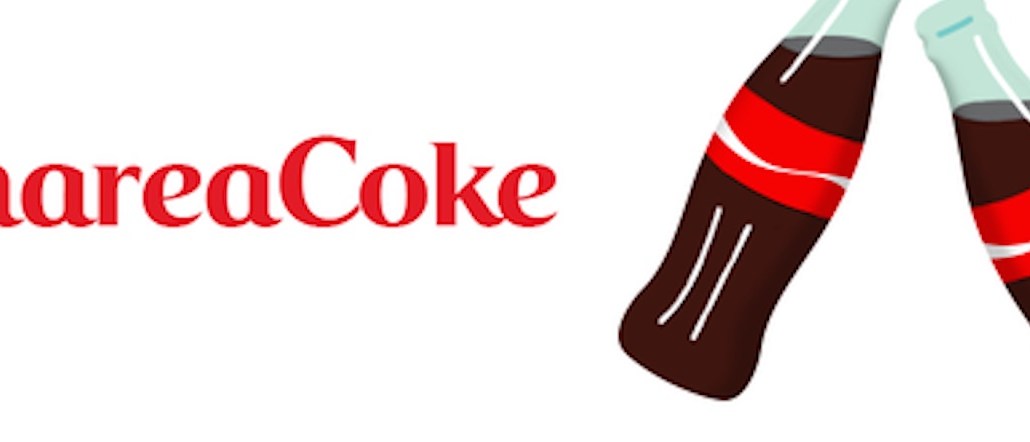
Coke is it. And by “it” we mean the first company to have its own custom emoji — a pair of glass bottles adorned with its signature red label. The emojis appear when people tweet the hashtag #ShareACoke.
Ready for some fun? Tweet #ShareaCoke to help set a new @RecordSetter record for the world’s largest cheers. *clink!* pic.twitter.com/9UmY5WrVKE
— Twitter (@twitter) September 17, 2015
Although the customizable the Share a Coke campaign has been recently hijacked elsewhere, people have largely behaved themselves and are using it sincerely. In an attempt to draw attention to the new emoji, Coca-Cola is using Vine stars like Ethan Dolan, his brother Grayson and Hayes Grier to have their followers tweet the hashtag with the prospect of getting a follow or a direct Message in return.
What a world!
Here’s an example:
I’m pumped to #ShareaCoke with my fans. Tweet using #ShareaCoke to set a new record for largest cheers. I’ll follow & RT a bunch of you #sp — Hayes Grier (@HayesGrier) September 17, 2015
Hey guys! I’m DM’ing a BUNCH of people who tweet me using #ShareaCoke @cocacola Let’s trend, see you in the DM’s #sp
— Ethan Dolan (@EthanDolan) September 17, 2015
In an interview with TechCrunch, which first broke the news, Twitter’s senior director of brand strategy Ross Hoffman said the social network used Coca-Cola to test out the emoji because it was a “perfect opportunity to work with a nimble and smart marketer to make this happen.”
With emojis growing in popularity, it’s smart for Twitter to capitalize on the trend and charge brands big money to create a “hashflag” campaign for the public to use. Coca-Cola is the first company to try this out and we hear that more brands will have their own emojis soon. Cheers?


More in Marketing

By the numbers: Wall Street’s tough assessment of ad tech
Big Tech continues to dominate digital growth, triggering a Wall Street exodus, but are returns imminent?
CMOs are struggling to link AI visibility with sales
Brands are spending on tools that rate their visibility within LLM responses and AI search, but proving the commercial impact of GEO remedies isn’t easy.

Lifestyle brand Stanley 1913 adapts its marketing for the AI search era
The marketing it was doing worked well, but only for a human audience. The brand needed different approaches to ensure it was picked up by the AI platforms.