Join us Dec. 1-3 in Nashville for the Digiday Programmatic Marketing Summit

This research is based on unique data collected from our proprietary audience of publisher, agency, brand and tech insiders. It’s available to Digiday+ members. More from the series →
About two-thirds of agency employees say their agencies now offer maternity leave, with about 45% of the same employees saying their shops also give paid leave to new fathers.
That’s part of a new survey covering work-life, culture and careers conducted by Digiday Research early this year.
About 63% of the agencies that offered maternity leave offer between one and three months, while 29% of them offer more than three months.
In the U.S., where paid maternity leave is not mandatted by law, studies by the Society of Human Resource Management have shown that one in three — 33% — of companies now offer paid maternity leave, up from one in six 10 years ago.

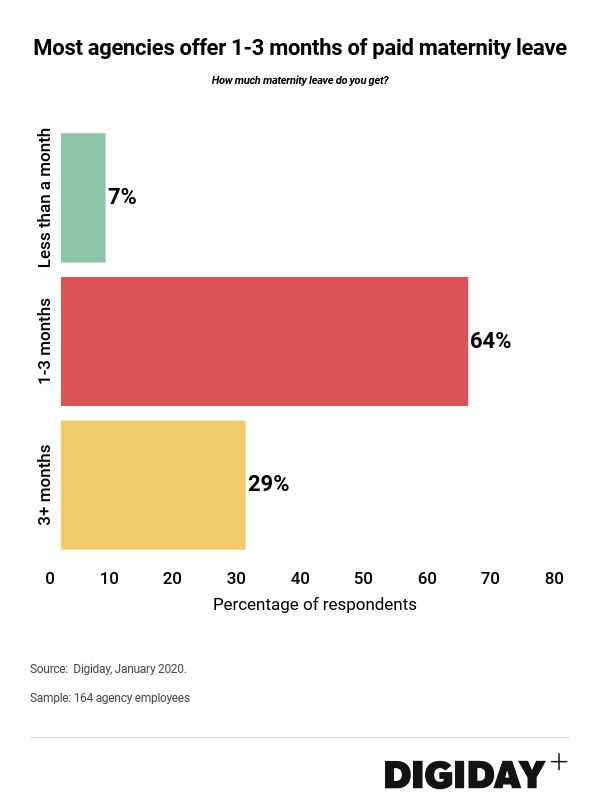
In the same survey conducted last year, over 90% said that paid maternity leave was longer than a month and longer than three months for 32% of respondents. Comparatively, 42% said the paid paternity leave offered by their company was less than a month.
In general, the state of parental leave across the U.S. is a problem. But at ad agencies, staffers often bemoan that the industry hasn’t really put its money where its mouth is and created inclusive policies for parents to be able to take time off and return to work in a way that’s sustainable.
That’s not to say there haven’t been moves to try make a change. Movements like the Pledge Parental Leave had agencies sign up to offer at least three months of full paid leave to primary caregivers.
But overall, parental leave in general has been a hot-button topic across the industry. The issue has often been one of unevenness. As Digiday has previously reported, some agencies offer generous parental policies. Others don’t. And for many, the policies are often disjointed or unfair.


More in Marketing

AI boosts discovery but reviews still seal the deal, new research shows
ChatGPT is where 16% of shoppers start looking for products. However, only 9% go there to actually buy something.

Future of Marketing Briefing: Advertisers have more ways than ever to choose a holdco, and free holdcos to choose from
Fewer holdcos, more ways to pick one: inside the changing agency pitch.
Walmart Connect pitches brands directly as it pushes lift studies ahead of holiday ad deals
Walmart Connect is using lift studies to prove ad performance directly to brands ahead of the holidays, signaling a tighter race with Amazon.