Join us Oct. 26-28 in Newport Beach for the Digiday Media Buying Summit
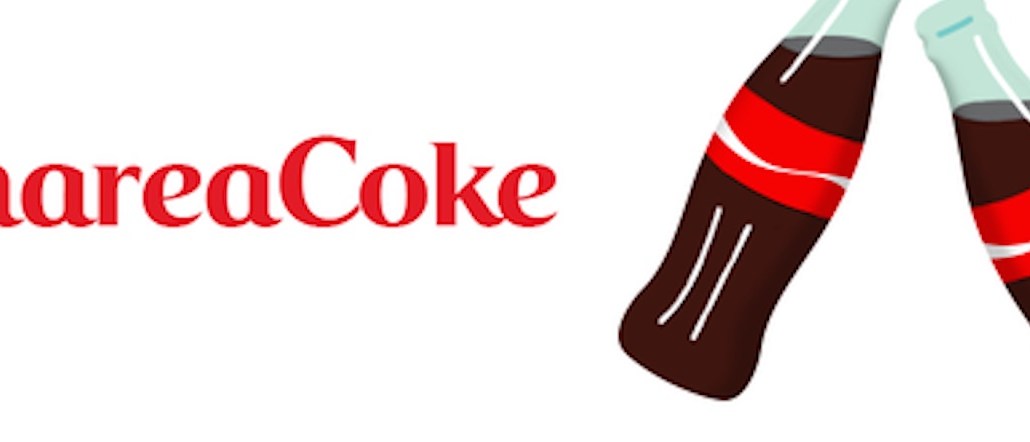
Coke is it. And by “it” we mean the first company to have its own custom emoji — a pair of glass bottles adorned with its signature red label. The emojis appear when people tweet the hashtag #ShareACoke.
Ready for some fun? Tweet #ShareaCoke to help set a new @RecordSetter record for the world’s largest cheers. *clink!* pic.twitter.com/9UmY5WrVKE
— Twitter (@twitter) September 17, 2015
Although the customizable the Share a Coke campaign has been recently hijacked elsewhere, people have largely behaved themselves and are using it sincerely. In an attempt to draw attention to the new emoji, Coca-Cola is using Vine stars like Ethan Dolan, his brother Grayson and Hayes Grier to have their followers tweet the hashtag with the prospect of getting a follow or a direct Message in return.
What a world!
Here’s an example:
I’m pumped to #ShareaCoke with my fans. Tweet using #ShareaCoke to set a new record for largest cheers. I’ll follow & RT a bunch of you #sp — Hayes Grier (@HayesGrier) September 17, 2015
Hey guys! I’m DM’ing a BUNCH of people who tweet me using #ShareaCoke @cocacola Let’s trend, see you in the DM’s #sp
— Ethan Dolan (@EthanDolan) September 17, 2015
In an interview with TechCrunch, which first broke the news, Twitter’s senior director of brand strategy Ross Hoffman said the social network used Coca-Cola to test out the emoji because it was a “perfect opportunity to work with a nimble and smart marketer to make this happen.”
With emojis growing in popularity, it’s smart for Twitter to capitalize on the trend and charge brands big money to create a “hashflag” campaign for the public to use. Coca-Cola is the first company to try this out and we hear that more brands will have their own emojis soon. Cheers?


More in Marketing
Ikea’s CMO sees LLMs as the newest place a brand has to hold its line
LLMs have widened the brand. Ikea’s CMO thinks the basics still hold.
How many people does it take to run an agency? According to Bad Mktg, just two if you’re using AI
BaD Mktg is just two employees and a lot of AI to run the business and ideate. The secret to its success? The experience of the people leading the ideation.
‘Mission and capital can coexist’: Golden State Valkyries’ Jess Smith on pitch to sponsors
The WNBA’s newest team must navigate measurement demands and marketers wanting to share in the ‘mission’ if it’s to establish a commercial foothold.