Secure your place at the Digiday Publishing Summit in Vail, March 23-25
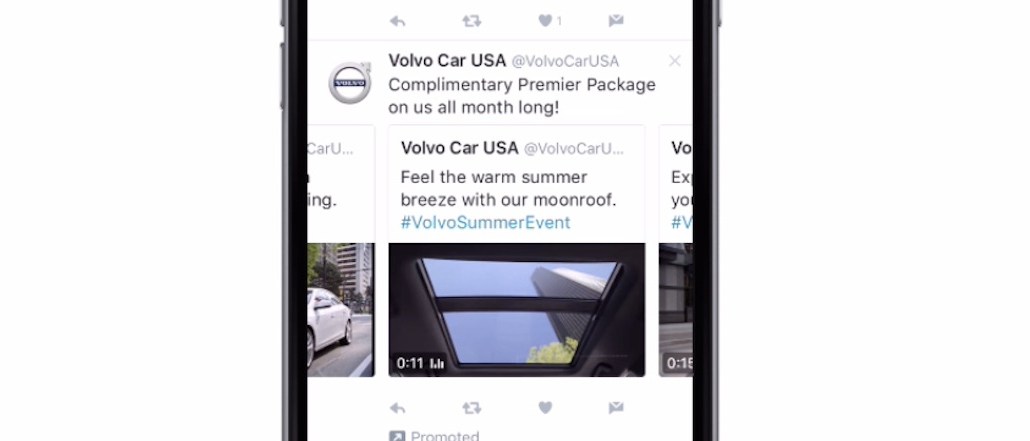
Twitter is rolling out an Instagram-like carousel ad more than six months in the making.
The new type of ad unit that lets brands place multiple tweets, in some cases from users themselves, in a carousel format that lets people swipe through. Digiday first reported in January that it was working on this.
— Twitter Advertising (@TwitterAds) June 3, 2016
The unit, called a “Promoted Tweet Carousel,” lets companies jam up to as many as 20 tweets into it, including videos, pictures and tweets from satisfied customers as long as they give the advertiser explicit permission to use their tweet. Twitter is charging companies only when a user engages with a tweet in the unit.
“Since people tweet about their favorite brands and products every day, we developed this powerful solution to help marketers leverage social recommendations,” Twitter explained in a blog post.
Agencies welcomed the new unit of using people’s tweet since a post from a normal sometimes holds more clout than a celebrity.
Twitter is also likely hoping to replicate Instagram’s monster success because people are 10 times more likely to engage with a carousel ad compared to a static ad on the Facebook-owned platform. Even just a little bit of Instagram’s advertising success could be a boon to struggling Twitter.


More in Media

A new studio is betting Hollywood talent and first-party data will reshape creator monetization
Linden Lane Films combines Hollywood talent, YouTube mega creators, and audience data with hopes of reshaping monetization and content.

In graphic detail: Middle-tier creators are fueling the next phase of the creator economy
Facts and figures behind the growing middle tier of creators who make less than macro creators, but convert more.

How medical creator Nick Norwitz grew his Substack paid subscribers from 900 to 5,200 within 8 months
Creator Playbook: Unpacking the strategy behind medical YouTuber Nick Norwitz turning to Substack to significantly grow his brand.