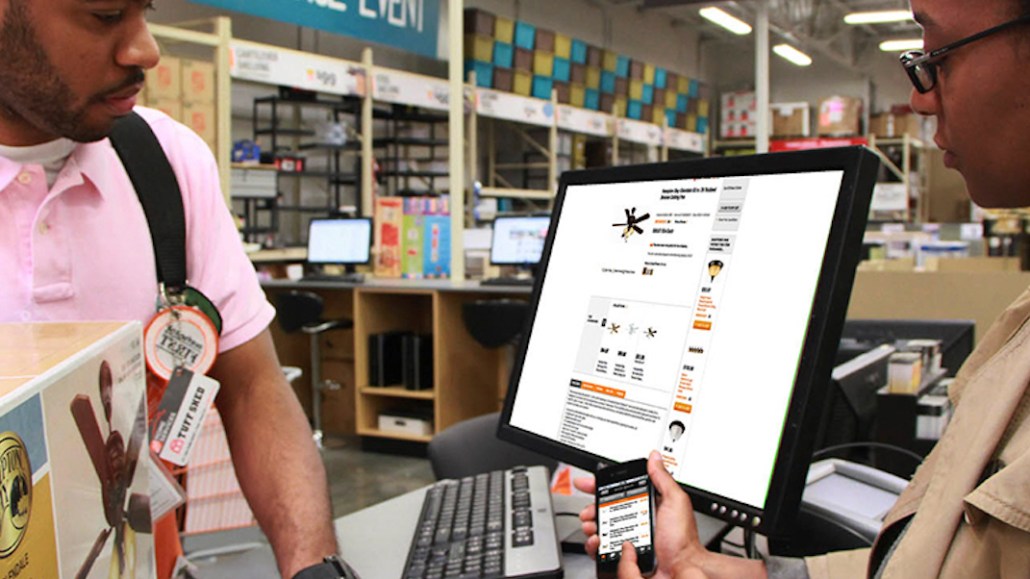
Retailers are betting on in-home services as a way to differentiate against e-commerce competitors.
Walmart, Home Depot and the Container Store are hiring contractors to go customers’ homes to perform services that include furniture assembly, appliance installation and expert advice on the organization of a customer’s living space.
“The barrier to entry with a product-only offering is very low — there are an endless number of suppliers that can offer the same product; where you differentiate is in your ability to provide services,” said Brendan Witcher, principal analyst at Forrester.
For Home Depot, centrally managing contractors mitigates risk. It said it chooses contractors and does background checks on them, and it owns the IT infrastructure to track orders and customer interactions. In this way, it offers all customers a consistent experience synonymous with a trusted brand — a recipe some argue that’s Amazon-proofed its business model. The company said it does regular customer surveys to ensure contractors are meeting expectations.
Home Depot was an early mover serving the “do it for me” customer segment, a group industry watchers say retailers are increasingly trying to please.
“All of the demographic trends are pointing to continued growth in the ‘do it for me’ market – with baby boomers’ aging in place, millennials entering the housing market in greater numbers, and more customers looking for time back in their lives,” company spokesman Nick Smith said.
Meanwhile, Walmart is outsourcing its service offering. Since March, it’s been working with Handy, a digital platform that connects home service providers — including plumbers, cleaners and general-service contractors — on furniture and appliance installation. The retailer said it’s about customer convenience.
“We work with a variety of companies to provide convenient access to services our customers are looking for, such as nail salons, renting a rug cleaner and shipping packages,” said spokeswoman Erin Hulliberger, in an email. “Our relationship with Handy is similar – we’re working with Handy to offer a convenient location for customers to purchase Handy’s services – i.e., alongside a relevant store or Walmart.com purchase.”
Handy offers partner retailers more than just a way to channel installation orders. The company, which also works with furniture retailer Wayfair and is testing its services with a handful of other retailers it won’t name, offers clients a technology platform to track contractor timeliness, customer satisfaction with work and project difficulty levels as reported by contractors. It declined to say whether this platform is being used by Walmart or Wayfair — but it’s a tool it offers its clients, for whom it’s an opportunity to learn more about customers.
“We have a technology platform that gives [retailers] information and data and gives them the ability to help manage their own services platform,” said CEO Oisin Hanrahan. “It also gives them the ability to help manage their own service platforms — for example, some retailers have a network of installers, and we can onboard those professionals and create a network for that retailer — it’s an end-to-end experience.”
As retailers look to future business models, more will invest — and even acquire — service platforms to grow their reach. It’s a trend that’s already started to materialize, with Ikea’s acquisition of TaskRabbit last September. Since its acquisition by Ikea, the TaskRabbit platform is now offered at every Ikea store in the U.S. and in key U.K. markets (though it still maintains the ability to work with other retailers).
“We expect retailers to enter more service markets and make acquisitions of existing service providers as they seek to offer services that respond to underlying shifts in how consumers live and what they expect,” wrote Deborah Weinswig, CEO of Coresight Research, in a recent report.


More in Marketing

DMexco ’26 Briefing: From scaling AI operations to teaching the next generation of ‘bold’ CMOs
DMexco 2026 media partner Digiday hosted two panels that outlined the challenge of AI at scale and the CMO of the future.

Marketers bemoan the culture of ‘good enough’ as standards fall amid the AI bubble
‘Drowning in measurement,’ marketers mull priorities in an internet where ‘two audiences’ exist.

Future of Marketing Briefing: Imagining the ad business hiding inside Meta’s Muse
Meta’s Muse is ad-free for now. Don’t expect that to last.