Join us Dec. 1-3 in Nashville for the Digiday Programmatic Marketing Summit
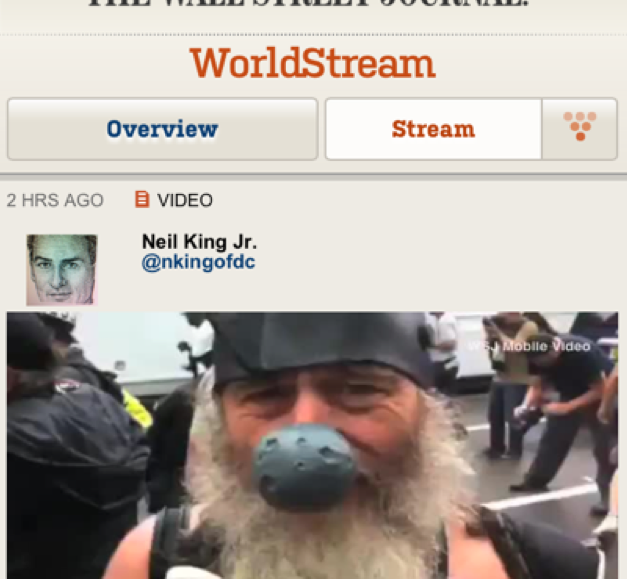
In a media world that trades short bursts of information as currency, it comes as no surprise that video will go this route. What is surprising The Wall Street Journal is leading the charge.
WSJ WorldStream has hooked up with video startup Tout for quick-and-dirty video hub where WSJ reporters upload videos directly from their smartphones. Neil King, Jr talks with Vermin Supreme, a presidential candidate; Utah Senator Orin Hatch speaks with Mark Scheffler about Paul Ryan. The company has been betting big on video over the last several months and now appears to be marrying mobile to video. The News Corp. company has been experimenting with all sorts of streams recently and by planting its flag in the video-stream ground the newspaper is doing something most publishers don’t do: show, not tell.
Mobile and video are two huge question marks publishers worry about on the business side. On the desktop version of WSJ WorldStream there’s a big box ad. The mobile version is divided into two functions: overview and stream. There’s no ad in the stream, but there is a banner ad in the overview. Neither has the kind of pre-roll spots advertisers love.


More in Media

Creators say it’s difficult to make money from news — with platform rules and brand guidelines
With more people getting news from creators than traditional media, those creators are still trying to build sustainable businesses.

Why CNN International is building for agentic ad market that barely exists yet
CNN International is still chasing its first agent-sold dollar by Q1.

Media Briefing: The transatlantic push to rein in stealth bots is gathering pace
U.S. and U.K. publishers are pushing for laws to crack down on stealth AI crawlers as bot scraping surges and demands for transparency grow.