Join us Dec. 1-3 in Nashville for the Digiday Programmatic Marketing Summit
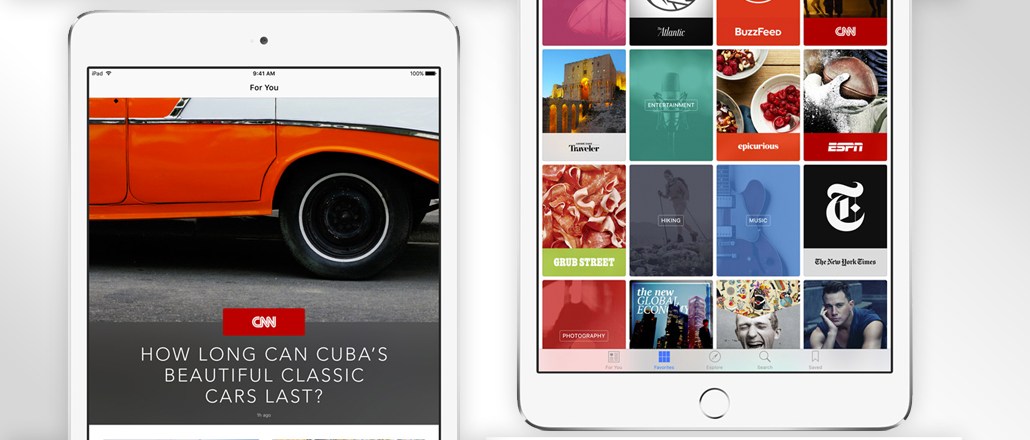
When Apple’s News app makes its debut with its upgrade to iOS 9 Sept. 16, as the tech giant revealed today, publishers will be on board en masse, with the old guard (The New York Times, CNN) and digital natives alike (Vox, Mashable). The News app is just the latest come-on by a platform to have publishers distribute their articles and videos straight to its app. But while some publishers took a cautious approach to posting straight to Facebook earlier this year, many are going all in with Apple News, where they see a chance to get in front of a sizeable audience that they’re not reaching elsewhere (articles read on Apple News will count toward the publishers’ traffic). Here’s a look at how four publishers are approaching the app:
CNN
The network is one of a number of publishers that has been part of the News app beta for about a month, and not only is it posting everything CNN puts on its own site, the network is also taking advantage of Apple’s publishing tools like parallax scrolling and layouts with videos integrated within them. The reason, said CNN’s chief product officer, Alex Wellen, is that publishing at scale is the best way to see how the audience is responding to the content.
“I can’t think of another platform where we’ve done this much content natively in that app,” he said. “The only way you’ll understand whether you’re effectively connecting with an audience is to do it at scale.”
Apple is also letting publishers monetize their content by selling ads themselves (and keeping all the revenue) or letting Apple do the selling and keep 70 percent. CNN plans to monetize the content whichever way it can, Wellen said.
Vox Media
Vox is also participating in the beta and will have all eight of its brands including SB Nation, The Verge and Vox.com in the app at launch. Similar to CNN, Vox plans to publish the vast majority of its site content to the app, which it likes for the ability to reach new audiences and present the content in the same way it looks on the publishers’ own sites.
“It gives us the opportunity to translate the content experience in a way that’s just as premium, just as engaging, just as sharable,” said Jonathan Hunt, vp of global marketing and partnerships at Vox Media.
The ability to sell advertising was also a factor in Vox’s embrace of the app, although execs said they’re not planning to sell ads right away, to give them time to see how the audience responds to the content.
Time Inc.
The publisher will be on Apple News with all its brands, including People, Time and Sports Illustrated, making full feeds of its online content available when the app goes live. The idea is that doing so will help ensure that the sponsors running across the brands get plenty of people seeing their messages. It also will help Time Inc. get as much exposure as possible for its content, given Apple is expected to be surfacing suggestions for readers.
“There’s a benefit to having more stuff in there,” said Scott Havens, a senior vp of digital at Time Inc. “With [Facebook] Instant articles, it can be a little more of a zero sum game with traffic referrals clicking in to Facebook and not coming to your owned-and-operated platform. Whereas Apple News, at this point, is a different destination experience that we hope is incremental.”
Wired
The Condé Nast monthly also is pulling out all the stops. It has devoted several developers, designers and editors to the platform, using a custom WordPress plugin that it built itself, and plans to post about 24 stories a day. Like other publishers, Wired said Apple offered a way to present its articles “beautifully and intuitively.” News is a new platform and it’s hard to project traffic, so Wired is selling sponsorships for now, with plans to add traditional ad campaigns in 2016 once it can project inventory and traffic, said advertising GM Robbie Sauerberg.
Image courtesy of Apple.


More in Media

Why CNN International is building for agentic ad market that barely exists yet
CNN International is still chasing its first agent-sold dollar by Q1.
Media Briefing: The transatlantic push to rein in stealth bots is gathering pace
U.S. and U.K. publishers are pushing for laws to crack down on stealth AI crawlers as bot scraping surges and demands for transparency grow.

Creator mentors Colin and Samir want to turn their followers’ ideas into productions
Creator mentors Colin and Samir teamed up with Adobe to fund a creator’s project; the first step towards the duo’s new production era.