YouTube has long been tagged as the home of the skateboarding dog video. But it’s starting to grow up, with an ambitious channel strategy and a cottage industry of production companies.
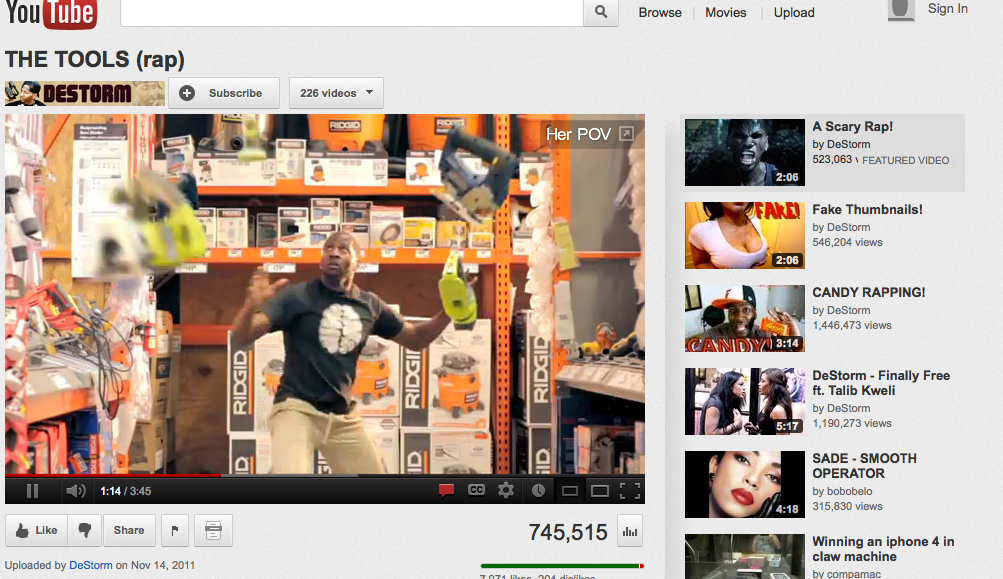
Big Frame, an online media company and talent management firm, is one of them. It has signed up a passel of YouTube stars like MysteryGuitarman (who has 2 million subscribers who have watched his videos 325 million times) and DeStorm (1.2 million subscribers, 175 million views) to deals to create custom video content for clients like Home Depot, Tide and BBC America.
The company is the new media intermediary between talent and brand, helping one become a star and the other to tap into the YouTube cultural phenomenon.
“The next big piece of the puzzle that we need to deliver on the content side is these programming packages that make sense for advertisers, that feel comfortable to them, to take advantages that make it safe,” said Steve Raymond, CEO of Big Frame.
YouTube seems to be moving in that direction. While digestible, snackable content is what arguably drives content, in order for YouTube to get even close to the TV dollars, it needs to have content that people will consume for extended periods of time. Hence, the NewFronts from a few months ago. Basically, YouTube is working with content partners to incentivize people to look at YouTube as a program. With longer form and short-form content, it would appear the world is YouTube’s (and its advertising partner’s) oyster.
“When you’re talking about 5 billion streams a day around the world, there’s a big opportunity for brands to reach customers in better ways,” Raymond said.
But brands have a stake in this too, especially on the content side. With so much time being spent on the site, it’s foolish for a brand not be a part of the ecosystem. But, according to Raymond, media companies and brands need to try to understand the ad units YouTube is using.
“I don’t think a lot of people on my side are factoring that in,” Raymond said. “It’s a transformative way to buy media, a pay per view on auction. It doesn’t feel similar to the way TV is sold, but it’s what worked in search. You don’t pay a customer you show an ad to, just to those who act on it. So you spend more per view, so the economics for YouTube, if you get it right, are much better than traditional media.”
Image via Shutterstock


More in Media

Digiday Publishing Summit September 2026 Recap: How publishers are rebuilding for the post-search era
Execs at DPS described how they’re preparing for a post-search era by prioritizing direct audiences, diversified revenue and AI strategies.

From brand deals to equity deals: creators want a stake, not just a fee
The creator economy is moving into a new phase: creators getting into companies at the ground floor through sweat equity or angel investing.
Media Briefing: Publishers question whether personalization actually pays off
Publishers are personalizing newsletters to get more value from readers, but questions remain over whether it’s a meaningful differentiator.