
Publishers are wrapping their heads around the rise of viewability and programmatic at the same time, but they’re finding that the two aren’t easy to tackle simultaneously.
Much of the disparity starts with the traditional approach to open exchanges, which publishers have used to sell their remnant, non-premium inventory. Their more viewable inventory, which appears on more premium real estate is, in contrast, reserved for direct deals, which publishers hold onto in the hopes of fetching higher rates.
“So far it seems as if they’re almost opposites,” said Media Kitchen director of programmatic media Brian Nadres, referring to open exchange inventory and viewable impressions. “But maybe that’s to be expected. Publishers are afraid of putting things on the open exchanges because they’re afraid inventory is going to be undervalued.”
The data confirms the disparity. Ads served direct to publisher are far more viewable than those served through programmatic deals, according to a recent report from Sizmek, which saw a twenty percent gap in the viewability of flash rich media ads. A similar report from Integral Ad Science found that the average viewable of inventory on exchanges and networks hovers around 42 percent — far lower than the IAB’s 70 percent threshold.
The disconnect between viewability and programmatic is complicated further by the already complicated measurement and billing picture of viewability itself. While the industry has given the green light for buyers and sellers to transact on viewability, variances between viewability measurement vendors is complicating their ability to actually do so.
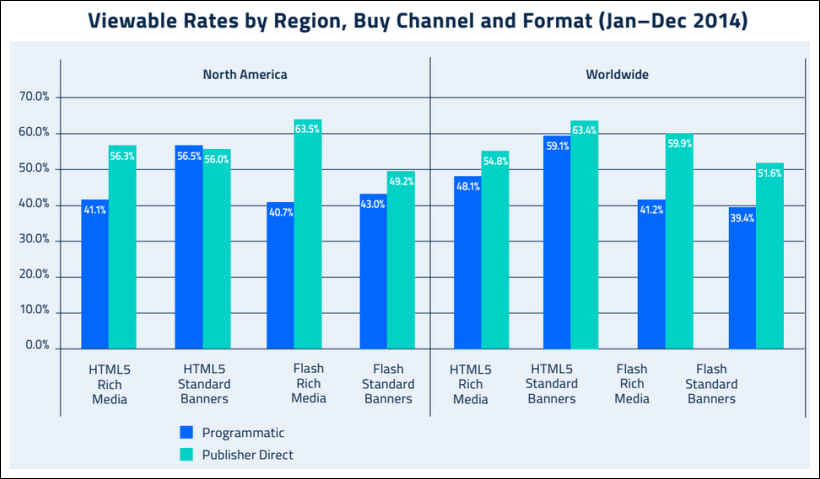
“The discrepancy in viewability between what is consistently measurable now across all accredited vendors versus what buyers are asking for needs to be solved in the ‘direct-sold and served’ world before it is fully tackled end-to-end in the programmatic word,” said Chip Schenck, Meredith’s vp of programmatic sales and strategy.
Despite the fraught relationship between viewability and programmatic publishers have found ways to bridge the gap. Business Insider chief revenue officer Pete Spande said that, when it comes to indirect sales, viewability is viewed as an optimization tool, but isn’t yet a buying criterium. “When conversations come up about viewability on the indirect side it’s always more for an after-the-fact analysis,” he said.
The discussion changes, however, when it comes to automated direct and private marketplace deals, which make it far easier and more logical for publishers to transact on viewability. “If I’m a publisher and I know the ground rules and what viewability I’m measured on, it makes a lot easier to control for the outcomes,” Schenck said.


More in Media

Creator mentors Colin and Samir want to turn their followers’ ideas into productions
Creator mentors Colin and Samir teamed up with Adobe to fund a creator’s project; the first step towards the duo’s new production era.

How a fashion creator turned audience demand into a 500+ client styling business
A creator with a fashion merchandising degree speaks on her quest to diversify revenue fast, from styling to sweat equity investment.
Forbes looks to Google AI pilot for insights as publishers seek value beyond the click
Forbes has joined Google’s paid News AI pilot that gives Google expanded rights to its content to test new ways of providing readers with context about stories before they click through.