Join us Dec. 1-3 in Nashville for the Digiday Programmatic Marketing Summit
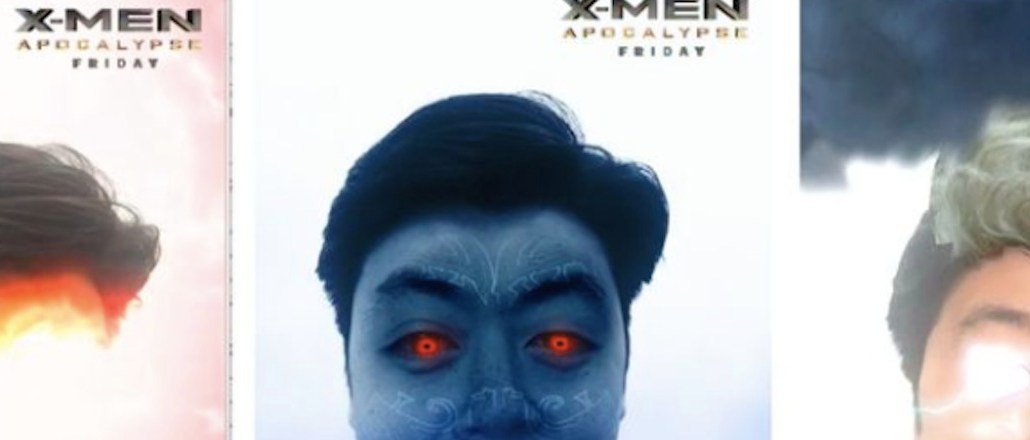
Brands are invading Snapchat more than usual today.
Snapchat users are noticing that its usual array of rainbow-spewing and other assorted face lenses have been completely displaced by several sponsored lenses for the upcoming “X-Men: Apocalypse” movie. That’s because Twentieth Century Fox purchased Snapchat’s first-ever “lens takeover” package, which lets users morph their faces into characters from the movie.
Some people, however, feel that Snapchat is selling out to companies and running the fun lenses that make the app unique.
Naturally, they took to Twitter to complain:
today is the worst day ever. they got rid of the dog filter on snapchat! for x-men filters! i hate x-men now!
— Damaris Stroker (@damarisstroker) May 23, 2016
Snapchat letting X Men take all of our precious filters away for a promo run what a travesty
— ryan (@rynvskv) May 23, 2016
thanks x-men for ruining snapchat
— Cass (@cassfly) May 23, 2016
when basic hoes find out snapchat took away the dog filter for X-Men pic.twitter.com/48Zw8orEyi
— madeline ava chadie (@madelinechadie) May 23, 2016
X-Men bought ALL of the Snapchat lenses today and I’m freaking irate! Now I will purposely NOT be seeing that movie
— Jackie O (@JackieOProblems) May 23, 2016
Relax: the regular selection of lenses come back tomorrow.
In addition to the lens-centric promotion, Twentieth Century Fox is the first company to let users buy tickets to the upcoming X-Men installment within the app. The ads will appear starting today and until May 26 within the Live and Discover stories, letting people swipe up and buy the tickets from Fandango.
Terms of the agreement were not disclosed, although it’s likely in the high six-figures. Digiday previously reported lens can cost as much as $700,000. So, it’s not shocking that a deep-pocketed movie studio is once again wading into untested waters with a pricey Snapchat promotion. Last year, Fox Studio’s “The Peanuts Movie” was the first brand to buy a sponsored lens and Sony bought the first ever pop-up Discover channel for James Bond’s “Spectre.”


More in Media

The Hill adds interactive election tools to subscription offering ahead of the midterms
The Hill is betting on interactive subscriber-only features to help grow its new subscription business ahead of the 2026 midterms.
The Daily Mail tests GEO with brands ahead of AI visibility product
The Daily Mail is running around a dozen GEO tests to work out what works before turning its AI visibility offering into an official product early next year.

Meta delays rollout of updated commercial terms amid publishers’ collective pushback
Meta’s updated commercial terms have galvanized publishers into a coordinated pushback over the company’s use of their content.