Join us Dec. 1-3 in Nashville for the Digiday Programmatic Marketing Summit
Racked’s shoppable holiday market gives small retailers an e-commerce boost

Making holiday gift guides easy to shop is a no-brainer. Commerce continues to bleed into content as publications look for an alternative to waning ad dollars, and the gift-giving time of year lends itself to the click-to-buy model.
For the shopping season, Vox Media’s Racked.com integrated an online shopping cart onto its site for its “L.A. in New York” holiday market.
Racked, which focuses on shopping and fashion content prime for commerce, hasn’t previously done much with shoppability beyond simple affiliate links. It has a national property as well as local editions — Racked LA, NY, San Francisco and Miami — and the goal of those sites is to encourage in-store shopping.
“Racked is a site that’s meant to inspire our readers to shop in store,” said Natalie Alcala, editor of Racked LA. “But we’re also aware of the times. People are shopping online.”
The L.A. in New York guide was the online version of a physical pop-up market in New York’s SoHo the weekend of Dec. 4. Fifteen retailers — small boutiques like Boy + Girl, accessories brand J. Southern Studio and nail polish line NCLA — with limited e-commerce abilities are all shoppable on Racked.com through the cart.
For Racked, the appeal of its online cart is that it doesn’t lead readers away from the content. The cart slides out onto the Racked screen whenever a reader clicks a buy button. Shoppers choose size, color, quantity and then check out without leaving the Racked site.
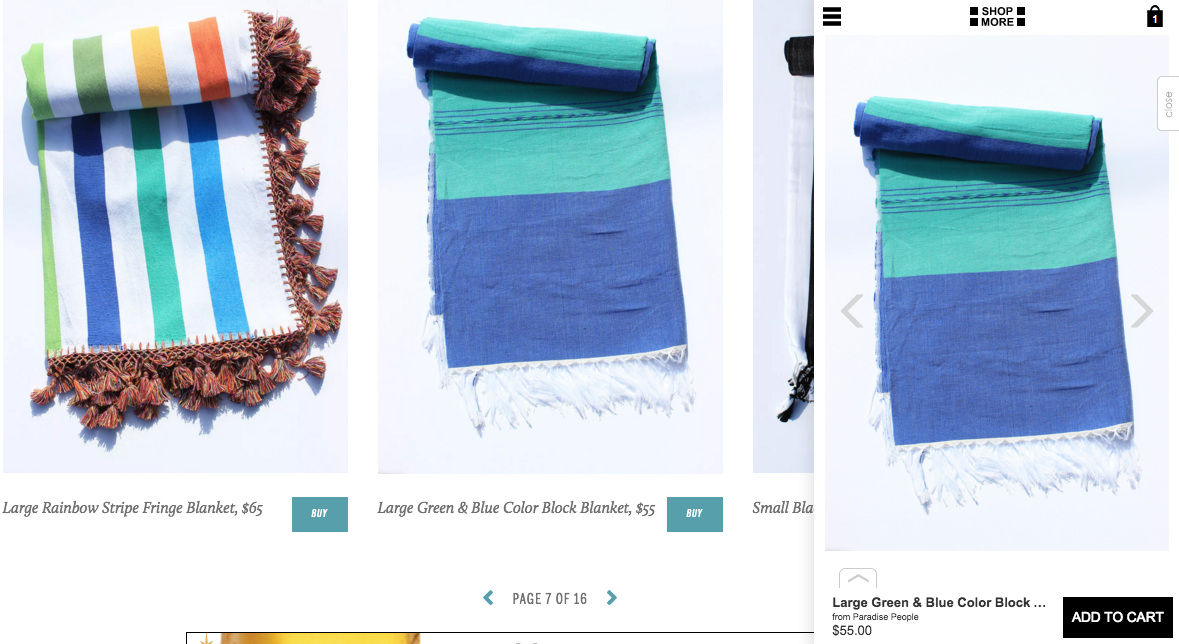
Racked’s audience has grown to about 5 million monthly uniques across its six properties, with the national edition being the most-trafficked. Vox Media has positioned the site as a growth spot for the network, given that 82 percent of its readers are women, with an average age of 29 and a household income above $100,000. Vox Media chairman and CEO Jim Bankoff has said that’s a prime demographic for the company.
“For us, the goal is always to keep the reader engaged longer,” said Alcala. “It helps that we can also give these small retailers more exposure.”
Bringhub, which powers the online shopping cart, also works with The Huffington Post and SheFinds.
“There’s more than one factor involved in why publishers are seeking out new commerce capabilities,” said Bringhub’s cofounder and CEO Dominik Pantelides. “Revenue is declining and they’re looking for new monetization methods. We enable them to monetize without them having to change their core competence.”


More in Media

The Daily Mail tests GEO with brands ahead of AI visibility product
The Daily Mail is running around a dozen GEO tests to work out what works before turning its AI visibility offering into an official product early next year.

Meta delays rollout of updated commercial terms amid publishers’ collective pushback
Meta’s updated commercial terms have galvanized publishers into a coordinated pushback over the company’s use of their content.

Creators say it’s difficult to make money from news — with platform rules and brand guidelines
With more people getting news from creators than traditional media, those creators are still trying to build sustainable businesses.