Join us Dec. 1-3 in Nashville for the Digiday Programmatic Marketing Summit
Phishers target Facebook users with scams disguised as ‘dislike’ buttons

Savvy scammers are already capitalizing people’s excitement on Facebook’s decision to soon add a “dislike” option to posts.
Users are seeing ads displaying “early invites” to try out a dislike app allegedly created by Facebook, according to several security blogs. For those gullible enough to fall prey to the trick, they’re inundated with a bait-and-switch scams, surveys and liking pages.
In one instance, scammers are attempting to trick people into forking over $1,400 to participate in a get-rich-quick scheme. Others are presented with a affiliate surveys, where the scammers cash in because they’re paid a small fee if people sign up for it.
“In some cases they will even lead you to pricey premium rate mobile phone subscriptions, online surveys that generate the scammers income, or trick you into downloading malicious code onto your PC,” writes security expert Graham Cluley on his website.
Here’s what a typical ad looks like:
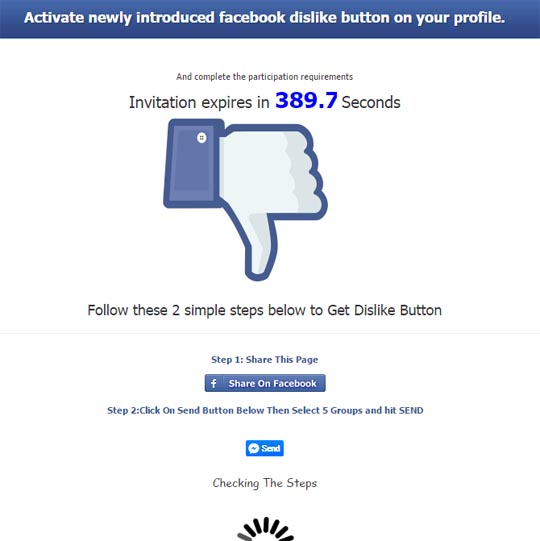
The scammers have found a “great opportunity” in targeting users’ pent-up demand over the highly anticipated button and have decided to “exploit it for their benefit,” says security monitoring blog Hack Read.
Whether its luring people in with celebrity sex tapes or free gift cards, phishing scams have been pervasive on Facebook for years and experts say it’s better to ignore them (or perhaps install an adblocker).
When the “dislike” option finally does arrive, it will be coming from Facebook itself. “The important thing about a Facebook-provided Dislike button, of course, is that you wouldn’t need to go to some random-looking third-party site to download it,” observes Naked Security’s Paul Ducklin.
A Facebook representative told Digiday that “this particular scam doesn’t stand out in terms of volume or impact,” adding that users “rarely come into contact with spam or other low quality content” like this.
Photo via Shutterstock.


More in Media

Creators say it’s difficult to make money from news — with platform rules and brand guidelines
With more people getting news from creators than traditional media, those creators are still trying to build sustainable businesses.

Why CNN International is building for agentic ad market that barely exists yet
CNN International is still chasing its first agent-sold dollar by Q1.

Media Briefing: The transatlantic push to rein in stealth bots is gathering pace
U.S. and U.K. publishers are pushing for laws to crack down on stealth AI crawlers as bot scraping surges and demands for transparency grow.