
The Feed is Digiday’s Web-culture corner. Check The Feed everyday for Web-culture news roundups, infographics, essays and more. Follow us on Twitter for updates throughout the day @SWeissman.
Pinterest might not yet be the new Tumblr, but it’s certainly making eye-opening gains.
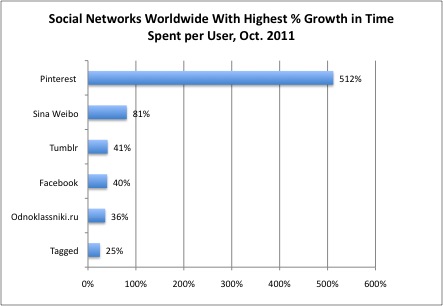
According to data from ComScore via eMarketer, Tumblr experienced a 172 percent increase in worldwide audience size between October 2010 and October 2011, topped only by China’s version of Twitter Sina Weibo with a 181 percent increase.
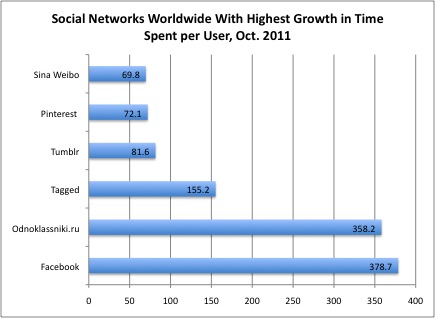
Looking at growth in time spent per user on social networking sites worldwide, Pinterest saw an average of 72.1 minutes per worldwide user in October 2011, which is a 512 percent increase since May 2011. That’s no small feat. Tumblr visitors spent an average of 81.6 minutes on the site, up 41 Tumblr visitors posted an average of 81.6 minutes in October, up 41 percent from October 2010.
While both Tumblr and Pinterest have seen impressive growth in audience size and time spent per user, they are still pretty far behind the time spent per user on Facebook, which also saw 40 percent growth from October 2010 with users spending an average of 387.7 minutes on the site in October 2011.
Social Networks Worldwide by Minutes per User, Oct. 2011
 Social Networks Worldwide by % Growth in Time Spent per User, Oct. 2011


More in Media

How a fashion creator turned audience demand into a 500+ client styling business
A creator with a fashion merchandising degree speaks on her quest to diversify revenue fast, from styling to sweat equity investment.

Forbes looks to Google AI pilot for insights as publishers seek value beyond the click
Forbes has joined Google’s paid News AI pilot that gives Google expanded rights to its content to test new ways of providing readers with context about stories before they click through.

The Verge switches up its audience team to prepare for Google Zero
The Verge has restructured its audience development team to prioritize loyal readers over traffic and page views.