
The Pinterest gold rush is in full effect. So far it’s been mostly companies in retail/e-commerce, fashion, food and design that have pretty successfully set up shop on the social image-sharing platform. Publishers aren’t about to be left out when it comes to the Next Really Big Thing.
Here are five publishers that have branched out onto Pinterest and are using the new hot platform to expand how they present their content. The five we have chosen take advantage of the visual nature of Pinterest and have well-organized and/or entertaining boards that showcase content they wouldn’t necessarily publish on their main publication websites. They also have seen some success in attracting consumer interactions, as measured by attracting followers.
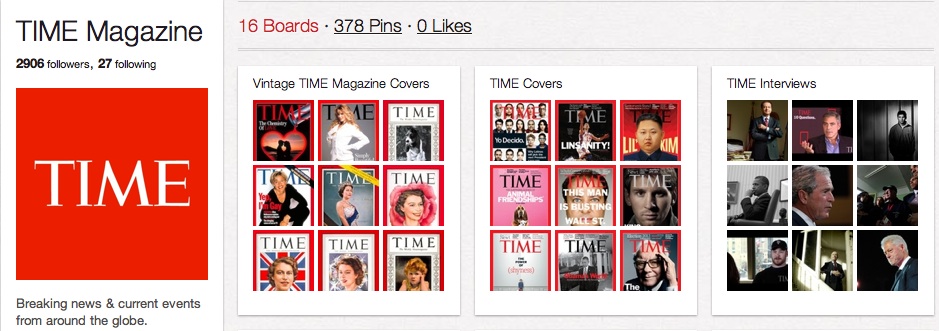
Time Magazine
Followers: 2,903
Boards: 16
Highlights: Well organized categories like “Time Interviews,” “Time Book Reviews” and “Time Behind the Scenes.” Also fun product guides and graphics.
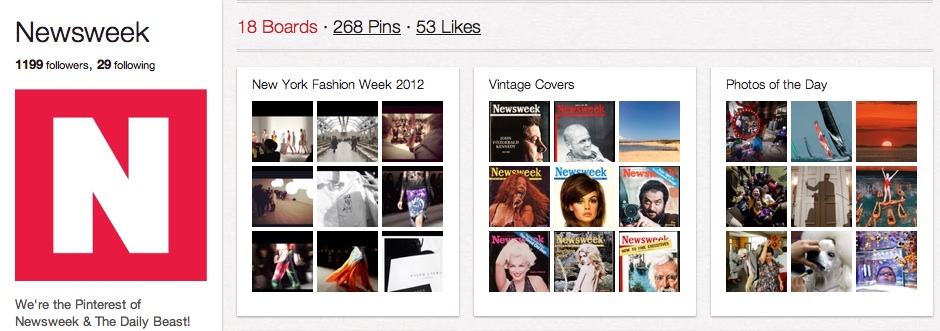
Newsweek
Followers: 1,198
Boards: 18
Highlights: Good assortment of fun and informative boards, like “Vintage Covers,” “First Lady Fashion” and “Top Stories.”
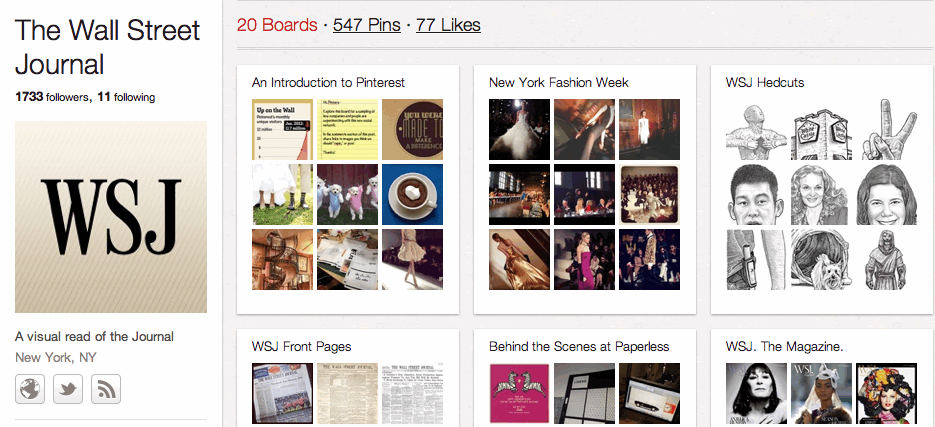
The Wall Street Journal
Followers: 1,730
Boards: 20
Highlights: As we covered on Digiday, the WSJ has done a good job of integrating Pinterest into its social media presence. Boards include “WSJ Front Pages,” “WSJ Headcuts” and “WSJ Design and Decorating,” to name a few.
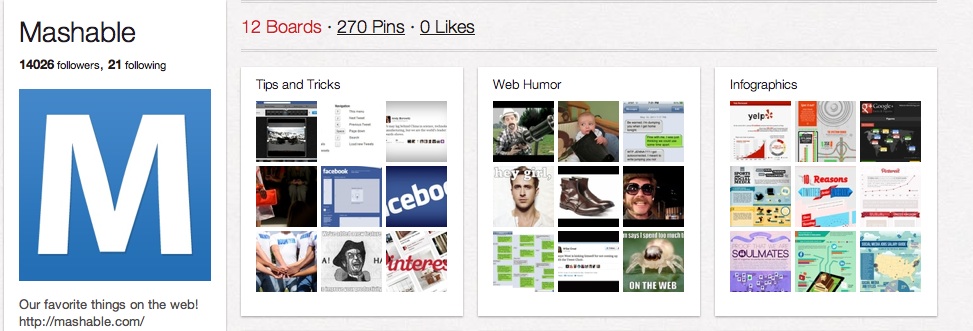
Mashable
Followers: 14,026
Boards: 12
Highlights: Relevant and fun Boards for the tech world, like “Women in Tech,” “Web Humor” and “Social Media.”
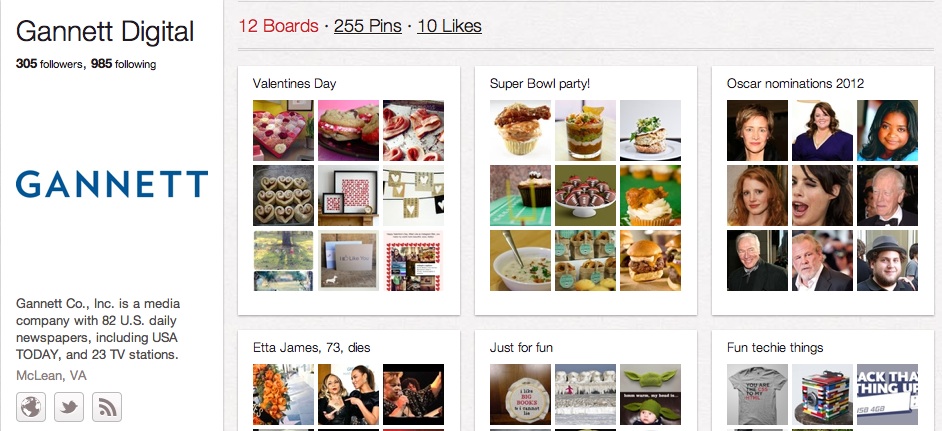
Gannett Digital
Followers: 305
Boards: 12
Highlights: Boards include “Fun techie things,” “Oscar nominations 2012” and “For the office.”


More in Media

How a fashion creator turned audience demand into a 500+ client styling business
A creator with a fashion merchandising degree speaks on her quest to diversify revenue fast, from styling to sweat equity investment.
Forbes looks to Google AI pilot for insights as publishers seek value beyond the click
Forbes has joined Google’s paid News AI pilot that gives Google expanded rights to its content to test new ways of providing readers with context about stories before they click through.

The Verge switches up its audience team to prepare for Google Zero
The Verge has restructured its audience development team to prioritize loyal readers over traffic and page views.