Join us Sept. 14-16 in Miami to connect with top publishing leaders
Digiday+ Research: Publishers stick with 2020 revenue priorities, meh on the metaverse and emerging tech
This research is based on unique data collected from our proprietary audience of publisher, agency, brand and tech insiders. It’s available to Digiday+ members. More from the series →
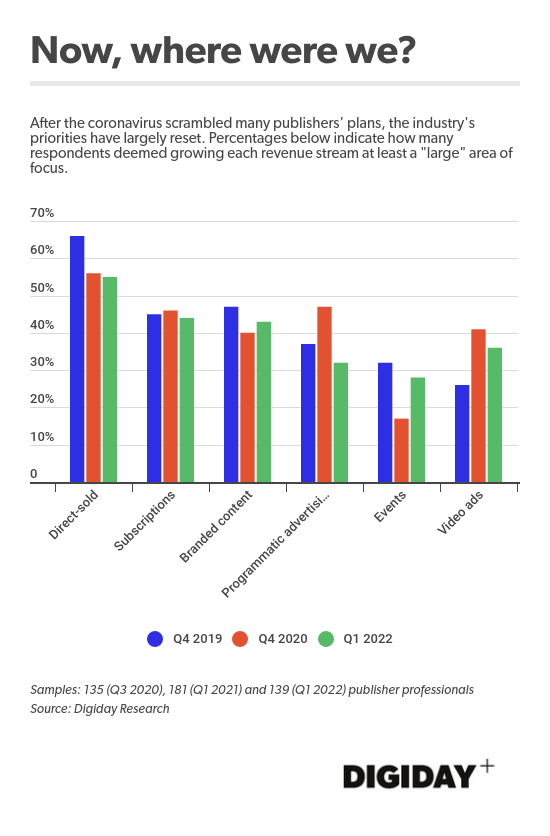
With some exceptions, publishers’ revenue priorities are nearly identical to the ones they set entering 2020. Direct-sold advertising, subscriptions and branded content were considered the largest areas of focus for the 139 publishing executives surveyed by Digiday in the first quarter of 2022 — as they were pre-pandemic in the fourth quarter of 2019.
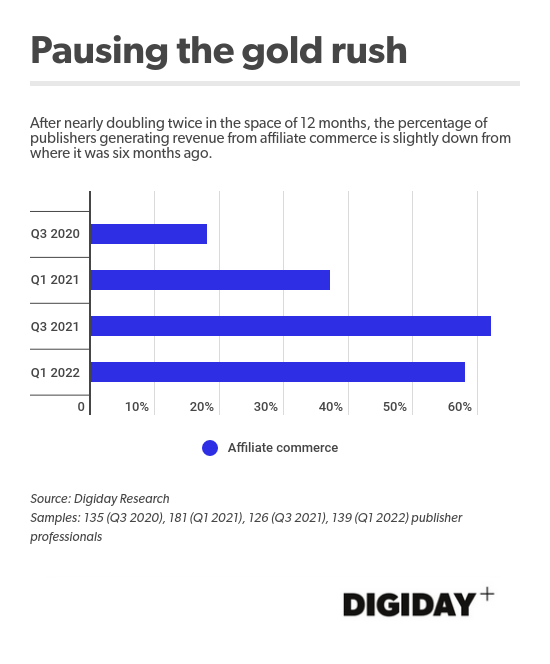
Publishers were investing more in commerce as an approach to diversify revenue streams, according to 139 publishing professionals surveyed in the first quarter of 2022. However, that share reported that affiliate commerce revenue leveled off after a pandemic-powered year of significant gains.
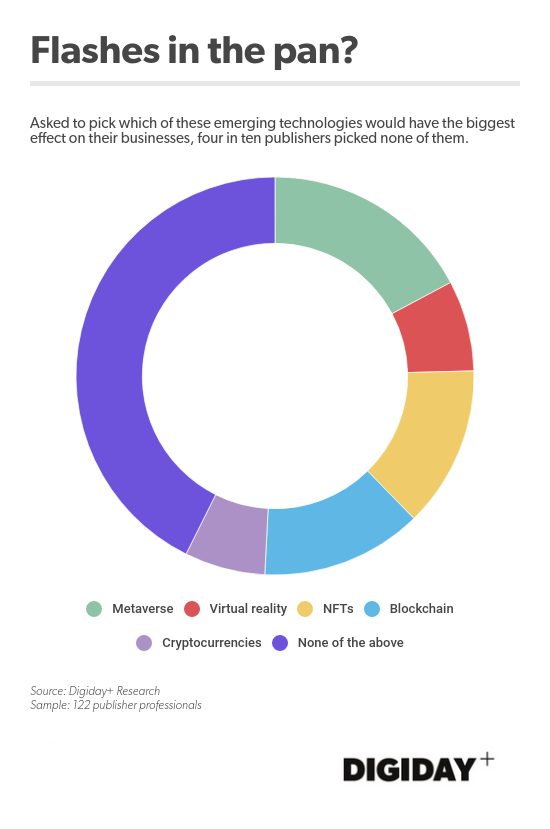
And despite the considerable hype surrounding the promise of emerging technology for the media and marketing industries, publishers seem neither hugely impressed with or planning for significant investment in these burgeoning areas. Close to half of the 122 publishing execs surveyed in February think none of these emerging technologies will have a significant impact on their businesses over the next few years. The metaverse, NFTs and blockchain held the most promise, albeit small, while virtual reality and cyrptocurrencies were far lower priorities.


More in Media

What’s in and out for creators heading into Q4
A look at the creator economy trends heading in to Q4 2026, from clipping to creators in the C-suite, diversification and regulation.

Google divestiture is dead — and publishers are fine with that
Publishers didn’t get a Google AdX breakup; they got behavioral remedies, promised transparency and a new reminder that Google’s real power lies in controlling demand, not pipes.

Marketers say usage rights are driving up the price to work with creators
Creator pricing’s biggest hurdle are usage rights, which can create confusion and frustration on every side of the negotiation table.