for the Digiday Programmatic Marketing Summit, May 6-8 in Palm Springs.
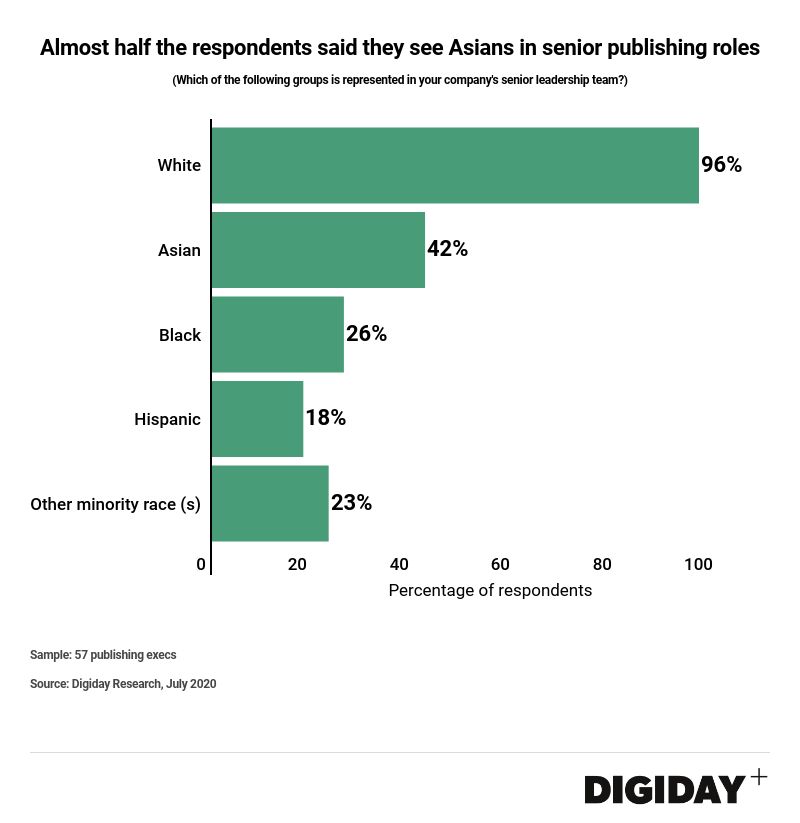
Digiday Research: 42% of publisher respondents say their companies employ Asian people in senior roles, while just 18% say Hispanic employees have top jobs
This research is based on unique data collected from our proprietary audience of publisher, agency, brand and tech insiders. It’s available to Digiday+ members. More from the series →
Along with their counterparts at agencies, brands and ad tech companies, publisher executives are grappling with how to make their employee ranks more diverse and cultures more equitable.
Certainly making the senior ranks more inclusive is among the pressing goals for publishers going forward. Digiday Research conducted in July asked publisher employees which racial groups are represented in their company’s senior leadership team. Nearly every respondent said their companies employed white people in senior leadership and almost half said Asians people are represented in top jobs, followed by 26% seeing Black employees in senior roles and 18% observing Hispanics at the top echelons of publishing companies.
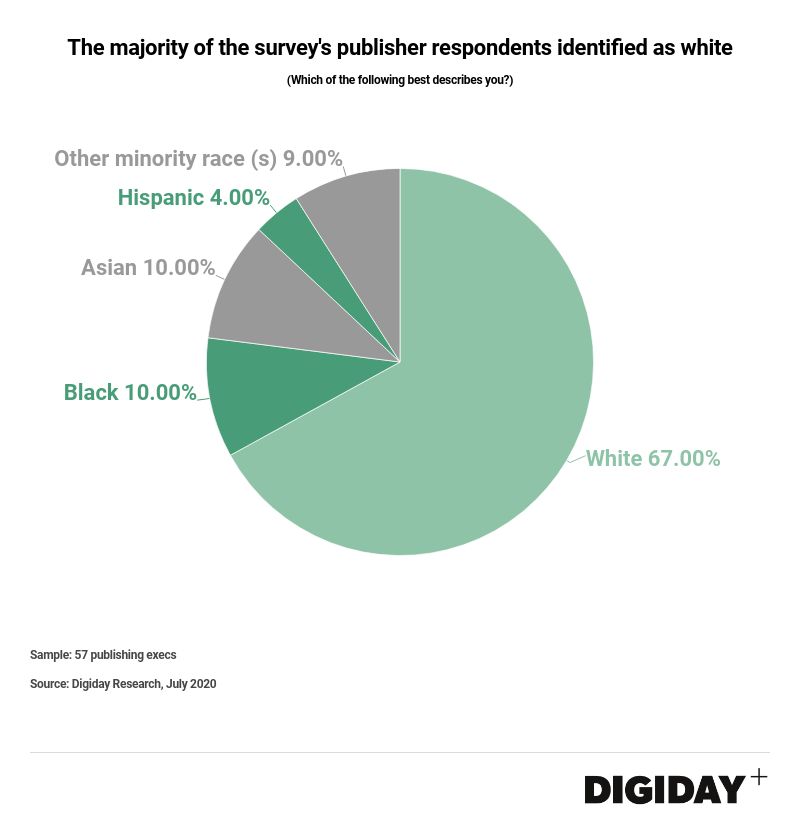
Two-thirds of survey respondents described themselves as white, while 11% said they were Asian and another 11% said they were Black. Just 4% said they were Hispanic and 9% described themselves as another minority race.”


More in Media

Taboola’s next act: an AI answer engine for publishers
HuffPost UK, Reach and USA Today Co. are rolling out Taboola’s AI-powered answer engine to boost engagement.

USA Today Co.’s AI licensing deals drive ‘notable’ revenue in Q1, despite pressure on traffic and programmatic
USA Today Co.’s AI licensing deals helped drive meaningful year-over-year revenue growth in Q1, despite pressure on traffic and programmatic.

How former college athlete and Airbnb host turned Love Island fame into widespread success
Love Island star TJ Palma had a successful career before his fame, now he’s generating even more revenue for his businesses through creator content.