Join us Oct. 26-28 in Newport Beach for the Digiday Media Buying Summit
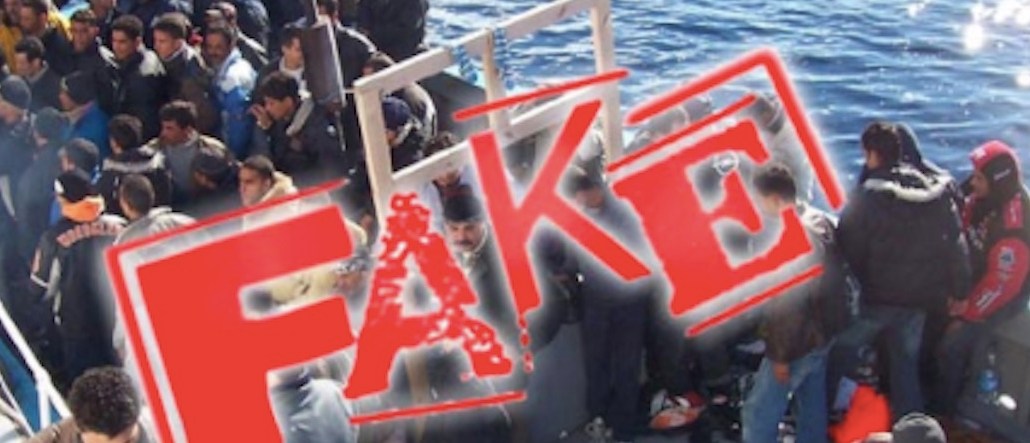
Fake news and the spread of misinformation isn’t going anywhere. And according to recent research from broadcaster Channel 4, Brits are very bad at spotting it.
Channel 4 and YouGov surveyed 1,700 people showing them six individual story headlines. Of these, three were true, and three were fake. These included “Tourist bitten by massive crocodile after trying to take a selfie” (true) and “Immigrants to be given £8,500 upon arrival to boost economy” (fake) as well as some Trump-related headlines too.
Only 4 percent were able to correctly identify the story by the headline.
“There were a few interesting demographic divides,” said Chris Curtis, political researcher at YouGov. “Remainers (those who voted to stay in the EU), those we class as ‘ABC1’s’ (middle class) and men generally identified more stories correctly as either true or false based just on the headline.”
People overestimate themselves
As shown in research in the States too, people overestimate their ability to pick out what’s true: Half of Brits (49 percent) say are confident they can tell the difference between a fake news story and a real news story, even though only 4 percent identified them correctly from the headline alone.
Source: YouGov / Channel 4, Jan.
Facebook is not a primary source of news
Channel 4 finds that for the most part, people aren’t getting their news primarily from social networks like Facebook. (Research finds people who get their news from Facebook believe false news 83 percent of the time.) Over half (53 percent) say they get their news from broadcasters, either online, TV or radio, and just 6 percent from Facebook.
Source: YouGov / Channel 4, Jan.
Gen Z is less skeptical
Studies find that younger people are less discerning. They also tend to get more of their news from Facebook or Reddit rather than multiple broadcasters and media. Marketing firm Ezanga surveyed 1,200 people worldwide born after the mid-1990s and found that 61 percent head to online communities like Reddit for further information.
When asked, “What aspect of the websites you visit inspires the most trust?” 56 percent answered that the name and source inspired trust, compared to 44 percent who said it was the presentation of the site.
Source: Ezanga, Dec.
One in four share fake news
The problem, then, comes when people keep sharing it. According to research from Pew in December, one in four Americans (23 percent) had shared a political fake news story, 14 percent of them knew at the time that it was fake and shared it because either they wanted to spread misinformation, to “call out” the stories as fake, for the amusement value, or for some other reason.
Source: Pew, Dec.
Social networks need to step up
According to the YouGov and Channel 4 survey, two-thirds of Brits (66 percent) think social media sites such as Facebook or Twitter aren’t doing enough to tackle fake news. To help tackle the problem in the last few months, Facebook has been working with third-party fact-checkers in the U.S. and in Germany, as well as launching initiatives with publishers in France, and banning fraudulent sites from its ad network. But still only 8 percent of Brits feel that social networks are doing enough.
Over half (55 percent) think the government is not doing enough to tackle fake news. Earlier this month a group of U.K. MPs has launched an inquiry into fake news, led by the Culture, Media and Sport Committee.
Source: YouGov / Channel 4, Jan.
Images: via That’sFake.com


More in Media
As creators increasingly move into Hollywood, deal terms can put their IP at risk
Advertising Week New York explored the business of creator-led programming across entertainment, and the problems arising within it
Apple’s Safari ad tech blocklist sends publishers back to IAB Tech Lab’s Trusted Server
What publishers once filed under someday now has a deadline, and Apple set it.
Media Briefing: As AI search shifts referrals, publishers revisit registration walls
As referral traffic declines, publishers are rethinking registration walls as a way to turn anonymous visitors into valuable known users.