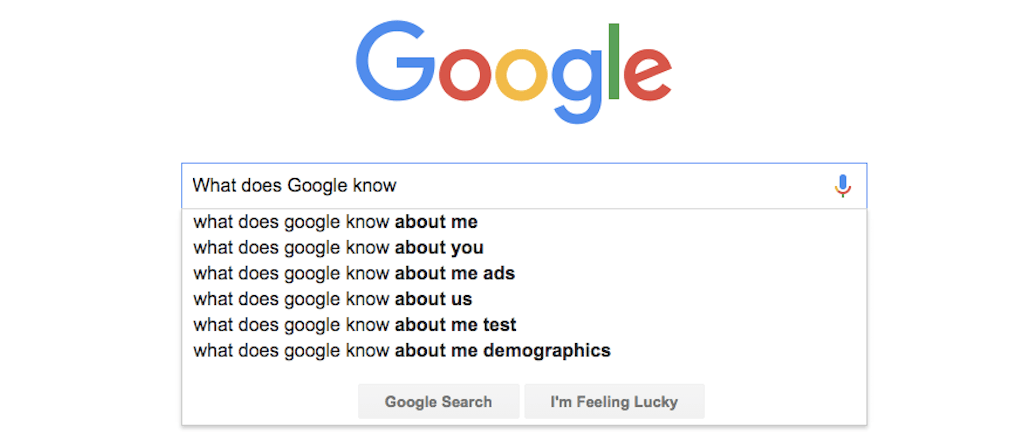
Google’s new “My Activity” page, where users can now view their entire internet history, represents another step toward the perfectly personalized ad. It is Google’s latest move to catch up to Facebook in the one area it has held back, using highly personal information for the most accurate marketing messages.
Google made a My Activity page for its users of Android phones, YouTube and search to see all the information it stockpiles on them. And it is giving the users the option to say they want super-specific ads customized just for them based on that data. Google has been moving to incorporate more of its unique insights into advertising and has gradually developed interest-based ads and customer e-mail matching capabilities, when brands bring contact lists to Google for advanced ad targeting.
Here’s what the new personalized ads options mean for users and brands.
What does Google know?
Basically everything. If someone uses an Android phone, Google knows every location users plugged into a map, every venue visited in real life, every search, every voice command, every app opened, every mobile purchase. Now Google has opened a My Activity page that neatly lays it all out.
Even ad tech workers are surprised by just how much Google knows about its users. “It was a holy shit moment, looking at the timeline of activity and getting into geo-locations and looking at voice audio — it’s staggering,” said Garrett MacDonald, evp of sales at Kochava, an ad and data technology firm.
Why is Google doing this?
The old way of targeting ads based on cookies is becoming obsolete. Cookies were never perfect on desktop — people could erase them and multiple people could use the same computer, obscuring who visited which page — so these files containing web data were not always accurate. Now, they are even less reliable as more internet activity is happening on mobile devices.
“Identity is still a clusterfuck,” MacDonald said. Consumers are on Gmail, YouTube, Chrome, switching devices, using business services and personal ones.
Google wants to unify all this activity by identifying users wherever they are, so device IDs and log-in information for apps have become the most accurate data markers.
How does this compare to Facebook?
Facebook is the king of logged-in users, with 1.7 billion people using its service on desktop and mobile. It can use all the data people hand over to the network and accurately target them with ads on Facebook and increasingly on apps that use its network to serve ads. Facebook’s ads have forced Google to up its game with better targeting capabilities.
“Facebook is owning the hour because they have what is widely believed to be the most robust targeting information it can act on. Google has so much targeting information, but it hasn’t let advertisers act on it yet,” said Jared Belsky, president at 360i.
Why has Google been holding back?
Several advertisers who declined to go on the record have characterized Google as content with letting Facebook stay ahead with aggressive use of ad targeting based on consumer data so it can follow and take less heat for it. “Google is still being pretty cautious in how it’s doing this,” one search marketing executive who works closely with the company recently told Digiday. “Facebook has opened the door for them, and they are capable of doing a lot more.” If Facebook already employs some of these methods, then Google will face less resistance from consumers and regulators concerned with privacy. “To Google’s credit, it is starting by letting people opt in, letting people feel in control and wanting ads that are most useful to them,” Belsky said.
Where is Google headed?
Advertisers said this is just the beginning of what Google will eventually offer in terms of ad targeting. It’s still holding back in ways it could piggyback on search history and mobile activity to serve up the most spookily accurate marketing in real time. “This is a precursor of things to come. Google is just starting to bring together its best assets and data across all platforms to allow targeted personalized messages,” Belsky said.


More in Media

SPUR publishes AI content tracking standard, pitches OpenAI and Google to join advisory board
Publishers are pushing for AI transparency with a new SPUR standard to track how AI tools use content, and inviting frontier AI labs to help.

Media Briefing: Publishers are turning GEO from an experiment into a business
Publishers are turning GEO into a new revenue stream as clients increasingly look to boost their brands’ visibility in AI-generated answers.

The creator economy’s stance on AI is shifting — again
Creators are integrating AI tools into their workflows, but at what point does it overtake the creative process and result in sameness?