Join us Oct. 26-28 in Newport Beach for the Digiday Media Buying Summit
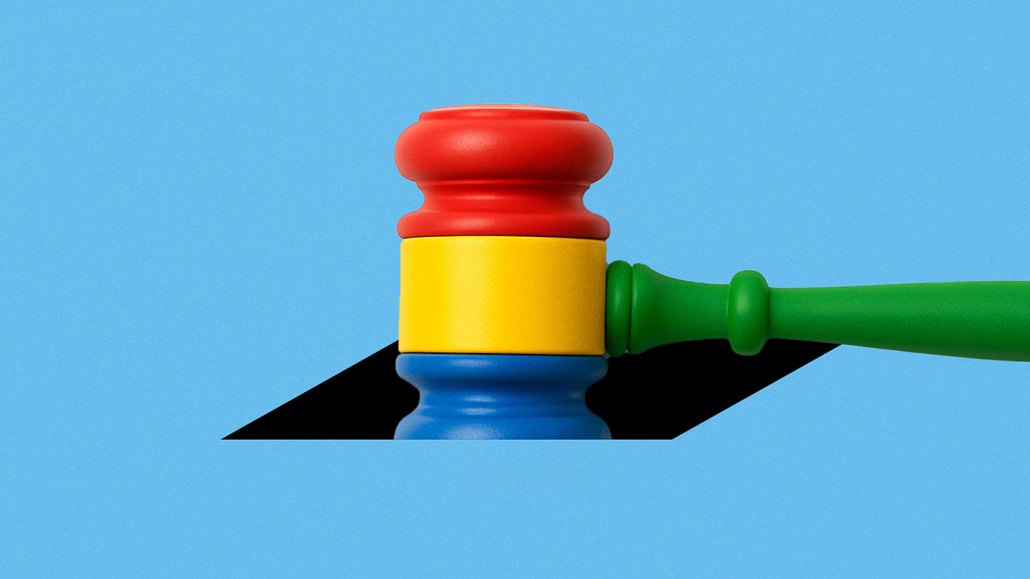
Google’s immunity to breakup is starting to feel inevitable.
Another attempt to force one has been written off. That’s despite the world’s largest advertising business being judged to have built that dominance on an illegal monopoly over online advertising. Judge Leonie M. Brinkema, of the U.S. District Court for the Eastern District of Virginia, ruled the company will answer instead through a string of behavioural remedies.
Why she chose that path isn’t public yet. Her written reasoning is sealed for 14 days while both sides check it for anything that shouldn’t be made public. Until it’s released, nobody outside the case knows exactly what Google now has to do.
What is known is that Judge Brinkema’s decision draws from “most” of the behavioral changes to Google’s business practices that the Department of Justice and Google proposed during the trial. Those proposals fall into three broad categories: limits on self-preferencing tactics, data-sharing with publishers and nondiscriminatory treatment of rival exchanges and ad servers.
That’s where the consensus was on both sides of the lawsuit. Even Google’s own lawyer conceded during their closing argument that the two sides were “largely aligned” on behavioral remedies in principle. Where they split was how far self-preferencing bans reach and who gets to see what.
Google, for its part, offered to let rival ad tech companies see bids happening in its programmatic marketplace in real-time, and to let publishers insert an independent auction tool between its two main products so its own systems don’t get final say over every sale. But that offer only covered standard banner-style ads on sites. It left out video,streaming TV and in-app ads. Unsurprisingly, the DOJ wanted that same visibility extended to advertisers too, not just publishers plus a flat ban on Google routing bids or setting prices in ways that favored itself, its actual code made public so outsiders could check it worked fairly, and the introduction of an independent auction tool applied across formats not just the ones Google chose to include.
Where Judge Brinkema landed on that gap will be one of the more consequential aspects of the remedy. For anyone who believed a breakup was the only way to set the open web up for a sustainable future, that outcome will sting. But it shouldn’t come as a surprise. Judge Brinkema spent the trial questioning whether a breakup was workable in the first place, raising concerns about the lack of a credible buyer for Google’s ad exchange — an obvious candidate like Microsoft would trigger its own antitrust review before a deal could even close, she mused at one point.
Beyond that was a concern about practicality. She pointed out that the ad tech market was changing too fast for anyone to say with confidence what it would look like in three to five years. Maybe even longer once appeals enter the picture since a divestiture order would almost certainly be stayed while Google fights it — a process that could run years. Behavioral remedies, by contrast, could start biting within a year, even mid-appeal.
Then there were the downstream risks Google’s own counsel raised during closings. The monopoly finding covered standard display ads on the open web, but Google’s ad exchange and ad server also handle video and mobile app ads — markets where Google was never found to hold illegal power. A divestiture therefore, Google argued, would take all of that with it regardless. It would also hand off a product that 92% of publishers get for free today, with no guarantee a new owner would keep it that way or maintain current service levels.
Read together, this isn’t just Google escaping a fourth breakup attempt. It’s another judge signaling that divestiture, as a tool, may not fit a market moving too fast, and a legal process too slow, for structural remedy to ever catch-up.
And yet, the same could be said of behavioural remedies. A market too fast to predict three years out is too fast for a monitor to police in real time. Which is to say the same volatility that makes divestiture look poorly timed makes enforcement of any self-preferencing ban just as hard to pin down.
Speed to implementation isn’t speed to resolution either. Behavioral remedies might start biting within a year to 18 months but that’s the beginning of years of dispute over what compliance actually means, not the end of them, and Google had already signaled during the trial that it intends to contest every clause of whatever order lands. The trust problem cuts the same way too. Giving a monopolist room to fix its own conduct before reaching for structural surgery only makes sense if there’s a good-faith actor on the other hand. Nothing in Google’s record on evidence handling in this case supports that any more than it supports confidence in how a forced buyer might behave.
Whether any of this changes anything comes down to how hard the court enforces it. Google spent the trial arguing it had already made, or planned to make, most of the changes on the table. That claim gets tested now. Three things need to hold out for it to ring true: interoperability, no quiet favoritism in how Google treats its own tools versus everyone else’s and a real ceiling on how much data Google can move across its other businesses. Because this antitrust case was never really about the ad revenue. It was about the view Google got from sitting on every side of the auction, and what that view let it do everywhere else it competes.
“Google can take a deep exhale now that their business will remain intact,” said Shamsul Chowhury, svp paid media at Zeno group. “For a long time Google has been under scrutiny for having access to both advertising and measurement platforms, almost as if allowing the students to grade their homework. I’m sure Meta and others would have liked to see some sort of breakup to give themselves a better slice of the digital ad spend pie. With Meta getting fined and Amazon also getting sued, Google seems to have gotten away relatively unscathed.”
It’s a result the industry has gotten used to. This marks the fourth time lawmakers have tried to force Google apart and come away with a fine, a rule chance or a promise to behave. The hope keeps coming. The outcome never does.


More in Media Buying

Publicis is selling directly to AI-anxious CEOs as it steps away from traditional pitches
Publicis boss Sadoun says agency group is skipping CMOs in more new business pitches, as Groupe notches up new business wins.
Ad Tech Briefing: Zeta goes big as Apple casts a shadow over Advertising Week
Advertising Week New York saw more ad tech M&A, plus, the rise of the “universal buying platform.”

‘An important capability for us’: PepsiCo CEO on Publicis switch
Pepsico’s Ramon Laguarta used a recent appearance in front of investors to champion the company’s decision to hand its global media account to Publicis Groupe.