Overheard: Revisiting the K2 Report on media agency practices like rebates and principal media
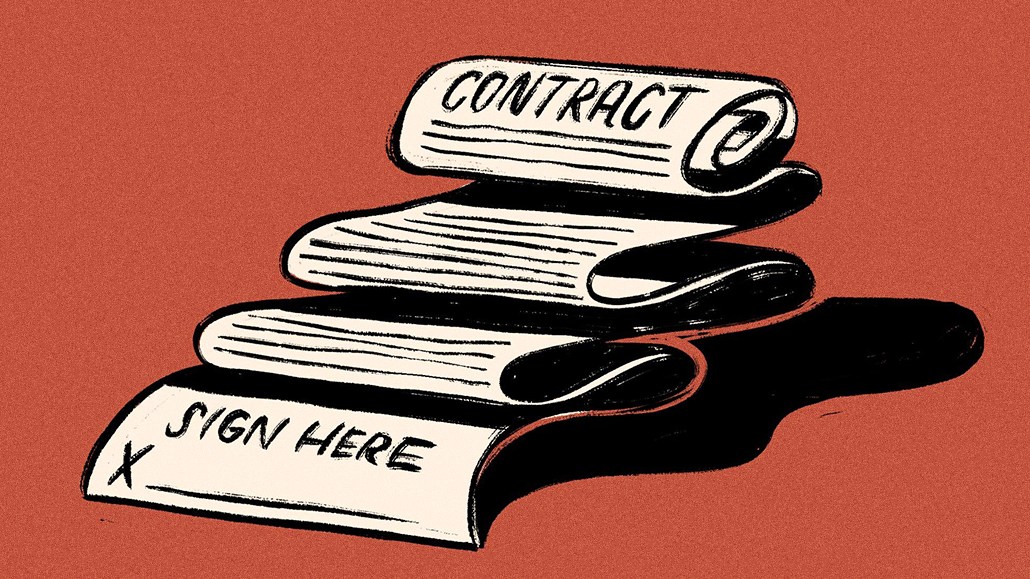
It’s been a decade since the infamous K2 report was issued by the Association of National Advertisers, which blew open the longtime opaque practice of media agencies holding onto rebates from publishers (instead of passing them back to their clients) as well as pursuing principal media under unclear contracts with clients.
And just as its longtime executives (including CEO Bob Liodice) are leaving, the organization decided to revisit the topic, and as Bill Duggan, ANA’s soon-to-depart evp said, get the band back together again. That included Jon Mandel, the legendary head of media for Grey Advertising, who in 2015 delivered a speech that laid bare the practice of agencies holding onto media rebates rather than passing them back to clients.
But also showing up for the webinar were Richard Plansky, who was with the K2 organization when it assembled the report, Keri Bruce, a partner with Reed Smith who specializes in helping marketers with agency contracts, and finally Nick Manning, who’s been helping Richard Foster with his unlawful dismissal case against WPP Media. Manning has been an outspoken critic of the practice of principal media.
The good news, according to Duggan, is that progress has been made among marketers, 60% of whom surveyed have updated their media agency contract in the past year. Less good is the news that the percentage updating contracts include non-transparent media and/or rebates clauses is still lacking — despite considerable coverage to the topic in the last two years.
In a three-hour webinar that went over the initial report’s finding but also showed where transparency has improved — and gotten worse — in the relationship between client and media agency, each of the four offered some pearls of wisdom as well as some daggers of truth. Here’s just a sampling of what they said.
Jon Mandel
(Longtime media head at Grey Advertising/Mediacom, whose speech at the 2015 ANA Masters of Marketing essentially kicked off the look into rebates and other bad behavior by media agencies — even though, as Duggan explained, the ANA was already investigating these behaviors as early as 2013.)
Mandel noted one of the inherent problems with principal media is the questionable value of the inventory a seller is giving the media agency — which may be inclined to, proverbially, put lipstick on a pig.
“If you’re a media seller, and in order to land this deal from an agency, you have to give them some media, which then gets resold as principal media. Are you going to give them the good stuff? Or are you going to give them the shit?” asked Mandel. “You can sell the good stuff at a premium, so you give them things that are not that that good in quality … The agency then takes this thing they got for zero, and they’re going to claim they bought it, and say, ‘Well, this media unit is perfect for your audience, because the people that will see this advertising are exactly your target audience.’ Well, if it’s the 16th time today that audience is seeing it, it’s really not that good.”
Nick Manning
(Former chief strategy officer at Ebiquity which was integrally involved in the K2 Report, and is actively involved on behalf of Richard Foster, who is accusing WPP Media of wrongful termination after blowing the whistle on principal media practices at that holdco.)
Principal media, to Manning’s thinking, “has been rather overblown, mostly by the agencies, and actually, if anything, it tends to overshadow other things that are going on, because there are lots and lots of other non-transparent schemes in the marketplace, in all areas of media, including retail media, connected television, social media, etc. In a way, it casts rather a long shadow, but it is a big deal, in as much as the agencies are reliant upon it for a lot of their revenue, and as a result, they push it very hard … You have a situation where the agency that you see day to day has two bosses as the client — the people behind the agency [and] the people who are pulling those strings in the holding company groups, and they’re caught a little bit between those two points. And it’s very difficult to serve two masters equally.”
Keri Bruce
(Partner at Reed Smith, and an expert in contracts.)
Bruce worked with the ANA to overhaul the templates of contracts between marketers and their media agencies, most recently in 2023, getting rid of some terminology like principal media, which can be understood to be different things, and is referred to elsewhere as proprietary media. Bruce et al replaced it with the term “non-transparent services,” which Is more of a catch-all term.
“You can negotiate a really great contract, but if you don’t have governance around that contract, it’s not very useful,” said Bruce. “Whether that governance is a regular audit, an annual audit … Part of that governance can be your annual review of your contract, which you should be doing. You shouldn’t be putting it in the drawer, and we’ve been saying this for years. There are too many changes in the media ecosystem and in the data privacy space, and so much data is involved with media that you really need to be taking a look at your contract overall, and at your contract compliance. Your auditors can often help you do that as well.”
Richard Plansky
(Regional managing director, North America for Kroll — but formerly the lead member of the team that assembled the K2 Report.)
Plansky talked about the complexity of the ad marketplace and how it inhibits marketers from asking questions of their agencies, since it’s human nature to not want to look stupid. But he also pointed to the human nature that drives a lot of business — anyone in business wants to make as much money as possible, so when chances arise to do so, it’s kind of hard to lay off. That’s the scenario that led to agencies seeing opportunity to hide rebates from their clients.
“Generally speaking, in my experience, altruism is not a good business strategy,” said Plansky. “People will almost always revert to the behavior that’s consistent with the incentives that are in place. People are at their jobs in business to be successful, and the measures of their success are going to drive behavior. So basically, if you ask any agency, media buyer buyer to choose between 75% margin and 20% margin, guess what’s going to happen, right? That is the most predictable thing in the world. It’s about human behavior.”


More in Media Buying
‘Defensible to the CFO’: Prime Day catalyzes Amazon video and DSP spend growth
Advertisers are wary of discounting away their profit margins, but find it hard to argue against increasing ad spend with e-commerce titan.
Omnicom Media and Rembrand partner to evolve in-content ad placements
The holdco and the ad-tech platform are taking in-content ad insertion to a new level, identifying scenes that can be monetized contextually.

Apple’s secret blocklist is the talk of Advertising Week New York (mostly off the record)
Ad execs at Advertising Week want to know one thing: are they on Apple’s block list.