Join us Dec. 1-3 in Nashville for the Digiday Programmatic Marketing Summit
Why DSW and other brands are pivoting back to ‘old’ marketing tactics
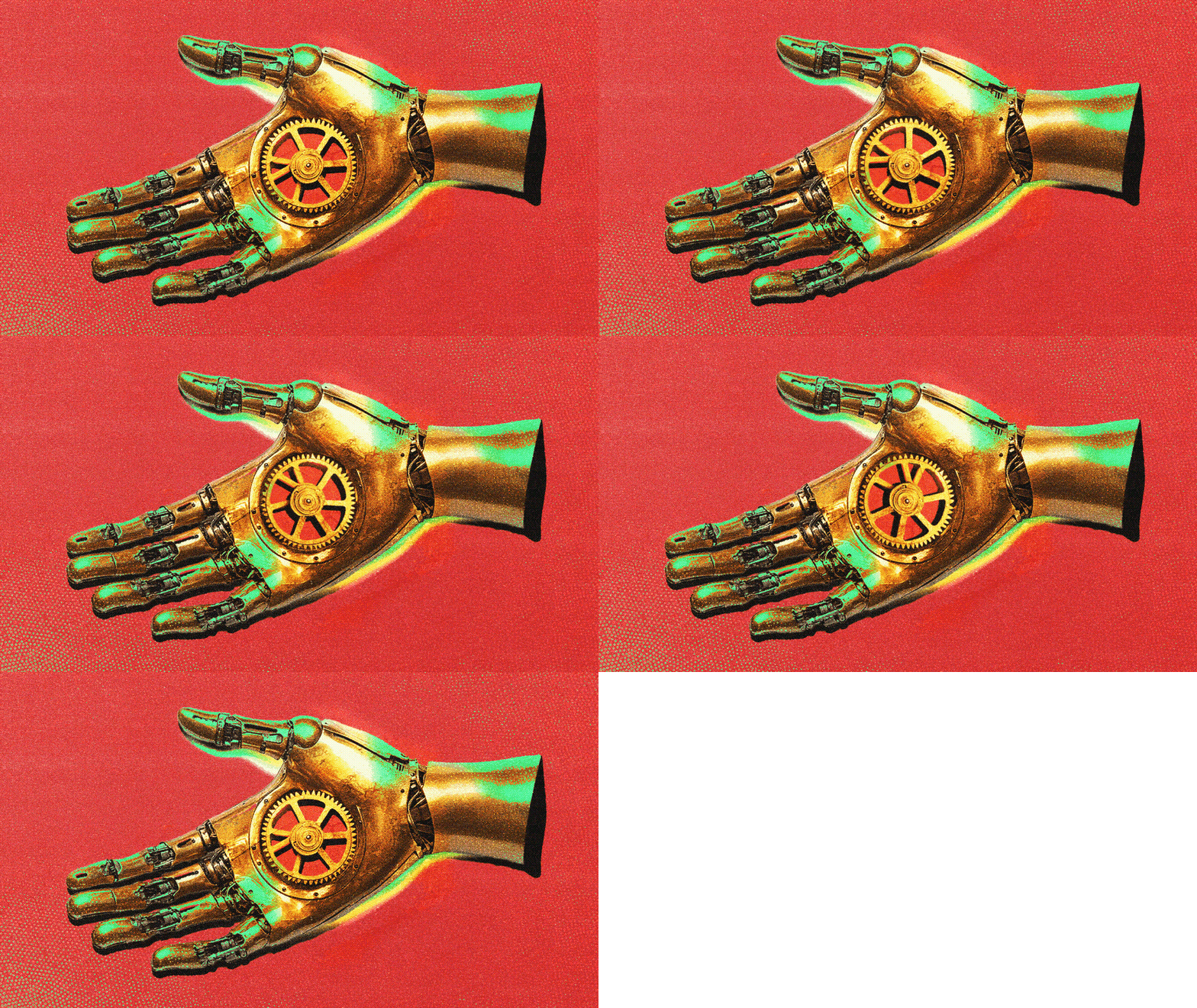
The phrase “what’s old is new again” doesn’t just apply to cyclical trends like low-rise jeans and flip phones, but marketing budgets as well.
Marketers are increasingly reconsidering more traditional and offline ad channels. Call it a pendulum swing in response to the rise of AI and digital saturation. As ad platforms roll out more blackbox, AI-powered ad solutions and the rise of so-called AI slop makes it harder to decipher human from machine-made content, some marketers are revamping their ad strategies.
Case in point: about 41% of U.S. ad buyers report they expect to increase their investments in in-person and experiential marketing, according to the 2026 IAB outlook study.
“We’re really just experimenting with some of these channels that you would say are old, but are new for us,” said Kelly Ballou, who leads brand strategy, brand marketing and creative for retailer DSW (Designer Shoe Warehouse).
Some marketers are reconsidering traditional ad channels, like radio and broadcast television — especially around live sports — as the counterweight to black box programmatic — and AI. That much was said during the Digiday Programmatic Marketing Summit this May in a town hall session, in which attendees are granted anonymity in exchange for candor.
“Going back to traditional is OK, and it’s still alive. People still watch TV, people still listen to radio,” said one anonymous exec.
Another added, “We always see the waves and what’s sexy for a second, and then we have to come back full circle.”
Chasing Gen Z with traditional channels
In an era of AI agents and automated media buys, DSW is retooling its media mix to incorporate things like out-of-home and direct mail for the first time to drive in-store traffic. Last year, DSW’s ad spend ratio was estimated 90% digital with 10% reserved for experiential marketing. This year, those dollars have been reallocated to 30% toward in-person marketing activations and 70% for digital ads to better target Gen Z shoppers, Ballou said.
The retail brand is running OOH ads — traditional billboards and mobile ads on trucks, for example — in six major metropolitan areas, centered around DSW stores. DSW is also rolling out a 20-page traditional catalogue to go after prospective shoppers, Ballou added.
DSW isn’t shutting off its digital ad campaigns either; the retailer is one of the brands participating in OpenAI’s ad pilot. DSW noted it was still too early to have data results on the AI testing to share.
“We all have been hooked on digital advertising because it’s so efficient for us,” Ballou said. The marketing exec added, “What we’re finding — and we laugh about this a lot — what’s old is new again.”
The push for human connection
Emajyn, an agency that specializes in corporate hospitality and brand activations, has seen a recent uptick in interest from brands looking for analog options, said PJ Loughran, CEO and founder of Emajyn. Loughran did not provide specific growth figures.
“A lot of brands are most worried — especially at large spends — of making sure the brand is out there, the product is out there, you’re getting to touch it,” Loughran told Digiday.


More in Marketing
AI boosts discovery but reviews still seal the deal, new research shows
ChatGPT is where 16% of shoppers start looking for products. However, only 9% go there to actually buy something.

Future of Marketing Briefing: Advertisers have more ways than ever to choose a holdco, and free holdcos to choose from
Fewer holdcos, more ways to pick one: inside the changing agency pitch.
Walmart Connect pitches brands directly as it pushes lift studies ahead of holiday ad deals
Walmart Connect is using lift studies to prove ad performance directly to brands ahead of the holidays, signaling a tighter race with Amazon.