
Although investments in social media, mobile and video continues to grow, ROI continues to lead the way as the No. 1 concern of marketers in digital.
A recent survey by the Association of National Advertisers found that 62 percent of marketers said the inability to prove ROI in new media platforms is their top concern nowadays. The marketers surveyed expressed concern over having the proper metrics to determine the right mix of traditional and digital media. And, 53 percent of respondents say there’s a lack of understanding about digital media among key people within their organization.
“Widely used newer media platforms that have been around the longest are more likely to have a process in place to measure their effectiveness/ROI,” the study says. “Platforms that have significantly grown in use over the past five years such as social media, viral video, and mobile are still behind when it comes to having a process in place to measure ROI. Mobile marketing, of the three, has the highest percentage of marketers measuring effectiveness.”
That tracks with other studies, which have shown that marketers are under more pressure than ever to prove business results from their efforts. Despite its reputation as the most measurable of all media, digital remains under the microscope in such new areas as social media and mobile. The ROI qualms don’t seem to be holding marketers back from using social platforms.
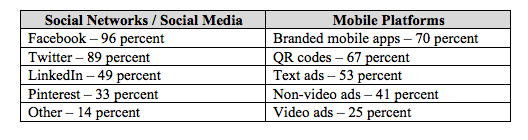
Last week Digiday interviewed a Kellogg executive, who lamented the ROI issue in social media. “What is tricky for us is, we are not direct marketers, and it becomes hard for us to understand what is working best,” said Bob Arnold, associate director for Kellogg North America’s digital strategy. “Like Twitter and Pinterest, for example, where there are no industry standards for measurement, it is about gut instinct. So the measurement piece is a challenge, especially in the emerging areas.”
While ROI remains a struggle, 60 percent of marketers are measuring social media to ROI standards. It’s telling that 40 percent aren’t measuring it to business results at all. For those that do, purchase (67 percent), time spent (54 percent) and would recommend/forward to a friend (51 percent) were listed as the top metrics that marketers are using in social media. Less than 33 percent of marketers find likes and followers effective metrics.
“Many marketers can draw a straight line between investments in social media marketing and financial results, but many more cannot,” said Augie Ray, an analyst at Forrester Research. “This doesn’t mean social media marketing is ineffective; it just means that marketers have to recognize benefits beyond dollars and cents. Facebook fans, retweets, site visits, video views, positive ratings and vibrant communities are not financial assets — they aren’t reflected on the balance sheet and can’t be counted on an income statement — but that doesn’t mean they are valueless. Instead, these are leading indicators that the brand is doing something to create value that can lead to financial results in the future.”


More in Marketing

Marketing’s upper middle embraces AI creative production
Scaled AI creative production is becoming ordinary among CMOS outside the billion dollar club.
‘It scared the hell out of me’: What brands have learned from creator partnerships
At Shoptalk Fall, brands like Favorite Daughter, SharkNinja and Bob’s Discount Furniture talked about what they’ve learned from working with creators.

Future of Marketing Briefing: Agency fees in creator deals are the next transparency headache for marketers
As creator marketing budgets grow, so do questions about what agencies are taking.