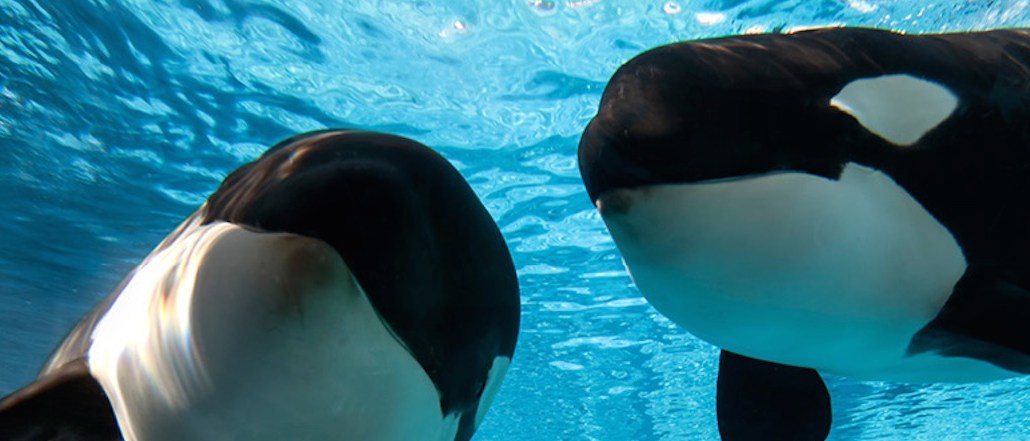
SeaWorld will stop breeding killer whales and end its signature theatrical shows, caving to years of bad publicity and declining attendance.
SeaWorld said in a statement this morning that it will shift its attention to “new, inspiring, natural orca encounters” that focuses on the animal’s’ health and wellness. “Society is changing and we’re changing with it,” a letter on its website read. “SeaWorld is finding new ways to continue to deliver on our purpose to inspire all our guests to take action to protect wild animals and wild places.”
The black and white whales have become synonymous with the brand for the past fifty years, when it began capturing the whales to breed and display for amusement purposes. But its reputation took a turn for the worse when the 2013 documentary Blackfish accused the park of animal abuse.
The changes won’t be immediate. While this will be the last generation of 24 orcas it breeds, the shows will continue until next year in San Diego and until 2019 at its parks in Orlando and San Antonio.
SeaWorld’s reputation is already bouncing back following the news.
“PETA has campaigned hard, and now there is a payoff for future generations of orcas,” the animal rights organizations said in a statement. The Humane Society of the United States echoed that sentiment, saying that the news is a ” dramatic shift that signals an eventual end to the practice of keeping captive orcas for public exhibition.”
Online, the brand has been mentioned 21,000 times today with 74.5 percent of the sentiment being positive, according to Brandwatch. As for the ending the breeding program, 96 percent of the mentions are positive.


More in Marketing

‘There’s nothing wrong with being a heritage brand’: How Revlon is updating its image by looking to the past
Revlon named musician and actress Teyana Taylor and country music star Megan Moroney as the faces of its “Revlon Be Unforgettable” campaign.

Inside agency OK Future’s AI ‘pressure cooker’ experiment with Goodwipes
OK Future cut Goodwipes’ AI spoof from six weeks to four days, exposing big savings and burnout risks.
From influencers to AI, here’s what Gen Alpha thinks about your brand
The Gen Alpha cohort now influences nearly half of total U.S. household spending in families with children ages 8-14.