Join us Dec. 1-3 in Nashville for the Digiday Programmatic Marketing Summit
An insurance company that will go unnamed here recently tapped an ad agency to streamline the insurance process for 16,000 customers — a difficult, high-level human-resource job, according to executives who were leading the project.
Thankfully, the agency just happened to have 750 human-resources specialists on staff whom it could ask for help.
That’s the competitive advantage of being PricewaterhouseCoopers, which houses an ad agency, called Digital Services, within the walls of the consulting and accounting firm at large. The agency alone did $750 million in revenue in 2014, making it the fourth-biggest agency network in the U.S. according to AdAge Datacenter. Its scale is what makes it able to compete against more traditional Madison Avenue advertising shops.
And the scale is huge: PwC Digital has more than 3,000 creatives and digital experts, who work inside an “Experience Center” that houses physical labs for prototyping, design and other creative. They work across 31 cities and at any time are working with over 200 clients.
David Clarke, principal and chief experience officer, who joined the agency via the firm’s acquisition of his shop, BGT, in 2013, says he knows the difference scales makes first hand. “When I had a small agency I used to say, ‘It’s not a big deal having only a couple hundred people,” he said. “But now, it’s a game changer. I’m challenged with a problem, I pull in someone from healthcare, or innovation or wherever. I love the horsepower.”
While the PwC agency does pitch clients in traditional reviews, many clients are often also working with its parent consulting arm as well. Clients and projects move back and forth often, said Clarke. The shop offers pay-for-performance billing as well as other options.
The division was officially launched in 2014, and a lot of the growth came, as is traditional with these kinds of shops, through acquisitions. It’s part of a larger trend within the industry of consulting and accounting firms that are building up businesses to compete with more traditional agencies. Accenture and McKinsey both have in-house agencies. Deloitte’s is a $1.5 billion business with 6,000 people on staff. Agencies are feeling the heat: Holding company CEOs have made it a point to recognize the competition they are providing.
Analysts see the trend as a wise investment. Brian Wieser of Pivotal called Deloitte, PwC and other consulting-agency behemoths like KPMG and Accenture “sleeping giants” in agency services. And people who dismiss them saying they can’t do creative work have, said Wieser, “a misplaced sense of their role in the universe.”
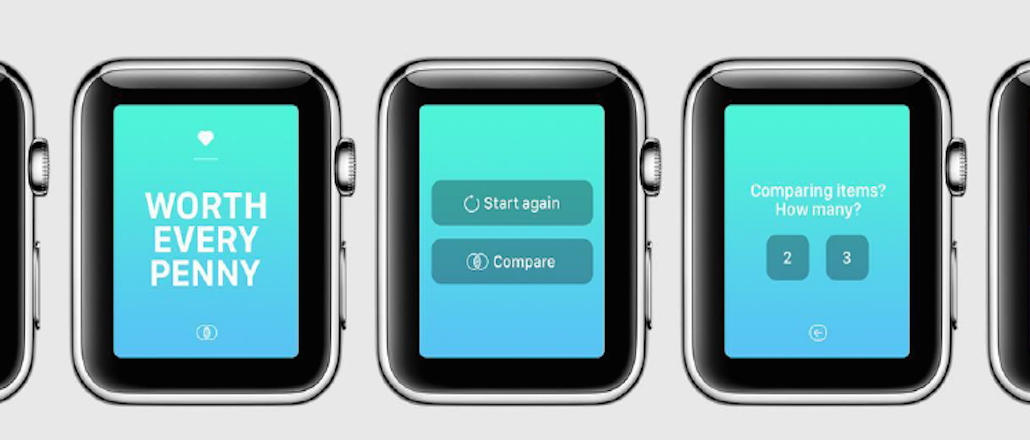
PwC, for example, recently launched “Impulse,” an app developed in one of its labs for a retail client (it declined to disclose which clients PwC works with). The app measures and captures heart rate data to discover what products excite customers so retailers can target marketing to an individual. For a health client, it developed Somni: A team of strategists, creatives and designers from the agency met with physiologists, biologists and data scientists from the health industry practice to work on a project to help users get a better understanding of how they are sleeping.
Even search consultants are starting to pay closer attention as these agencies start landing on their desks as part of client reviews. One search consulting exec — who preferred not to be named as she manages reviews for a lot of clients using these companies — said they are on her list of agencies to get to know better as clients start asking for their services.
Those reviews, however, can sometimes get interesting, says Clarke. “We bring in our agency people with tattoos and long hair and then our other partners from the business, who are buttoned up MBAs from Harvard. The room is always like ‘what is this?’” he said. “But that’s why we work. We’re right brain and left brain together.”
Homepage image: the Impulse app courtesy PwC


More in Marketing

Walmart Connect pitches brands directly as it pushes lift studies ahead of holiday ad deals
Walmart Connect is using lift studies to prove ad performance directly to brands ahead of the holidays, signaling a tighter race with Amazon.

Target’s holiday push stresses affordability, exclusives and an AI assistant
Target is also rolling out an AI-powered assistant called Ask Target on Target.com and the Target app.

Indie agencies want The Trade Desk and Amazon DSP to acknowledge their buying power with negotiating leverage
Indie agencies say DSP giants block direct seats and fee relief despite spend commitments.