Join us Dec. 1-3 in Nashville for the Digiday Programmatic Marketing Summit
In Graphic Detail: Why the best brands are relearning how to entertain first, advertise second

Content has never been easier to ignore. Most of it deserves to be.
Marketers have known this for a while. What’s changed is how some of them are responding. They’re moving from posts to programming — or trying to earn more attention rather than buy most of it.
SharkNinja, Gap, Mattel, LVMH, Arsenal Football Club are part of a growing cohort making deliberate bets on entertainment. They’re partnering with social publishers, hiring creators as creative directors, standing up in-house studios, and in a handful of cases, co-producing Hollywood films. That range is notable because there’s no single playbook. What they share is the same underlying problem. Traditional advertising is being skipped, blocked or simply scrolled past while the volume of content competing for the same diminishing attention keeps rising.
The irony is that none of this is new. Procter & Gamble figured it out in the 1930s when it funded radio dramas to reach housewives and coined the term “soap operate” in the process. What’s old is new again.
Performance channels have a lot to answer for
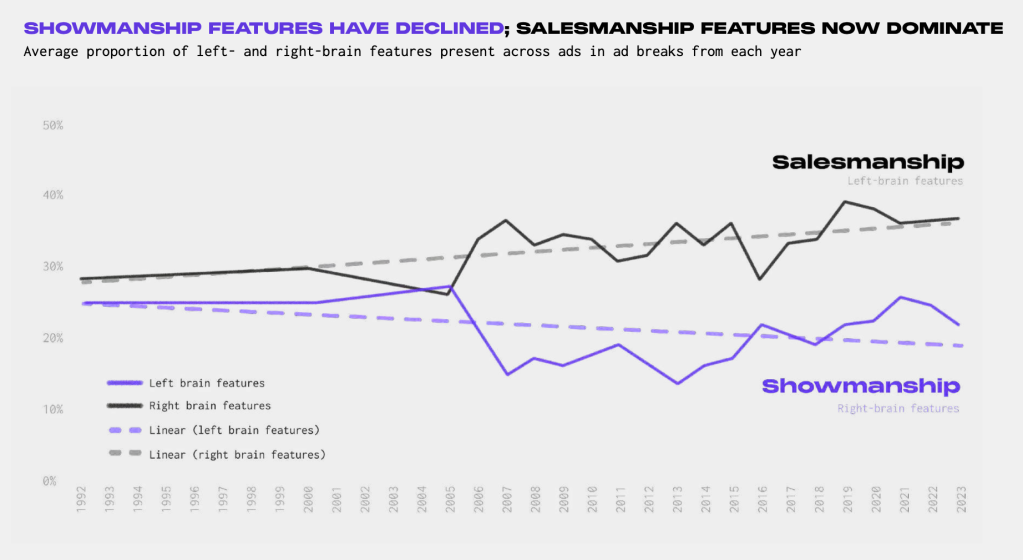
It’s a cliche because it’s true. Performance advertising made marketing more effective and less interesting — often at the same time. Marketers optimized so hard for the click over the years that they eventually forgot how to make someone feel something. Meanwhile, internet culture was getting weirder, funnier and more audience-driven. The more that happened, the more standard advertising stuck out, as evidenced by System 1 data (see below) collated by creative company Small World. Some marketers are only now starting to feel it.
“So many agencies and so many businesses are obviously obsessed with how their product works and how their audience thinks about their product,” said Dan Salkey, co-founder and strategy partner at creative company Small World. “They spend so little time thinking about what their audience is interested in outside of their brand, their product and their work.”
Marketers want to entertain. People want to feel something real
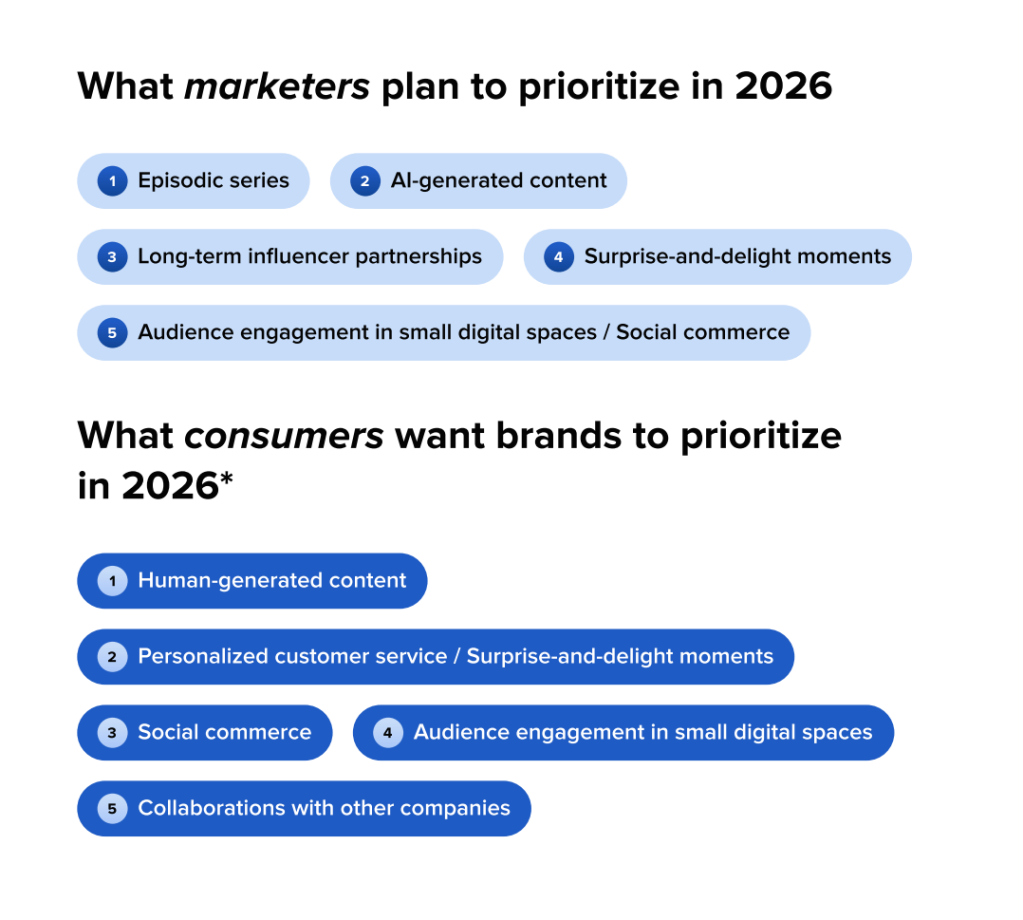
Sprout Social’s 2026 content strategy report, which surveyed 2,300 consumers and 1,200 marketers across the U.S., U.K. and Australia, puts episodic series as marketers’ number one social priority for the year, ahead of AI-generated content, long-term influencer partnerships and everything else. The entertainment intention is clear. But consumers’ top ask is human-generated content. Which is to say the brands most likely to get it right are the ones building around a genuine voice rather than a production schedule.
“That is the shift that has happened in the last five years, and it has inherently blurred the lines between advertising and entertainment,” said Salke. “That’s meant that brands who have an entertainment first strategy have now got a two to four times multiplier on their effects.”
Most brand-creator relationships still end after a single post
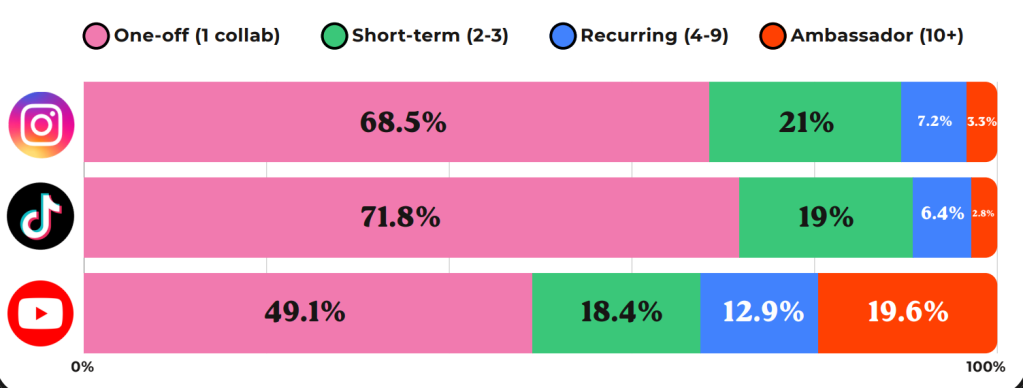
According to the Influencer Marketing Factory’s brand deals report of over 350 million creator profiles more than seven in 10 (71.8%) of brand-creator deals on TikTok last on average 4.9 months and end after a single collaboration. On Instagram, it’s 68.5%. Even on YouTube, where affiliate deal structures give both sides a reason to commit to 13.5 months on average, nearly half are still one-offs. It’s the same short-terminism that has undermined brand building more broadly. The brands moving into entertainment are, consciously or not, trying to escape it. Whether its in-house studios or long-form creator partnerships, the logic in each case is the same. Owned, sustained content relationships compound. A single sponsored post doesn’t.
Marketers have all the evidence they need to invest in brand-building
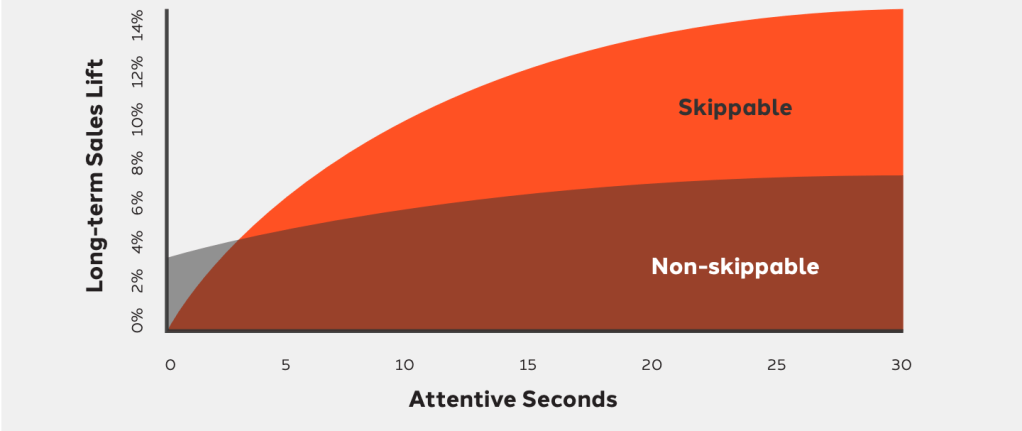
The irony is that most marketers already know this. The case for brand-building over pure performance has been made, repeatedly and with increasing rigor, for years. Attention research, long-term effectiveness data and the entire Binet and Field canon — it’s not a shortage of evidence. And the data keeps getting sharper. Dentsu’s Brand Reset study found that voluntary attention outperforms forced attention — skippable ads that hold a viewer past the first couple of seconds ultimately beat non-skippables. It also found that attention has diminishing returns: after 20 seconds, additional dwell time delivers little extra brand effect.
Put simply, short-term thinking got wired into how businesses operate after the 2008 financial crash and has been compounding ever since.
“It is irrefutable now and people see the importance of it, but breaking the behavior inside of clients organizations by focusing on those short term returns is the challenge,” said Will Swayne, global president of media at Dentsu.
The price of forgetting the basics
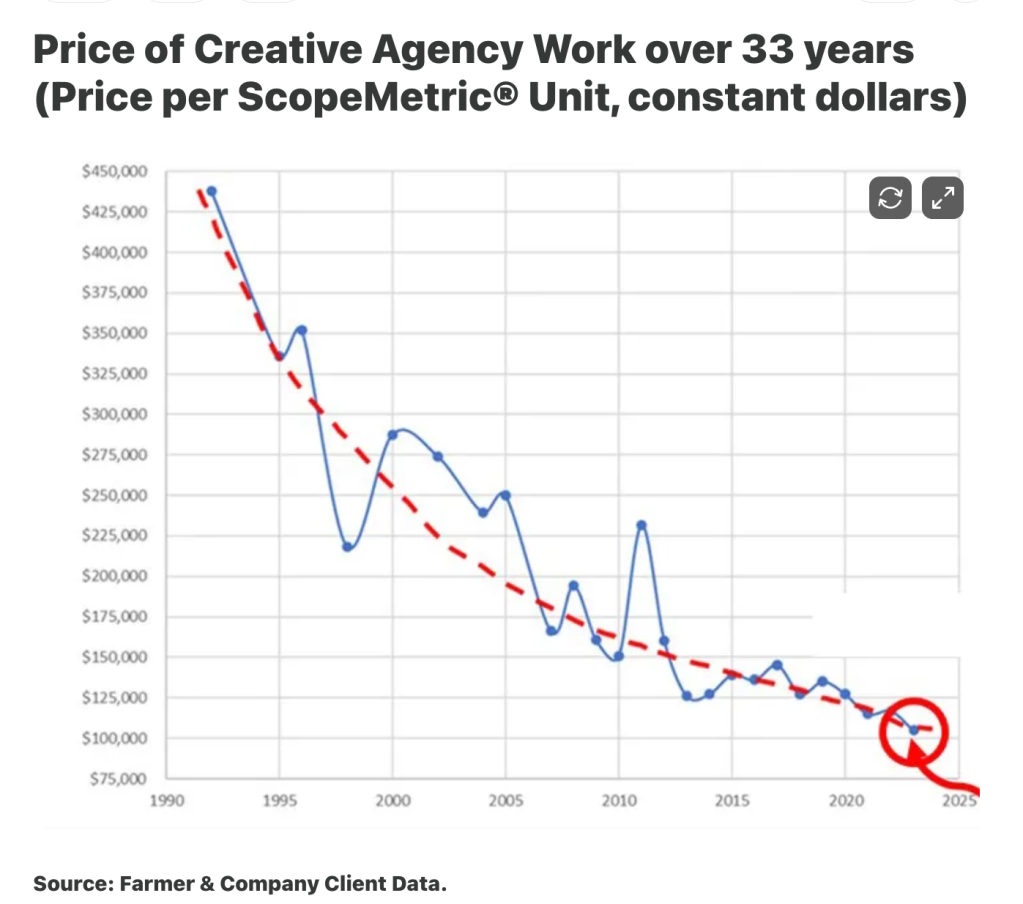
It shows up in the numbers. According to consultant Michael Farmer, the price of creative agency work has fallen 75% in real terms over the last 33 years, from $435,000 per unit to $110,00. The causes for this are well documented. Brands squeezed fees, agencies accepted scopes of work disconnected from outcomes and some holdcos began giving away creative entirely to protect media trading relationships, effectively pricing it at zero. The result was 40 of the 60 advertisers Farmer tracked have grown below GDP for 15 years. Ineffective creative, compounded over time, shows up eventually in the revenue line.


More in Marketing
AI boosts discovery but reviews still seal the deal, new research shows
ChatGPT is where 16% of shoppers start looking for products. However, only 9% go there to actually buy something.

Future of Marketing Briefing: Advertisers have more ways than ever to choose a holdco, and free holdcos to choose from
Fewer holdcos, more ways to pick one: inside the changing agency pitch.
Walmart Connect pitches brands directly as it pushes lift studies ahead of holiday ad deals
Walmart Connect is using lift studies to prove ad performance directly to brands ahead of the holidays, signaling a tighter race with Amazon.