Join us Dec. 1-3 in Nashville for the Digiday Programmatic Marketing Summit
Digiday+ Research: Digital accessibility elicits a lot of support but very little action
This research is based on unique data collected from our proprietary audience of publisher, agency, brand and tech insiders. It’s available to Digiday+ members. More from the series →
Making digital content accessible to people with disabilities is something almost everyone in the industry can get behind — more than 80% of agency and brand executives agree that more must be done about it, according to research from Nineteen Insights. But digital accessibility is also something that is not talked about often. Why is that?
Digiday and Nineteen Insights surveyed 134 agency and brand professionals in April to learn more about the discrepancy between support for digital accessibility and what’s actually being done about it.
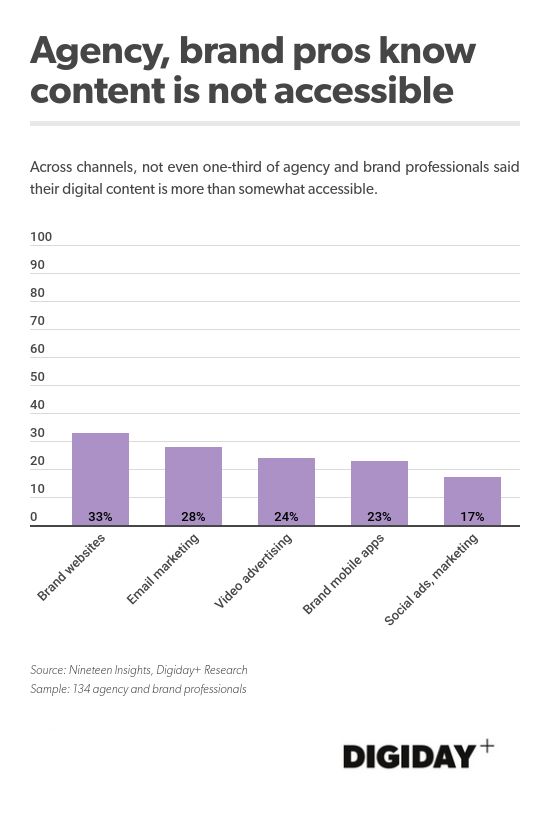
To start, respondents were asked about the current state of digital accessibility in their content, and it turns out that fewer than a third of agency and brand execs think their digital content is accessible. Brand websites came in at the most accessible, with 33% of respondents saying their website content is more than somewhat accessible. And at the bottom of the list was social advertising and marketing content — only 17% of agency and brand pros said their content on social is more than somewhat accessible.
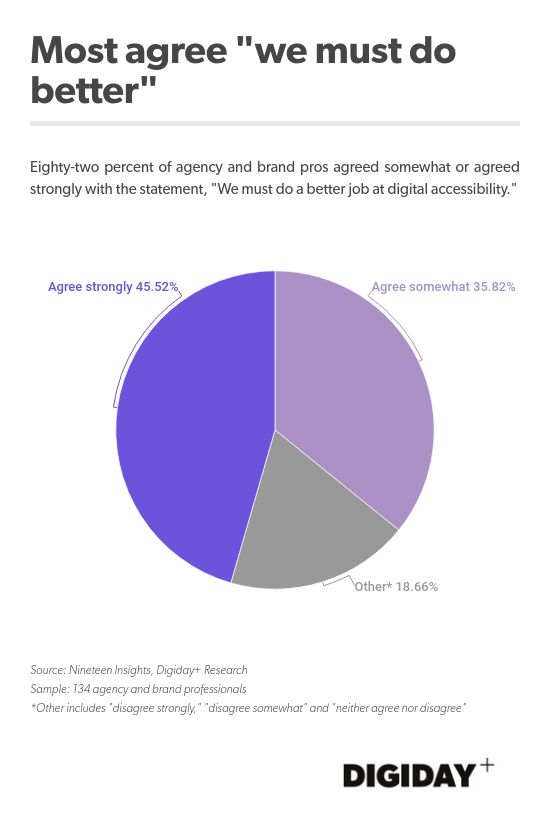
Across the board, agency and brand execs know this isn’t acceptable and that more must be done to make digital content more accessible to people with disabilities. In fact, a whopping 82% of agency and brand pros support working harder on this issue. Nearly half (46%) of survey respondents strongly agreed that the industry must do a better job at digital accessibility.
This data does beg the question: If so many agency and brand execs agree that more must be done about the accessibility of digital content, why is it that the current state of their digital content across channels shows that not much has actually been done regarding digital accessibility?
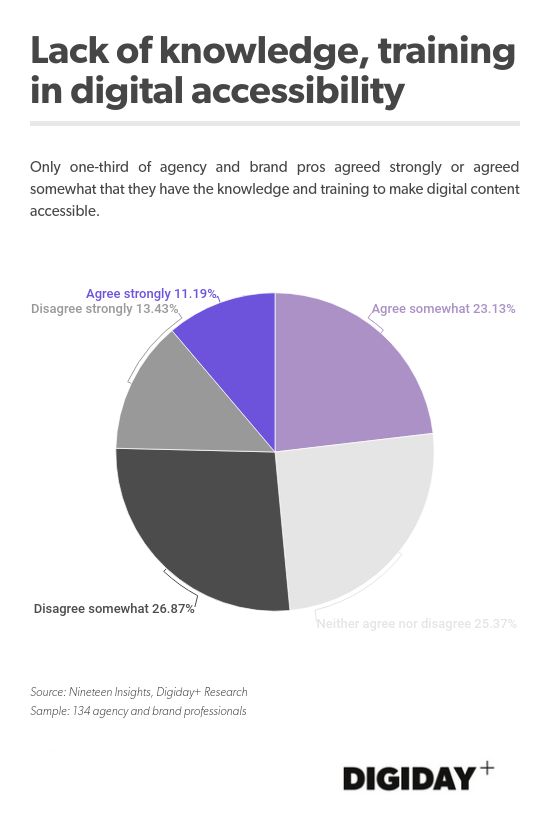
One possible answer is that agency and brand pros don’t have the knowledge and training necessary to move the needle when it comes to digital accessibility. When asked whether they have that knowledge and training, only about a third of respondents agreed somewhat or strongly that they do, while 40% disagreed somewhat or strongly.
This data is not to say that no one is working toward better accessibility of their digital content. Earlier this year, Digiday recognized Vox Media’s work in accessibility through its “More Than This” podcast developed with Straight Talk Wireless, which featured a visual experience catering to deaf and non-listening audiences. And we’ve talked to disability advocate Josh Basile at length about building accessibility into remote work and the metaverse. So where does the industry go from here?
As more aspects of consumer life become entrenched in the digital world and with the support of so many agency and brand execs, it is likely that the future of content will include a greater amount of digital accessibility.


More in Marketing

Salesforce’s $5.7 billion Braze deal puts marketers at an ecosystem crossroads
The deal promises faster, more connected marketing, while raising questions about vendor lock-in and how brands stand out as AI automates campaign execution.

AI boosts discovery but reviews still seal the deal, new research shows
ChatGPT is where 16% of shoppers start looking for products. However, only 9% go there to actually buy something.

Future of Marketing Briefing: Advertisers have more ways than ever to choose a holdco, and free holdcos to choose from
Fewer holdcos, more ways to pick one: inside the changing agency pitch.